Understanding Brown Trout Predatory Behavior
The Aggressive Strike Trigger
The aggressive strike is not random violence. It is a calculated decision made in milliseconds. Brown trout, particularly older specimens, conserve energy. They refuse to chase everything that moves. The trigger is a combination of silhouette, lateral line pressure, and the erratic pulse of a wounded baitfish.
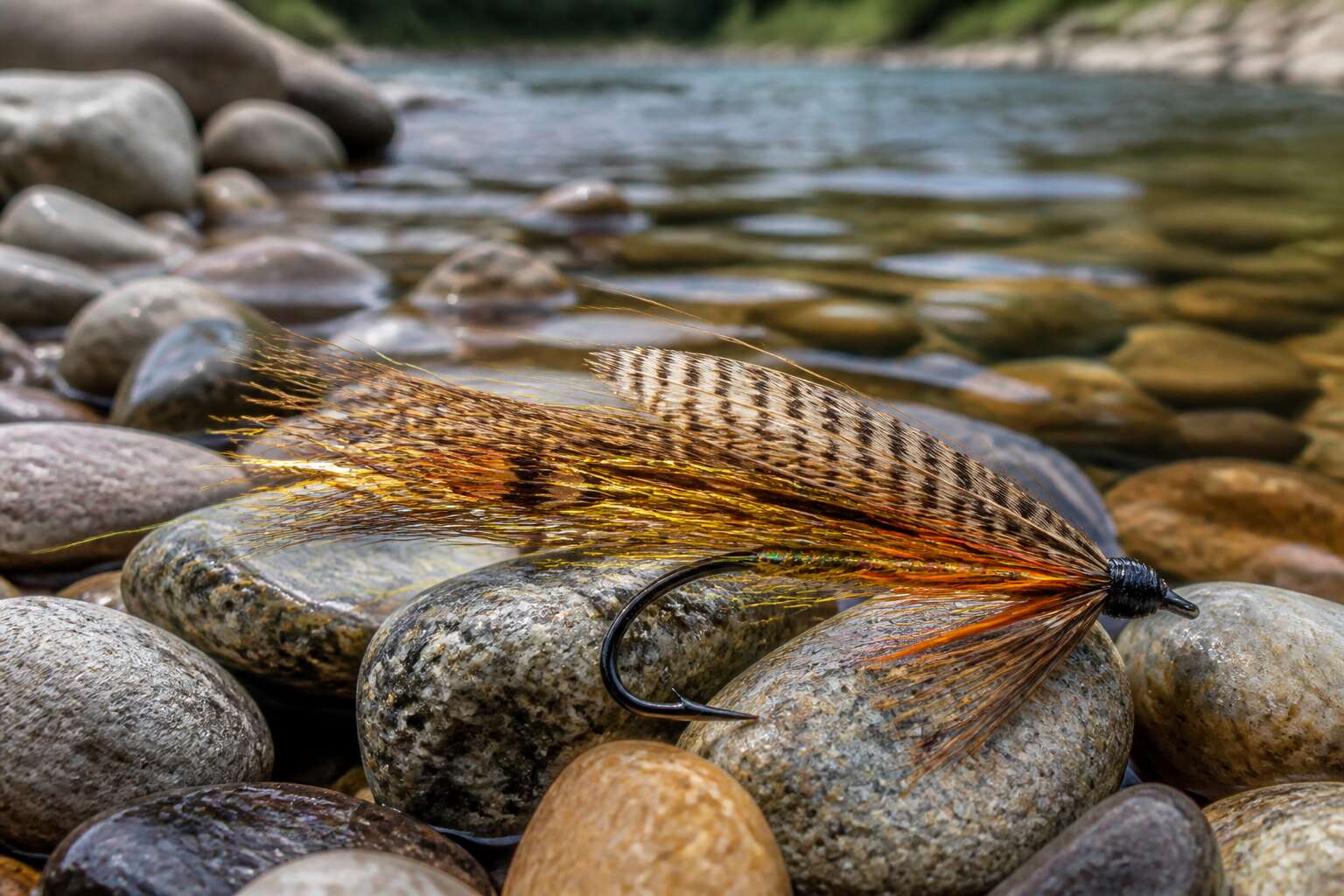
Anglers who understand this predatory economy are better equipped when presenting streamer flies for brown trout. The pattern must suggest vulnerability without appearing panicked. Trout read intention from the first inches of movement.
Some triggers hold more weight:
– Pulsing action over steady retrieval
– High contrast silhouettes in murky water
– Acceleration followed by sudden pause
These cues tap into an ancient loop. The trout does not deliberate. Hesitation costs it a meal and signals weakness to rivals. Streamer flies for brown trout become a narrative, where the strike is the moment of belief.
Forage Base and Natural Diet
Every river system supports a different mix of prey for its brown trout. I have emptied stomachs on Cape streams and found caddis larvae, tadpoles, and the occasional tiny mullet. This forage base dictates pattern choice and presentation, especially when selecting streamer flies for brown trout.
Most trout split their diet between aquatic invertebrates and terrestrial drift. The specimens that reach trophy size shift toward larger energy packages: small fish, crabs, and even frogs.
- Invertebrates dominate the colder months
- Terrestrial insects appear with summer winds
- Small fish become the staple for trout over 40cm
That seasonal shift changes behavior. A trout feeding on nymphs reacts differently than one hunting mullet schools. Its predatory instincts calibrate to the primary prey’s shape. When you present streamer flies for brown trout, you are matching that learned preference.
Prime Feeding Windows and Light Conditions
The same pool produces two completely different fish depending on the light. In a bright Cape afternoon, the brown trout tucks tight to the streambed and refuses to move. As the sun drops behind the fynbos, that fish slides into open water and begins hunting with an urgency that is impossible to mistake! I have watched this shift occur in under half an hour. Anglers who understand this daily transformation choose their streamer flies for brown trout based on when they will fish, not simply where.
Trout retinas shift between photopic and scotopic vision at twilight, creating a narrow window where predatory confidence outweighs defensive caution. This balance, not hunger, defines the prime feeding windows on any given river.
- Dawn: first light until direct sun hits the water, roughly 45 minutes
- Dusk: direct sun leaves the river until darkness fully settles
- Overcast: sustained cloud cover stretches both windows considerably
Bright hours serve a different function entirely. During those midday periods, presentations of streamer flies for brown trout produce fewer encounters because the fish’s visual system prioritizes concealment over consumption. The margins of the day are when that prioritization reverses.
Territorial Responses to Intruders
By mid-season on a Cape stream, a brown trout has defended its lie so often that the response becomes reflex. When an intruder enters that space, the reaction is not hunger. It is ownership.
The resident turns to face the intruder, fins flaring and jaw set wide. A small pattern earns a defensive swipe. A larger profile earns a chase to the boundary of the lie. The trout stops exactly where its daily patrol ends.
On overcast days, territorial aggression amplifies. The fish feel secure in low light and will meet streamer flies for brown trout at the midpoint of the pool. The strike is violent and immediate. The fly is struck, not consumed.
Top Streamer Patterns for Trophy Browns
Sculpin Imitations for Bottom Dwellers
Most fly fishers work the fast water, yet the real trophies stay low against the stones. Sculpin imitations, dressed with heavy dumbbell eyes and sparse bucktail, crawl exactly where browns patrol. These streamer flies for brown trout trigger an ambush response that surface patterns rarely match. I have seen a four kilo fish slide out from under a cutbank to inhale a jigged sculpin on the third drift.
Why do bottom dwellers dominate? Consider the anatomy of a natural sculpin:
- It has a flat, wide head that sits flush against gravel.
- Its pectoral fins flare outward, creating a broad silhouette.
- It moves in short, jerky bursts rather than sustained swimming.
Your imitation must replicate that motion. Cast upstream, mend slack, and let the fly tick the rocks. Then strip with a sharp two inch pull. The pause matters more than the strip. When the fly stalls, the brown decides!
Rabbit Strip Patterns for Undulating Action
Rabbit strip patterns generate a pulse that no synthetic fibre has matched. The leather backing holds the hair in a straight line, yet each pause in the retrieve lets the fur flare and collapse. That undulation triggers trophy browns when the water is cold and the fish refuse to chase.
Zonker style streamers perform well in still water and slow pools. The action is slower than marabou, but it carries more presence. These streamer flies for brown trout shine during winter months.
- Rabbit Zonker in olive over white
- Black and purple for low light
- Natural brown for clear water
I favour short strips with long pauses, letting the hair breathe.
Classic Bucktails and Baitfish Mimics
Classic bucktails evoke a certain dignified stance on the water, and their legacy remains one of the most honest presentations for January browns. These streamer flies for brown trout carry a subtle wing of deer hair that grips the current, then releases on a pause, mimicking a shying baitfish. In South Africa’s deeper flow, across the Lourens Valley or the Ramsgate pools, a bucktail maintains its profile better than softer marabou in fast channels. The body shimmers with tinsel, and the whole pattern breathes with rhythmic strip retrieves. Uncommon names like the Black Ghost and the Grey Winnie remain staples, and each has a different harmonic wire.
A list of proven bucktail patterns to keep or tie includes:
– Black Ghost
– Grey Ghost
– Mickey Finn
– Edie Tiger
– Nine-Three
The places of these flies sit in their baitfish mimicry rather than their noise. Their slim wings give a creature right through a cold-weather holding lane that triggers fallbacks. That quieting is why they persist. When the river glass over, tie on a Black Ghost and let it dangle a silver hook, a strong choice for a still pause. I favour these streamer flies for brown trout as a go-to after a rain, when the normal sculpins do not live in the same pool.
Flashy Woolly Bugger Variations
‘A Woolly Bugger must look alive, not pretty,’ a Cape Town guide once said. He tied his with a pearl Flashabou wing and a copper bead head. These streamer flies for brown trout work when the water runs cold and the fish hold deep. Flashy variations add the final visual cue. Here are three I pack for the Lourens Valley:
- Copper Head Bugger: extra weight, barred olive marabou, bead chain eyes
- Black and Blue Flash: black marabou, blue crystal chenille, silver rib
- Golden Retriever: gold tinsel body, yellow marabou, cone head
Each of these streamer flies for brown trout moves with a tight side-to-side roll. The flash draws a strike without a full baitfish imitation. That rhythm, not the shine, is what will tempt a trophy brown.
Strategic Water Reading for Streamer Presentation
Deep Pools and Undercut Banks
Deep pools hide brown trout in predictable places. The current loses momentum as it deepens, and fish hold along pressure seams where the water slows just enough. Reading these seams matters more than any fly pattern. You need to know where the current deflects off a submerged ledge or where it carves a narrow channel beneath an undercut bank.
Undercut banks demand careful observation. The trout sit in shaded water, watching the bank for movement. Your cast must land upstream so the fly swings naturally into that shadow line. Presenting streamer flies for brown trout along that dark edge requires attention to your rod angle and drift speed.
Useful visual indicators include:
- Surface boils that reveal submerged structure
- Turbulence against a bank that suggests a deep scoop
- Algae or debris lines tracing the main current flow
The Importance of Current Seams
The current seam is the quietest piece of information a river offers. It marks where fast water surrenders to slow, and brown trout station themselves along that boundary. Streamer flies for brown trout demand that you read this line correctly. Place the fly on the fast side, let it cross the seam, and the swing does the persuading.
Seams reveal themselves through small observations. A cluster of foam riding a straight path. A subtle change in surface texture. A leaf slowing as it enters the pocket. Each clue confirms where the boundary sits. I have watched anglers walk past them, casting instead at the deeper water beyond.
Not all seams are equal. Some persist through every flow condition, marking permanent structure. Others shift with the season, appearing only when conditions align. The permanent seam deserves repeated visits with streamer flies for brown trout. The shifting seam deserves one cast.
Targeting Wood, Rock, and Transition Zones
Reading water is an act of subtraction. You are not looking for more, but for less. When you strip away the constant variables of glare, wind, and bottom composition, what remains is the structural truth. Wood and rock are not just obstacles; they are current modifiers that create micro-havens of rest. A sunken log does not simply lie on the bed. It works as a ramp, directing water upward and carving a shallow depression in front of its nose. That depression is where a brown trout will hold, expending zero energy while scanning the conveyor of food drifting past.
Large boulders offer a different kind of sanctuary. The pressure wave in front of a boulder forms a distinct cushion, and the fish sits in that cushion, not behind the rock as many assume. To target this zone, your cast must land several feet upstream of the boulder. Let the streamer flies for brown trout sink to the bottom, then lift into the swing. The fly will bump the rock face and deflect sideways, mimicking a baitfish that misjudged its navigation. That deflection is the trigger, a moment of vulnerability that the trout reads as an easy meal.
Transition zones are the third pillar of this reading strategy. These are the places where the substrate changes, from gravel to sand, or where depth shifts abruptly along a flat stretch of river. These borders act as highways for crayfish and sculpins moving under the cover of darkness.
– A drop-off that occurs in water less than three feet deep is prime holding water for larger trout.
– A change in substrate from cobble to silt often indicates a slower current band where baitfish will gather.
– The seam between a weed bed and open water, even in winter, carries terrestrial insects and disoriented fry.
The key to reading these transition zones is to fish them at the boundary line itself. Do not cast to the center of the feature. Place the fly on the shallow side and let it fall into the deep. The sudden change in light and pressure triggers an aggressive response from territorial brown trout. When you identify these structural anomalies, you are not guessing. You are applying a positional logic that separates an amateur from a student of the river. The best anglers do not cover water; they dissect it, focusing their streamer flies for brown trout on the few feet of river that offer the greatest reward for the least expenditure of energy.
Dynamic Retrieve Techniques to Trigger Strikes
The Slow Strip and Dead-Drift Pause
Speed is not always the answer. When working streamer flies for brown trout, the slow strip and dead-drift pause often produce strikes where aggressive tactics draw only refusals. A slow strip is a steady pull, a few centimetres per turn. That speed lets the fly pulse without rushing past the fish’s comfort zone.
The dead-drift pause extends the idea. Stop the strip and let the fly hang, sink, or wobble in the current. This stillness reads as weakness. A brown trout holding in deeper runs follows the fly, then commits during the pause. The strike comes as the fly moves again.
Anglers make three adjustments:
- Shorten the strip to a hand’s length.
- Keep the rod tip low to reduce line drag.
- Wait two full seconds before resuming.
I have watched this pattern turn hesitant followers into committed strikers. The variation matters less than the trust placed in that moment.
The Fast Jigging and Ripping Motion
Some brown trout respond only to violence. The fast jigging and ripping motion converts hesitation into reaction, because a fleeing fly triggers an ancient chase reflex. I have stripped streamer flies for brown trout with brutal speed, letting the rod tip snap upward and the line pull tight in sharp bursts. That erratic cadence forces a decision within seconds. Three principles anchor this technique:
- Keep the fly in the upper third of the water column
- Vary the rip length between 10 and 30 centimetres
- Let the pause last one heartbeat, no longer
Ripping pulls the fly sideways and upward, mimicking a panicked baitfish. A brown that refuses subtle offerings will often attack from below, slashing at the fast jigging motion as if punishing the intruder.
The Swing and Twitch Method
There is a quieter violence in the swing and twitch method. After the frenzy of the fast rip, this retrieve demands patience. Cast across the current and let the line belly downstream until the streamer flies for brown trout begin their arc through the dark water. The current pulls against the fly, and that pressure becomes your signal. Every bulge in the flow transmits through the line to your fingertips.
Then the hand moves. A sharp twitch of the rod tip, a pause long enough for the fly to falter, another twitch. The fly stutters against the flow, unable to hold its course. Brown trout that have witnessed every straight retrieve in the river will watch this stumble and recognise a wounded creature worth chasing. The take often arrives at the exact moment the fly hesitates, as if the fish has been waiting for the fly to admit defeat.
Varying Depths with Suspended Retrieval
Suspended retrieves require precision. Cast across, track the line. The moment it stops sinking, the fly hovers. Begin a sharp, six-inch snap, then immediately stop. The fly slices sideways, then stalls, quivering, before it begins to sink again. This erratic mid-column pulse triggers strikes from neutral browns. To vary depth effectively with streamer flies for brown trout, alter your rod tip angle or switch to a floating line with an unweighted pattern.
Use these adjustments to dial in depth:
- Lower the rod tip to let the fly drop a foot.
- Raise the rod tip to hold it higher during the pause.
- Shorten the pause to climb, lengthen it to sink.
The strike will come as the fly changes plane. Resist the urge to set the hook instantly; let the fish turn with the fly before applying pressure.
Seasonal Tactics and Environmental Adjustments
Early Season Cold Water Strategies
Early season brown trout operate on a sluggish metabolic clock. When water temperatures hover in the single digits, their aggression diminishes and their positioning shifts dramatically. You will find them tucked into the slowest water available, often hugging the bottom of deeper runs where the temperature is marginally warmer. The fish are not chasing meals; they are conserving energy. Your presentation must respect this economy of movement. A streamer ripped past a lethargic trout will only spook it. Instead, employ a very slow crawl along the substrate, with pauses lasting up to ten seconds.
The environmental adjustments start with your fly selection. Smaller streamer flies for brown trout are paramount during this period, typically in sizes 4 through 6. Bulk and heavy vibration are counterproductive. You want a profile that suggests an easy meal, not a challenging pursuit. Furthermore, consider the light angle. A high, bright sun in the clear winter water will expose your tippet. Fishing overcast afternoons or the low-light hours of late morning offers the best concealment.
Retrieve pace is the primary variable you control.
– Use a hand-twist retrieve to maintain a steady, subtle pull.
– Keep the rod tip low to the water, tracking the fly’s path.
– Focus on casting slightly upstream and across, letting the fly swing in a slow arc.
The key is to stay connected to the fly, feeling for the faintest hesitation. Winter bites are often subtle, more like a weight on the line than a sharp tug. You must be patient, covering water methodically rather than casting widely. When the take comes, it is often a slow, deliberate mouthing. Wait for the heavy resistance before setting the hook. These adjustments, focused on efficiency and precision, are what separate a successful winter outing from a frustrating one.
Summer Low-Light and Night Fishing
Summer darkness transforms the river. The brown trout that hid from the high sun now move with a boldness that surprises even seasoned anglers. Low-light hours become the only honest window for presenting large streamer flies for brown trout, when the fish venture from deep holds into the shallows to hunt with less caution.
Night fishing strips away visual cues and replaces them with tactile awareness. You feel the take before you see any sign of it. The hesitation arrives as a subtle weight. The dark demands a slower cadence, yet one that stays connected to the fly at all times.
On a moonless river, a specific order emerges:
- Dark or black streamer flies for brown trout create a strong silhouette against the faint sky glow
- The fly works best along the edges where the moonlight fails to reach
- Fingers read the take before the eyes can confirm it
The summer night becomes a private ritual. The patient angler catches what the daylight hours never reveal!
Autumn Spawning Aggression and Feeding
The river’s temperament shifts again as autumn grays the sky. The brown trout that prowled moonless shallows now feel a deeper pull, an ancient signal that rearranges their priorities. Feeding becomes secondary to territory. The same streamer flies for brown trout that mimicked baitfish in summer now represent something more threatening, an intrusion on a spawning claim that cannot be tolerated.
Aggression replaces hunger. A large buck, having pushed a female onto the gravel, will attack almost anything that enters his domain. This creates a distinct opportunity for the angler who understands the trigger. The key is to present the fly with purpose, crossing the lie with deliberate speed to provoke a reaction.
– Strip the streamer close to the gravel, where the redds are cut
– Use darker profiles that resemble competing males
– Retrieve with erratic bursts that mimic a challenger’s nervous entry
The old, patient cadence of summer no longer applies. What mattered was the pause, the pause that allowed a cautious fish to commit. In autumn, hesitation loses its value. The strike comes as a violent, instantaneous turn, often without warning. Be ready for a take that feels more like a collision than a bite.
Adapting to Water Clarity and Temperature
Water temperature governs a brown trout’s willingness to chase more than any other variable. In South African streams, a highveld thunderstorm can drop water clarity from clear to milky in minutes. These two shifts, temperature and clarity, force the angler to rethink streamer flies for brown trout entirely. Cold water slows the metabolism. The same fly that provoked a hammer strike in autumn now requires a patient, near bottom crawl to earn attention.
Clarity changes the presentation logic as well. Stained water demands bulk and vibration. Clear water exposes every flaw in the pattern’s motion. The angler must read both conditions simultaneously, often within a single session.
- Cold and clear: reduce fly size, slow the strip, hug the gravel
- Warm and stained: increase profile, add flash, vary the speed aggressively
Streamer flies for brown trout succeed when the retrieve matches the environment’s rhythm, not the angler’s preference.
Essential Gear and Rigging for Streamer Fishing
Selecting the Ideal Rod and Line Weight
On the Cape’s windblown reservoirs, a mismatched line weight will cost you more than distance. It will break the rhythm of your retrieve. For streamer flies for brown trout, the 7 weight rod stands as the undisputed workhorse. It lifts large flies without sacrificing accuracy. A 5 or 6 weight suits small mountain streams, while an 8 weight handles heavy sinking lines and persistent gusts.
Pair your rod with a weight forward line that matches its rating. A floating line allows precise depth control in clear water. A sinking tip or full sink line reaches deep pools where browns hold. Keep the leader short, from 0x to 2x, to transmit every strip.
- 6 weight for small streams, light sculpins
- 7 weight for general river tactics
- 8 weight for strong winds, heavy rabbit flies
Rig with a loop to loop connection. This simple knot offers quick changeovers. Use a stiff fluorocarbon tippet for a solid hook set. Check the rod’s casting action before you wade out.
Leader and Tippet Construction for Heavy Flies
In the tussle with a Cape brown, the leader is the weakest link. For streamer flies for brown trout, a 7.5 foot tapered leader made of stiff nylon gives the fly its authority. Too soft a butt section will stall the turn in wind. Too fine a tippet will snap on the strike.
Build a leader that transfers energy from the line to the fly. Start with a 40 pound butt section, then step down through 25 and 12 pound tests. Finish with a 0x or 1x tippet, no longer than two feet. Fluorocarbon has the sink rate and abrasion resistance for rocky bottoms, but it costs you knots. Monofilament stretches a little, which saves you when a fish surges.
Choose based on the water:
- Clear, still water: 2x fluorocarbon for subtle presentation
- Windy conditions: 0x monofilament for turnover
- Heavy cover: 1x braided tippet for strength
Attach the tippet with a blood knot or a loop to loop connection. A non slip mono loop gives heavy flies free movement, which matters more than any retrieve.
Adding Weight, Floating Lines, and Sinking Tips
The right line system does the work so streamer flies for brown trout reach the strike zone without an exhausting cast. A floating line with a weighted fly covers the top two metres, but when fish hold deeper, a sinking tip gets the fly down quickly.
- Intermediate tips for slow, steady depth control
- Fast sinking tips for current and deep troughs
- Tungsten putty or split shot pinched a metre above the fly
Add weight to the leader, never the tippet, to keep the fly’s action natural. I match sink rate to flow. A slow sinker in fast water proves useless, and a fast sinker in a still pool plummets into weeds.
Floating lines still matter for surface twitches and suspended takes. A spare spool with a sink tip offers the simplest depth adjustment. One swap extends your range.
Hooking, Fighting, and Landing Large Browns
Most anglers spend their time chasing brown trout with nymphs and dry flies. The streamer game gets less attention, and that is a mistake. Streamer flies imitate sculpins, baitfish, leeches, and other larger prey. Brown trout, especially the bigger fish, hunt these aggressively. Root wads, undercut banks, log tangles, and deep tailouts all hold browns that are willing to eat a large meal. Getting a big brown to commit takes more than stripping a big fly through every pool. It takes the right fly line, the right sinking tip, a solid leader and tippet setup, and most importantly, a controlled retrieve.
Gear matters more than most anglers think. A 9 foot 5 weight works for small streams, but for lakes and larger rivers where browns grow heavy, a 6 or 7 weight rod is the better choice. The heavier rod handles bulky flies, heavier sinking lines, and a stiff wind without wearing you out. It also gives you the backbone to turn a big fish out of wood and avoid broken tippets.
Your fly line does the real work. A floating line is fine in shallow water, but it limits how deep your streamer can go. A sinking tip or a full sinking line gets the fly into the strike zone where brown trout actually sit. Sinking tips come in different sink rates, from intermediate to fast sink, so match the line to the depth and current speed you are fishing. In slow, deep pools, a slow sinking tip works well. In fast runs with heavy current, you need a faster sink rate to punch down through the water column. The rule is simple: if you are not getting hung up on bottom structure, your fly is not fishing deep enough.
The leader and tippet connection is where many streamer anglers go wrong. Use a short leader, about 7 to 9 feet, to give yourself more control over the fly and the line. Fluorocarbon tippet is the standard for streamer fishing. It sinks slightly faster than nylon, which helps keep your fly down, and it has less stretch, so you feel strikes quickly. On most days, 0X or 1X tippet is plenty for aggressive browns. In low clear water or when fish are pressured, drop to 2X or 3X to keep the connection stealthy.
The fly itself should match the forage in your water. Olive and white is a proven color combination, and natural brown patterns with subtle flash often beat the neon options. Sculpin patterns with a cone head get down fast and push water, which triggers a reaction strike. Carry a few sizes and switch until you find what they want.
How you retrieve matters more than the fly pattern. Brown trout often follow a streamer before they commit, so vary your speed and pause often. A classic swing with mends, a steady strip, a dead drift, and a stop and go retrieve are all tools. Many strikes come during the pause when the fly looks wounded or vulnerable. Keep your rod tip low, maintain a tight line, and strip strike when you feel weight. Given that browns hit hard, you should always be ready for a violent take.
The best time to fish streamers for browns is low light. Overcast days, dawn, dusk, and even night fishing are prime windows. During bright midday sun, browns tuck under wood and drop into deeper water, so a fast sinking tip becomes your best friend. Target structure like log jams undercut banks and boulders where big fish hold. Start at the head of the run, cast across and slightly downstream, mend to get the fly down, and let it swing through the lie. Work the entire run before moving on, since large browns are often at the tailout.
Streamer fishing for brown trout is a serious upgrade from casting dry flies all day. It requires reading the water, adjusting your fly line and sinking tip, and presenting the fly like a natural in the zone. But the payoff is undeniable. Match your rod weight to the conditions, rig your leader and tippet with care, vary your retrieve with purpose, and you will find the big browns that ignore everything else.


0 Comments