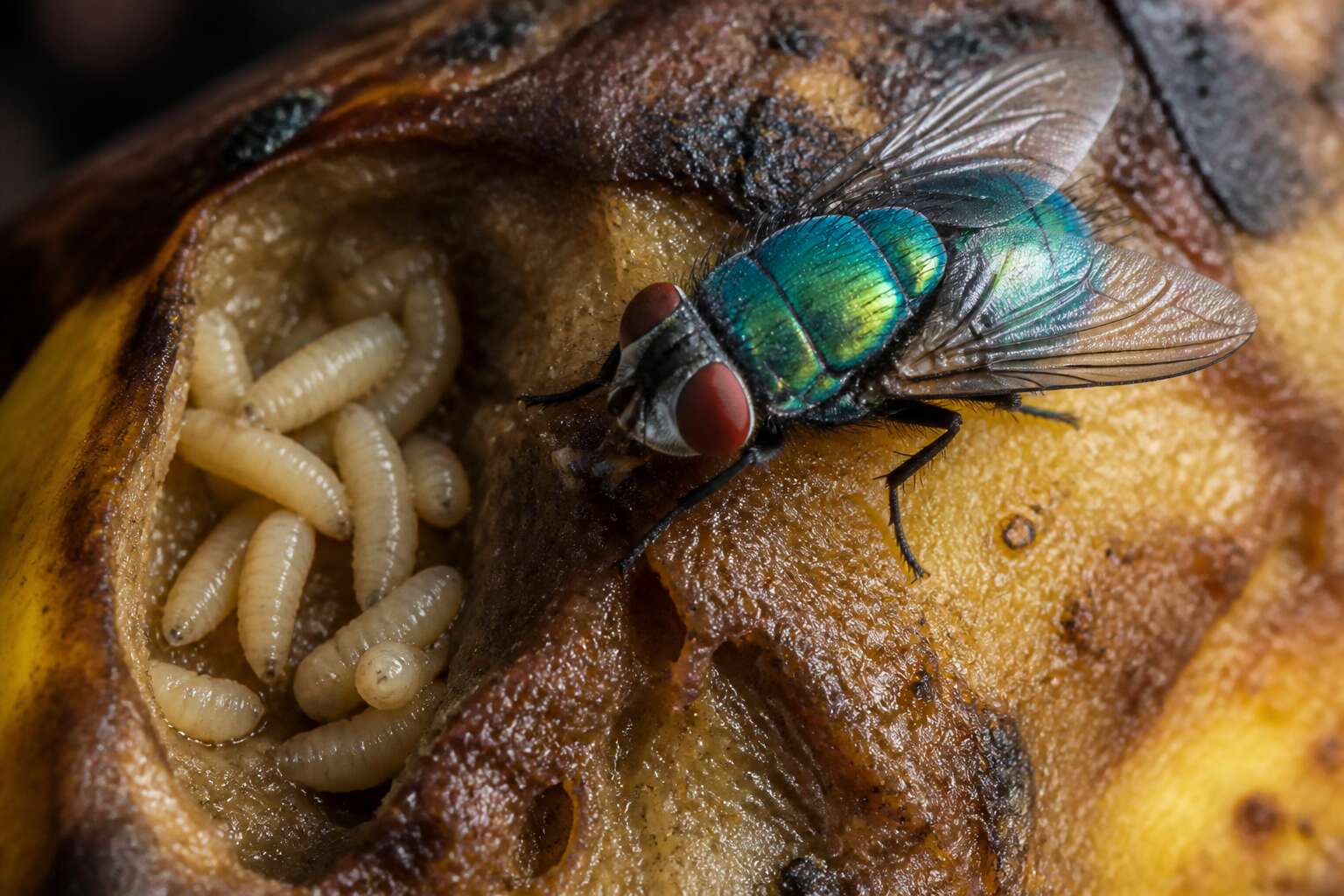
Understanding Fly Larvae and Maggots
Defining Fly Larvae and Their Lifecycle
Within minutes of death, fly larvae can colonise exposed tissue, a fact that unsettles even seasoned investigators. The phrase flies with worms captures a common misconception, because maggots are not worms at all; they are the larval stage of true flies. The lifecycle follows a relentless sequence:
- Egg
- First instar larva
- Second instar larva
- Third instar larva
- Pupa
- Adult
Each stage is temperature dependent, which is why forensic scientists measure larval length to estimate post-mortem intervals. In South African hospitals, sterile maggots are deliberately introduced to clean chronic wounds, a therapy that predates antibiotics but remains startlingly effective. Understanding this lifecycle transforms revulsion into respect: what we call flies with worms is simply a creature following its biological imperative. The transformation from egg to adult takes roughly seven to ten days under optimal conditions, though species variation is enormous.
Common Fly Species That Produce Maggots
One blow fly can deposit 300 eggs in a single sitting. That number explains why you rarely see just one maggot! In my experience, understanding fly larvae and maggots begins with identifying the common species behind the infestation. South Africa’s primary producers are blow flies, house flies, and flesh flies.
- Blow flies arrive first, often within minutes of exposure.
- House flies follow once the surface dries.
- Flesh flies give birth to live larvae, skipping the egg stage.
These differences matter because each species leaves distinct evidence. When people say flies with worms, they usually mean blow fly maggots. The term is technically wrong, but the reaction is understandable.
Environmental Conditions That Attract Flies
South Africa’s summer heat creates paradise for filth flies, though not for us! A single neglected rubbish bin can sustain maggots for weeks. Flies with worms thrive where warmth and moisture combine, and the Highveld’s January sun provides both without mercy.
The environmental checklist demands attention:
- Organic waste exposed beyond twelve hours
- Standing water or persistently damp soil
- Temperatures between 20 and 35 degrees Celsius
- Unsealed bins or open compost heaps
Each condition compounds the next. Waste collection delays, common across municipalities, give blow flies an early advantage. Once hatched, larvae wander in search of stable warmth and humidity. Too wet, they drown. Too dry, they desiccate. People hold their noses at a leaking bag and mutter about the maggots. The description misses technical accuracy, but arrives with perfect sincerity.
The Role of Maggots in Decomposition
A single blow fly deposits two hundred eggs into a wound or carcass, and each larva consumes enough tissue to transform flesh into soil within days. Maggots secrete proteolytic enzymes that liquefy proteins, predigesting organic matter for bacteria and fungi. This process, known as putrefaction, serves as nature’s reclamation project. The flies with worms become agents of renewal, converting death into nourishment for the Highveld’s earth. Scavengers depend on this unseen labour; vultures cannot reach the marrow between vertebrae, but larvae penetrate every recess.
Decomposition proceeds through distinct stages, each hosting different maggot species:
- Fresh stage, where initial enzymes begin breaking membranes
- Bloat stage, as gases expand and larvae accelerate protein breakdown
- Active decay, when maggot masses consume the bulk of soft tissue
- Dry remains, leaving bones and cartilage for slower organisms
Their feeding aerates decomposing matter, releasing nitrogen and phosphorus back into the soil. On rural farms and urban verges alike, maggot activity decides whether a fallen steer or discarded chicken returns to the cycle or lingers for months. Understanding this choreography reveals why persistent infestations signal an ecological imbalance worth addressing.
Identifying a Fly Larva Infestation
Visual Signs of Maggot Presence
One small patch of wriggling white specks can reveal an infestation numbering in the thousands. I have seen these colonies hidden in plain sight, tucked behind a bin or beneath a pet bowl. The visual signs are unmistakable once you know what to look for, though they are easy to dismiss. These creatures, which many people describe as flies with worms, appear as pale, legless larvae clustered in organic material. Their colour ranges from creamy white to a dull brown, and they move in a distinctive, coordinated wave that sets them apart from other household pests.
Several indicators reveal an active infestation:
– Clusters of tiny, writhing larvae near food waste or animal droppings
– Small, dark specks scattered around the area, which are larval droppings
– A faint, musty odour that strengthens as the colony grows
– Adult flies hovering close to cracks, bins, or pet waste
These signs confirm the reproductive cycle is well underway, and the population will expand rapidly if left undisturbed.
Distinguishing Fly Larvae From Other Pests
Not every wriggling creature in your bin is a maggot. South African homes host carpet beetle larvae, weevils, and pantry moth caterpillars that all look similar to flies with worms. True fly larvae have no legs, no visible head capsule, and a body that tapers to a blunt point. Beetle larvae carry six tiny legs near the front. Moth caterpillars show both legs and a defined head, which settles the identification swiftly.
Maggots also move differently. When disturbed, they ripple in a coordinated wave. Other larvae scatter in erratic directions, a quick test you can run without touching anything. The habitat offers another clue. Flies with worms prefer moist, protein rich waste like meat scraps or pet droppings. If your problem sits in dry flour or a wool jersey, you are likely housing a different pest entirely.
Common Infestation Areas in Homes and Gardens
The infested home rarely announces itself. The signs gather quietly in the damp seam beneath a sink, in the greasy hollow of a compost bin. I have learned to inspect these places when the air turns heavy. The true sight is unmistakable: a slow, coordinated ripple of flies with worms feeding in the waste.
Common infestation areas in South African homes and gardens follow a predictable pattern. They hold moisture and protein in equal measure.
- Underneath overflowing bird feeders
- In unsealed rubbish bins near the kitchen door
- Around pet enclosures where droppings accumulate
Check the shaded soil near vegetable patches, too. The larvae bury themselves just beneath the surface, where the rot persists.
Health Symptoms for Humans and Pets
One maggot can carry millions of bacteria on its surface. When these infestations appear indoors, the risk extends beyond the visible problem. Humans exposed to contaminated surfaces may develop skin infections, particularly where scratches or surgical wounds exist. Myiasis, the invasion of living tissue by larvae, occurs in South Africa more often than public health records suggest. In my experience, respiratory complaints and eye irritation follow prolonged exposure to heavy infestations.
Pets encounter more direct contact with larvae. Symptoms in dogs and cats include:
- Persistent scratching or biting at the skin
- Vomiting from ingesting contaminated food or water
- Unexplained lethargy and weight loss
These signs are frequently mistaken for routine allergies. The presence of flies with worms introduces a separate category of risk.
When to Seek Professional Help
Identifying an infestation requires attention to subtle cues. Larvae leave behind a fine, rust coloured dust as they migrate. A sweet, musty odour may cling to the air. Check the darkest corners of your home, especially near decaying organic material. The larvae themselves may appear as pale, segmented forms that writhe when disturbed.
When the presence of flies with worms persists despite thorough cleaning, professional help becomes necessary. I have seen infestations burrow into structural timber and contaminate water sources. If you observe larvae emerging from cracks in walls or ceilings, do not delay.
Signs that demand immediate intervention:
- Larvae present in food storage areas
- Infestation recurring after repeated cleaning
Professional pest control services in South Africa can address the source. Flies with worms will not vanish on their own. Act before the problem embeds itself deeper.
Health Risks Associated With Fly Larvae and Parasitic Worms
Understanding Myiasis and Its Types
I have seen what a neglected wound can invite. Myiasis occurs when fly larvae feed on living tissue, a truth that unsettles even seasoned entomologists. The tumbu fly, common in South Africa, deposits its eggs on damp clothing. When the eggs touch skin, they hatch and burrow beneath the surface. This is the reality behind the phrase flies with worms, where the worm is not a separate creature but the larval stage of the fly itself.
- Furuncular myiasis: larvae develop inside a single boil.
- Creeping myiasis: larvae tunnel through the skin.
- Wound myiasis: larvae invade open injuries.
- Intestinal myiasis: larvae are ingested and passed.
Nasopharyngeal myiasis colonises the nasal passages and can cause tissue destruction. Each form carries the risk of secondary bacterial infection. A fly carrying larvae is a vector, not a mere annoyance. Understanding myiasis and its types is the first step in recognising this threat.
Secondary Infections From Bacterial Contamination
A single maggot carries more than revulsion. The surface of fly larvae teems with bacteria, including Staphylococcus and Streptococcus species. When larvae crawl across an open wound, they transport these pathogens directly into tissue. The result is often a secondary infection more dangerous than the original injury.
The phrase flies with worms describes a visible infestation, but the unseen contamination matters more. Bacterial load from larvae can trigger sepsis, tissue necrosis, and antibiotic resistant complications. In South African clinics, wounds contaminated by fly larvae are a known pathway to hospital acquired bloodstream infections.
- Cellulitis spreading beyond the wound site
- Gas gangrene from Clostridium species
- Systemic infection leading to organ failure
Each of these conditions requires urgent medical intervention. Flies with worms near a compromised wound site should be treated as a medical emergency, not a nuisance.
Allergic Reactions and Toxins
When flies with worms linger near a living host, the body’s immune system confronts more than the visible movement. Maggot secretions contain proteolytic enzymes and foreign proteins. For certain individuals, these compounds provoke acute allergic reactions, including angioedema and bronchial constriction. Others develop contact dermatitis where larvae have touched skin.
Beyond allergens, fly larvae excrete ammonia and additional metabolic byproducts. These toxins irritate mucous membranes and cause localized tissue damage. Chronic exposure in heavily infested dwellings may lead to respiratory symptoms and persistent inflammation.
- Swelling around exposed areas
- Wheezing or shortness of breath
- Burning skin sensations
These responses demand attention, especially when such infestations appear indoors repeatedly. The hazard lies in repeated exposure rather than initial contact.
Diseases Transmitted by Flies and Larvae
In the dark corners of neglected kitchens, flies with worms carry more than decay. Their bodies transport microscopic eggs of parasitic nematodes. When these insects land on food or utensils, they deposit Strongyloides or Ascaris eggs onto surfaces. In South African homes, where warm climates accelerate proliferation, the risk of soil-transmitted helminth infections rises sharply.
- Roundworm infections from contaminated meals
- Hookworm larvae penetrating bare feet
- Trichinella transmission through fly contact with meat
Each pathway begins with a single fly. The larvae themselves can also ingest worm eggs and excrete infective stages, creating a cycle of contamination that spreads within living spaces. This transmission often goes unnoticed until abdominal pain or chronic fatigue emerges. Unlike visible maggots, these parasitic worms operate invisibly, long after the flies with worms have departed.
Prevention Techniques Against Fly and Maggot Infestations
Sanitation Practices to Deter Flies
In South Africa, the window between a stray scrap and a maggot crisis is shockingly narrow. Sanitation is the quiet art of refusing flies with worms a place to settle. It begins with the humble task of removing waste daily, not weekly, and scrubbing bins with hot water and vinegar to erase lingering scents. Compost heaps demand vigilance, as turning them regularly denies larvae the undisturbed moisture they crave. Wipe counters and sweep floors immediately; food residue attracts attention. For those keeping animals, immediate disposal of manure is non negotiable. The principles are few:
– Seal all rubbish bags before placing them outside
– Keep drains free of organic film with a stiff brush
– Move bins away from doors and windows
These deliberate acts form a barrier that flies with worms cannot easily cross.
Natural Repellents and Essential Oils
In South Africa, a single unguarded doorway can invite flies with worms into a kitchen. Scent offers a quieter defense. Essential oils do not kill the adult fly on contact; they disrupt the odor trails that guide it toward breeding grounds.
Lavender and eucalyptus oil, diluted and wiped across window frames, create a residual barrier. Peppermint works well near bins. Other oils belong in the same rotation:
- Citronella for patios
- Tea tree for dark corners
- Lemongrass for doorways
The oils evaporate in the highveld heat, so the barrier fades within days.
Herbs planted near entrances serve the same purpose. Rosemary and basil release oils when brushed against. These natural repellents reduce the need for chemical intervention.
Physical Barriers and Screening Methods
Physical barriers form the first line of defense against flies with worms entering a home. A gap beneath a door in Johannesburg or Durban is an invitation. Steel mesh with apertures smaller than 1.6 millimeters blocks most fly species while allowing airflow.
Window screening demands attention to detail. Tears along edges, loose corners, and rusted frames all undermine the barrier. Self-closing mechanisms on doors prevent the absentminded passage that grants flies with worms access to kitchens.
Consider these screening priorities:
- Ventilation openings in ceilings and roofs
- Pipe entry points through exterior walls
- Chimney flues and exhaust fans
- Utility meter boxes with external access
Each penetration point represents a potential route. Sealing them requires silicone, expanding foam, or replacement mesh, depending on the surface. The investment pays back in reduced fly pressure during summer months.
Proper Waste Management and Composting
Municipal reports across South Africa’s coastal cities indicate that over 70% of fly breeding sites trace back to organic waste handling. The connection between a poorly managed compost heap and a kitchen filled with flies with worms is direct, yet often ignored. Moist, layered organic material creates the exact thermal environment maggots require to develop from egg to pupae in under a week.
Proper waste management starts with containment. Bins should have tight-fitting lids and be stored away from direct sunlight, as heat accelerates larval development. Washing bins after collection removes the protein film that attracts gravid flies seeking oviposition sites. A clean bin is less of a target than a dirty one, plain and simple.
Composting requires a different mindset. When you turn a pile regularly and maintain a balanced carbon to nitrogen ratio, you promote thermophilic bacteria that raise internal temperatures above 55 degrees Celsius. That heat kills fly eggs before they hatch. A well-managed compost system is not a breeding ground, it is a sterilising unit.
– Keep meat scraps, dairy, and cooked food out of open compost heaps.
– Bury fresh green waste at least 15 centimetres below the surface.
– Use a closed compost bin with a secure base if you have limited space.
Each of these steps reduces the olfactory cues that draw flies to your property. An uncovered pile of rotting fruit is a signal beacon. Once flies arrive, they lay eggs in clusters of up to 150, and within 24 hours, those eggs become the larvae that will eventually crawl out in search of pupation sites. Breaking that cycle starts with denying them the initial landing spot.
Pet and Livestock Protection Measures
The caked manure in a cattle pen serves as a reservoir. During South Africa’s humid summers, that warmth hastens the emergence of flies with worms, the larvae burrowing into damp scabs and open hoof cracks. I have witnessed a calf’s restlessness spiral into systemic distress overnight.
Prevention for pets and livestock demands vigilance beyond general sanitation. Elevate feeding stations, rotate grazing zones to expose eggs to lethal UV rays, and treat every scratch with an astringent wash. The unaided eye misses the earliest signs, so establish a routine.
– Probe beneath tails and around ear bases daily.
– Replace soiled bedding with fresh, dry material.
– Isolate any animal showing persistent licking or stamping.
Stabling animals on well-drained ground denies the pest its crucial moist habitat, interrupting the development before pupation begins.
Seasonal Prevention Tips
Each season rewrites the rules of pest pressure. In South Africa, the first warm rains after a dry spell can trigger an explosive emergence of flies with worms, as dormant pupae synchronise their hatching with rising humidity. I have learned to treat seasonal transitions as critical windows rather than gradual changes. The shift from winter to summer demands a different vigilance than autumn’s cooling days, when fly activity slows but does not vanish entirely.
– Adjust inspection frequency according to temperature trends.
– Clear breeding sites before each seasonal change, not after.
– Monitor microclimates like shaded compost edges.
Observing how moisture patterns interact with animal movement offers a more reliable prediction than calendar dates alone. A single overlooked patch of decaying organic matter can sustain generations of larvae across multiple seasons, so the focus should remain on breaking the cycle at every conceivable stage.
Effective Treatment Options for Maggot Wounds and Infestations
Medical and Surgical Removal
In South Africa, delayed medical intervention for myiasis leads to surgical debridement, as flies with worms thrive in necrotic tissue. Effective treatment begins with maggot wound removal, where clinicians apply a topical anesthetic before extracting each larva with forceps. This step prevents tissue damage and reduces secondary bacterial contamination.
Systematic removal follows these steps:
- Administer local anesthesia to numb the affected area.
- Remove visible larvae using sterile forceps.
- Irrigate the wound with saline solution to flush out remnants.
- Prescribe broad spectrum antibiotics to counteract infection.
For infestations penetrating deeper bore structures, surgical debridement becomes necessary when flies with worms have burrowed into subcutaneous layers. Surgeons excise dead tissue along with embedded larvae, often using a scalpel or curette. Post operative care includes daily dressing changesand patient monitoring. Early surgical intervention preserves mobilityand prevents systemic complications. Severe cases may lead to amputation, but outcomes remain rare with timely treatment.
Home Care and Cleaning Protocols
After surgical removal, home care determines whether the cycle ends or starts anew. I have found that most reinfestations stem from forgotten corners, not the wound itself. Scrub bedding, floors, and pet areas daily.
- Wash all fabrics in hot water with a disinfectant.
- Vacuum carpets and dispose of the bag immediately.
- Apply a topical fly repellent approved for use near healing skin.
Keep wounds covered with sterile gauze and change dressings twice daily. Flies with worms are drawn to residual odors, so use an enzymatic cleaner to break down organic stains. This vigilance prevents the need for repeat visits. Flies with worms will exploit any lapse in your routine.
Prescription Medications and Follow-Up
Even a successful debridement can be undone in a week without the right medication. In South African clinics, myiasis treatment usually involves prescription antibiotics and an antiparasitic such as ivermectin. The doctor may also apply a topical agent to draw out larvae that remain embedded. The follow-up schedule matters as much as the drug. Flies with worms will return if the wound stays uncovered, so a wound must be rechecked at day three and day seven to confirm no new eggs have hatched.
The medication is only half the battle. A swab taken during the second visit will reveal whether bacterial contamination has spread under the dressing. If it has, a stronger antibiotic is prescribed. I have seen patients assume the treatment failed when they had simply stopped the course early. The skin around the wound also needs a daily check for discolouration, and any moist patch should be cleaned with an antiseptic approved for healing tissue.
Follow-up visits typically cover:
– A visual check for new larvae
– A wound swab for bacterial culture
– A review of the medication schedule
That pattern breaks the cycle.


0 Comments