Identifying Common House Flies and Their Breeding Grounds
Recognizing Fruit Flies vs. House Flies
Finding a sudden swarm of tiny aerialists in your kitchen is never a pleasant surprise, which is why understanding how to get rid of flies in your house starts with identifying your adversary. What a difference that makes!
The common house fly is a brutish sort, often found near decaying organic matter, garbage bins, or pet waste. Their breeding grounds are damp, dark corners where filth accumulates.
Recognizing the difference is crucial, as fruit flies are drawn to fermenting produce, not general waste. Consider these distinguishing traits:
- House flies are larger with dull grey bodies.
- Fruit flies are minuscule, reddish-brown, and hover erratically.
- House flies breed in soiled material, while fruit flies prefer sugary spills.
I have found that tracing the buzzing often reveals a simple oversight. When you understand these differences, figuring out how to get rid of flies in your house becomes precise observation rather than frantic swatting. That distinction dictates where to focus your attention.
Where Flies Lay Eggs in Your Home
House flies are not random wanderers. They are creatures of habit, and their habits revolve around moisture and decay. In South African homes, the warm climate accelerates decomposition, making even the smallest crumb a potential nursery.
Where flies lay eggs in your home is often hidden. Look for organic matter that stays wet for more than a day. Common sites include:
– Underneath rubbish bin liners
– Inside pet food bowls left with residue
– In drain traps coated with slime
– Behind appliances where spills go unnoticed
These locations provide the warmth and protein needed for maggot development. A female house fly can deposit several batches of eggs in one afternoon, and each batch hatches within hours. Understanding this lifecycle is the first real step in learning how to get rid of flies in your house. Once you know where they breed, you stop guessing.
Why Kitchens and Trash Areas Are Prime Targets
House flies are synanthropic creatures, sharing our homes with an intimacy we rarely invite. In South Africa, the kitchen becomes their citadel. Afternoon heat lingers on countertops, and cooking oil clings to every surface. Trash areas offer a permanent feast.
Consider what a fly perceives in your kitchen: the sugars left in a bottle, the grease film on a stove knob, the damp sponge in the sink. These are not messes. They are landmarks.
- The gap between counter and wall, where juice spills settle
- The underside of the trash bin lid, where condensation collects
- The recycling crate with sticky beer bottles
Understanding how to get rid of flies in your house begins with recognising why these zones dominate. The kitchen is a thermal refuge, holding warmth overnight when the outdoors cannot. Trash areas supply protein and fermentation, a nursery disguised as neglect.
How to Spot Early Signs of an Infestation
Common house flies breed in damp organic material. The female lays up to 150 eggs in rotting food, pet waste, or the sludge under a bin liner. In South African kitchens, that residue behind the fridge often goes unnoticed. These are the breeding grounds you must inspect.
Early signs appear before the adults swarm. Watch for these clues:
- Tiny white eggs clustered in crevices.
- Dark fly specks on countertops.
- Maggots in the trash bin base.
A persistent buzz near windows confirms larvae have matured. Clean those spots immediately. To stop the cycle, you must understand how to get rid of flies in your house at the source.
Prevention Strategies to Keep Flies Out
Sealing Entry Points and Repairing Screens
Every summer, South African households battle persistent flies. Yet the most effective approach to how to get rid of flies in your house begins before they enter. Prevention hinges on denying access. Start by inspecting your home’s exterior for gaps around pipes, vents, and doors. Use silicone caulk to seal these openings. For windows and doors that remain open, consider installing weather stripping.
To systematically address entry points, follow these steps:
– Check door sweeps for damage and replace them as needed.
– Fit fly screens on all openable windows.
– Ensure vents have fine mesh covers.
Repairing screens is equally critical. A single tear offers an open invitation. Patch small holes with a screen repair kit or replace torn sections entirely. Also, inspect ceiling gaps and roof eaves where flies squeeze through. By closing every route, you stop the cycle before it starts. This proactive barrier works alongside any other method you employ, making your home less hospitable and far easier to keep fly-free.
Proper Food Storage and Waste Management
Dealing with a fly infestation starts with understanding that prevention is easier than removal. The most effective method for how to get rid of flies in your house is to stop them from entering in the first place. Flies enter through any small gap, and they breed in moist organic material. Your primary goal is to locate and seal these entry points.
Begin by examining your home’s exterior for any cracks or gaps. Check the areas where utility lines, pipes, and cables enter the building. Use a silicone-based caulk to seal these openings. Pay close attention to window and door frames. A small gap under a door is an open invitation. Install weather stripping along the bottom of doors to create a tight seal.
Inspect all window screens for tears or holes. Any damage, no matter how small, is a potential entry point. Repair any tears you find, or replace the screen mesh entirely. For a larger or recurring problem, applying a residual insecticide spray around the exterior of these entry points can provide an additional barrier. This treatment targets flies before they have a chance to come inside.
Your kitchen and trash areas are the most attractive locations for flies. Flies are drawn to food waste and moisture. Ensure all trash bins have tight-fitting lids and are emptied regularly. Clean up spills immediately to remove food sources. Store fruits and vegetables properly, and do not leave pet food sitting out for long periods.
For flies already inside, a simple and effective method is the vinegar trap. Pour apple cider vinegar into a jar and add a few drops of dish soap. Cover the jar with plastic wrap and secure it with a rubber band. Poke a few small holes in the top. The vinegar attracts the flies, and the soap breaks the surface tension so they drown. Another direct method is using a fly swatter for individual pests.
A vacuum cleaner is a highly effective tool for catching flies, especially those near windows or ceilings. The suction pulls them in without creating a mess. It is a quick way to remove many flies at once. This method works well for areas where they congregate.
To prevent them from breeding, address any standing water sources both inside and out. Check for leaky pipes under sinks and ensure your gutters are clear. Flies breed in damp, decaying material, so removing these conditions is critical. A consistent approach to sanitation and sealing will reduce your home’s appeal to flies.
After you have sealed the primary entry points and cleaned potential breeding sites, you can take steps for more permanent control. These efforts, combined with the traps and removal methods, form a complete strategy. For a serious infestation, you can set up commercial fly traps or bait stations outside the home to intercept them before they reach your doors.
You should regularly check the seals you have created for wear and tear. Replace weather stripping and repair screens as needed. By consistently maintaining these barriers, you keep your house less hospitable and far easier to keep fly-free. This proactive approach ensures that new generations of flies cannot find a way in. Following these steps will lead to a noticeable reduction in fly activity.
Maintaining Cleanliness in High-Risk Zones
A single fly can tag your kitchen counter with a hundred invisible germs. That is not an exaggeration! I have seen a swarm materialize from a neglected mop bucket. The drain under the sink, the rubber seal of the fridge, the dog’s water bowl. These moist, grimy pockets are fly nurseries. Attack them with boiling water and a scrub brush. Rinse the pet bowl every single day. Flip it upside down when empty. Dry the dish rack after use. Leave no damp surface for the flies to exploit.
This is the gritty side of how to get rid of flies in your house. It is not glamorous. It is, however, the difference between an occasional buzz and a full-blown infestation. Stay relentless. Your reward is a kitchen that repels filth instead of inviting it.
Using Natural Repellents as a Barrier
After sealing entry points and maintaining cleanliness, natural repellents form a second line of defense. Herbs like basil, mint, and lavender emit scents that flies detest. Place pots near doorways or windows to create a fragrant barrier. Eucalyptus oil mixed with water and a drop of dish soap works as a spray for frames and sills. Three natural barriers work well: first, citronella candles for patios; second, lemongrass oil for diffusers; third, apple cider vinegar traps near fruit bowls. The key to how to get rid of flies in your house lies in consistent application. Reapply sprays after rain or cleaning. Rotate your chosen repellents to prevent flies from adapting. A simple routine works best: check potential entry points each morning, refresh any dried herbs weekly, and wipe down surfaces with a vinegar and water solution. These steps form an invisible shield that keeps the interior unwelcoming without harsh chemicals. Remember that natural does not mean one-time. Persistence matters more than intensity.
Landscaping Tips to Deter Outdoor Flies
Flies breed outside before they ever enter your home. In South Africa, warm, wet conditions accelerate their life cycle. The most effective way to learn how to get rid of flies in your house starts with making your yard unattractive to them.
Keep compost bins sealed and turn them regularly. Remove pet waste promptly. Trim overgrown shrubs and grass, as flies rest in shaded, damp areas. Ensure drains and gutters flow freely; standing water is a breeding ground.
- Place outdoor bins away from doorways.
- Clean up fallen fruit under trees.
- Use fine mesh on rain barrels.
These measures reduce fly populations before they approach your windows. Consistent outdoor maintenance directly supports indoor control. It is simpler to prevent entry than to chase flies inside. Focus outside first; the indoor problem shrinks naturally. That is the practical secret behind how to get rid of flies in your house.
Effective DIY Traps and Remedies
Apple Cider Vinegar Trap for Fruit Flies
Apple cider vinegar trap exploits a simple biological drive. Fruit flies cannot resist the scent of fermentation. Pour a shallow layer into a jar. Add a single drop of dish soap to reduce surface tension. The flies land and drown.
This remedy answers the persistent question of how to get rid of flies in your house without toxic chemicals. Refresh the vinegar every three days. Stronger vinegar produces better results.
- Place traps beside ripening fruit
- Use a paper funnel for easier entry
- Empty the jar before it overfills
Check the trap each morning. The body count tells you whether the problem is shrinking. Move the trap closer to the source if flies persist.
Dish Soap and Water Trap for Common Flies
The dish soap and water trap is simple, and it works. House flies do not plan; they follow scent and light. Fill a shallow bowl with warm water and add a few drops of dish soap. The soap acts as a surfactant, collapsing the surface tension. Flies land, slip, and drown. I have used this in my farmhouse kitchen for years!
Place the bowl in a spot that sees frequent fly traffic:
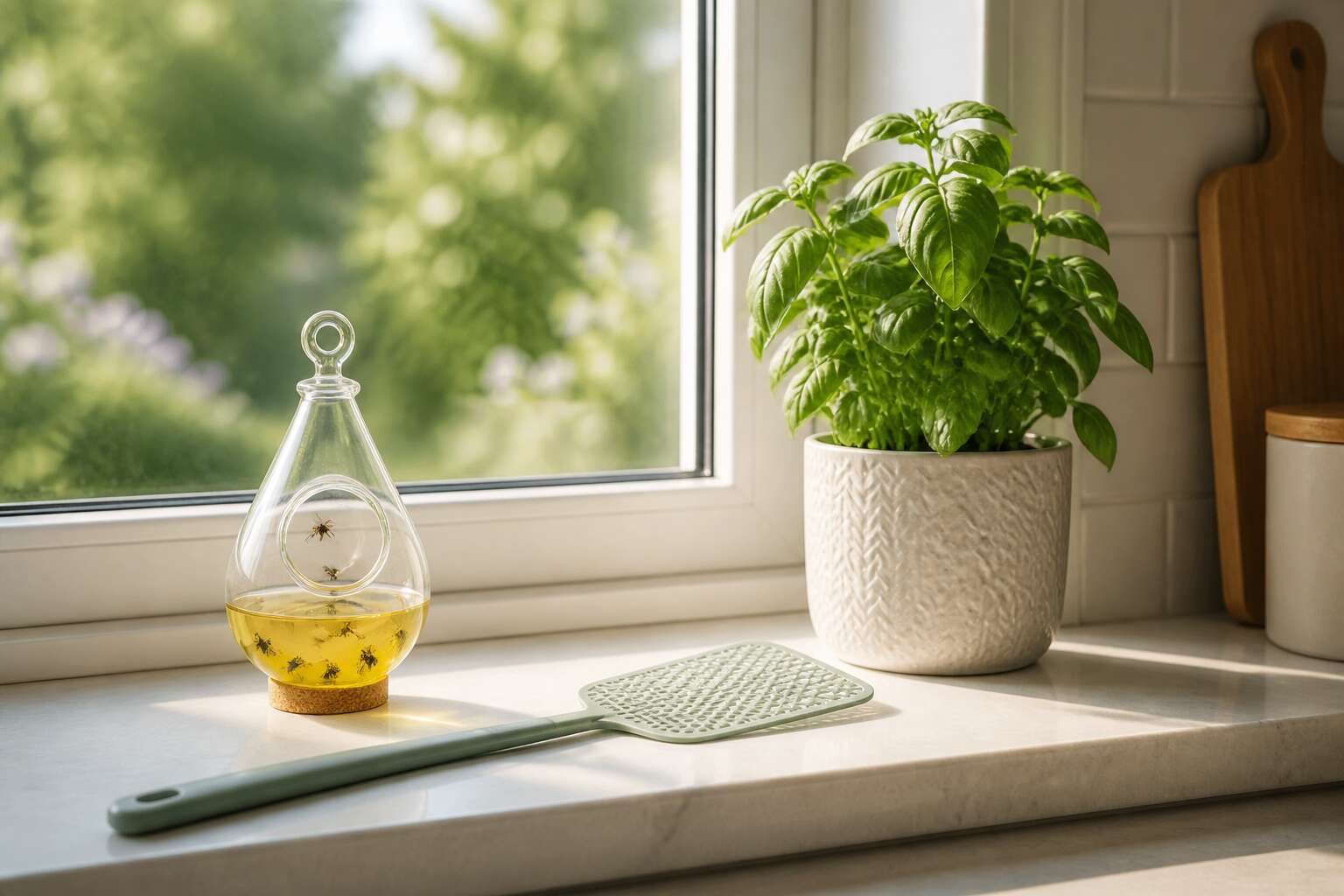
- on a sunny windowsill
- beside the rubbish bin
- near a pet food bowl
Check the trap each morning. Skim off the dead flies with a fork and refresh the water every two days. If the catch slows, add a small piece of raw meat to the water. For anyone searching for how to get rid of flies in your house, this trap is a dependable first step.
Herbal Sachets and Essential Oil Sprays
A fly’s world is ruled by scent, and you can turn that instinct against them without a single chemical. Herbs like lavender, mint, and bay leaf hold volatile oils that flies find deeply offensive. Crumble fresh leaves to release those compounds and place them in small muslin sachets. Hang these near door frames, above the kitchen counter, or in the pantry. You must refresh the sachets every week. Once the aroma fades, so does the deterrent effect, so treat this as a rotating chore, not a set and forget solution.
Essential oil sprays offer a more immediate, targeted barrier. Combine ten drops of eucalyptus, citronella, or tea tree oil with a cup of water and a teaspoon of rubbing alcohol to help the oil disperse. Shake the mixture vigorously before each use. Spray this directly onto window screens, around the rubbish bin, and along the thresholds where flies enter. The spray creates an invisible zone that discourages them from crossing. It works best when reapplied after cleaning or rain. I keep a fresh batch in a glass bottle by my back door in the Karoo, and it has saved many a Sunday braai from a swarm.
– Place sachets near fruit bowls and compost bins.
– Spray oil mixtures on exterior walls around doors.
– Reapply both after any surface cleaning.
The Classic Flypaper and Sticky Traps
Flypaper looks old fashioned, but it still works. The sticky surface catches flies mid flight, and the scent lure pulls them away from your food. I hang a strip near my kitchen window and another beside the rubbish bin. Within a day, the paper dots with fruit flies and house flies alike.
- Above window sills.
- Near indoor plants or compost pails.
- Along ceiling corners in high traffic rooms.
Replace the strips every two weeks. A dusty strip loses its tack. This method answers how to get rid of flies in your house without sprays or electric gadgets. It is quiet, cheap, and effective.
Using Household Ingredients to Kill Larvae
The larvae breed in the dark, damp pockets where food scraps decay. A kettle of boiling water is your first weapon. Pour it directly into drains and along the edges of your rubbish bin. The heat collapses their soft bodies instantly. I have used this method after every summer storm, when the air grows heavy and flies multiply.
For a slower poison, combine vinegar and salt. The vinegar breaks down the organic sludge they feed on, while the salt drains their moisture. Spread this mixture over compost pails or any damp cloth left behind. Let it sit for an hour, then scrub.
- Boiling water for instant kill
- Vinegar and salt paste for hidden crevices
- Dish soap mixed into warm water for a surface rinse
These remedies target the larvae, not the adults. That matters because each larva becomes another fly. So the next time you ask how to get rid of flies in your house, remember to look low. The answer crawls in the shadows beneath your furniture.
When to Use UV Light Traps
Once the larvae are handled, the adults demand attention. My go-to remedy is a bottle trap. Cut a plastic bottle in half, invert the top into the base, and add a spoon of Marmite dissolved in warm water. The yeast smell pulls them through the funnel, and the narrow neck keeps them there.
Other baits work too:
- A shallow dish of stale beer near the back door
- A jar of overripe fruit with a paper cone inserted
- A cloth soaked in sweetened milk, rinsed daily
UV light traps deserve consideration, but only in the right location. They perform best in dark rooms such as garages and storerooms, where no natural light competes for their attention. In a bright kitchen, the lamp becomes a useless ornament. Understanding how to get rid of flies in your house means watching where they gather and placing the right tool in that exact spot.
Chemical Solutions and Professional Help
Choosing Safe Insecticides for Indoor Use
Many homeowners reach for the nearest aerosol when they need to know how to get rid of flies in your house. That impulse can backfire. Indoor insecticide use demands care, especially in kitchens and rooms where children play. The wrong product may leave residues on surfaces or irritate sensitive lungs.
Before buying a spray, read the label for active ingredients. Pyrethrin and permethrin are common in household formulas, but they affect cats and fish. Choose a product labeled for indoor use and specifically for flying insects. Look for these features:
– A low odour formula
– A non-staining propellant
– A nozzle that targets flying insects
If the infestation persists after two weeks of chemical application, call a registered pest control professional. They can identify the breeding source and treat it directly. A professional assessment often saves money and reduces repeated exposure to chemicals. Your health and your home’s safety come first when you tackle how to get rid of flies in your house.
When to Call a Pest Control Service
Chemical sprays offer a quick fix, but they rarely eliminate the source of a fly infestation. If you have tried multiple applications and the flies return within days, it is time to consider professional intervention. Pest control experts use targeted treatments that reach breeding sites hidden in drains, walls, or under floors. They also identify entry points that you might have missed. How to get rid of flies in your house becomes a systematic process rather than a trial-and-error task.
- Large numbers of flies despite regular cleaning
- Recurring swarms after spraying
- Potential health risks such as contaminated food
Call a registered service if you notice any of these signs. Professionals assess the extent of the problem and apply safe, long-lasting solutions. Their expertise saves you time and prevents the problem from worsening. When home remedies fail, professional help is the responsible next step.
Comparing Foggers, Sprays, and Baits
When learning how to get rid of flies in your house, chemical options come down to three main tools: sprays, foggers, and baits. Each serves a different purpose. Sprays deliver immediate knockdown but offer little residual protection. Foggers release a mist that reaches hidden crevices, though they require you to leave the room. Baits attract flies to a poison source, which can reduce breeding populations over time.
Compare these options:
– Sprays: best for visible flies on surfaces.
– Foggers: suited for heavy infestations but need careful prep.
– Baits: slower acting, yet ideal for targeting larvae.
If these products fail to control the problem, professional pest control is the safer route. Experts locate breeding sites and apply treatments unavailable to the public. Persistent fly activity after repeated spraying signals a deeper issue. Calling a service saves time and limits health risks. Ultimately, the key to how to get rid of flies in your house is combining chemical methods with proper sanitation. But when the infestation overwhelms your efforts, a professional provides the most dependable solution.
Long-Term Maintenance and Seasonal Tips
Creating a Weekly Fly-Proofing Routine
Summer in South Africa means flies treat your home like a holiday resort. A weekly fly-proofing routine makes all the difference when you are figuring out how to get rid of flies in your house. Call it a Saturday morning ritual or a Tuesday evening chore, the key is consistency.
- Inspect all door thresholds and window seals for gaps.
- Empty and rinse bins before the heat amplifies odours.
- Check compost containers for larvae activity.
Seasonal shifts change fly behaviour. In wetter months, breeding slows, but adults seek warm indoor spots. Adjust your routine accordingly. A dedicated weekly check ensures you stay ahead of the lifecycle, which is your real enemy.
Managing Flies in Summer and Warm Climates
In Durban’s humid summers, fly pressure peaks in December. By February, populations can double weekly. Long-term control of how to get rid of flies in your house means adapting your approach as the season shifts.
A female house fly lays up to 500 eggs. In heat, those eggs hatch within a day. Permanent solutions target breeding sites.
For warm climates, these practices hold:
- Check outdoor drains and gutters weekly for organic sludge
- Keep compost heaps turned and covered with dry material
- Move pet food bowls away from doorways during peak hours
Habits matter most in subtropical regions like Mpumalanga and the Cape coast. Heat accelerates every stage of development. What works in autumn fails in a January heatwave.
As temperatures climb, shift control toward prevention. Spraying adults is temporary. Removing moisture and organic matter is permanent. In warm climates, this is how to get rid of flies in your house.
Preventing Reinfestation After Eradication
Once the last fly is gone, the real work begins. How to get rid of flies in your house for the long term is about routine, not reaction. I recommend a weekly sweep of potential breeding areas. Check trash bins, pet bowls, and plant saucers. Seasonal shifts also demand attention. In warm climates like South Africa, fly populations surge in December and January. Tighten your schedule during those months. For example, empty compost bins more often. Here is a short list to guide your maintenance:
- Inspect all screens for tears and gaps.
- Clean drains with boiling water every two weeks.
- Move outdoor lights away from entry doors.
- Keep ripe fruit in the refrigerator.
These simple steps prevent reinfestation. Remember, a clean home is your best defense.
Monitoring with Smart Devices and Traps
A smart trap does more than catch flies. It records every capture and sends the data to your phone, transforming pest control into a measurable routine. In South African summers, when fly activity peaks during December and January, this data exposes patterns you would otherwise miss.
Start with one sensor near your kitchen bin. Monitor alerts for two weeks. If captures increase during evening hours, you have found an entry window. Adjust your defence accordingly.
Smart devices also inform seasonal planning. They track humidity and temperature shifts that trigger fly breeding. Use those readings to time deep cleaning sessions effectively.
- Place a smart trap at the busiest entry point.
- Check its companion app daily for activity spikes.
- Clean and reset the trap weekly.
Knowing how to get rid of flies in your house becomes simpler when you measure the problem instead of guessing.


0 Comments