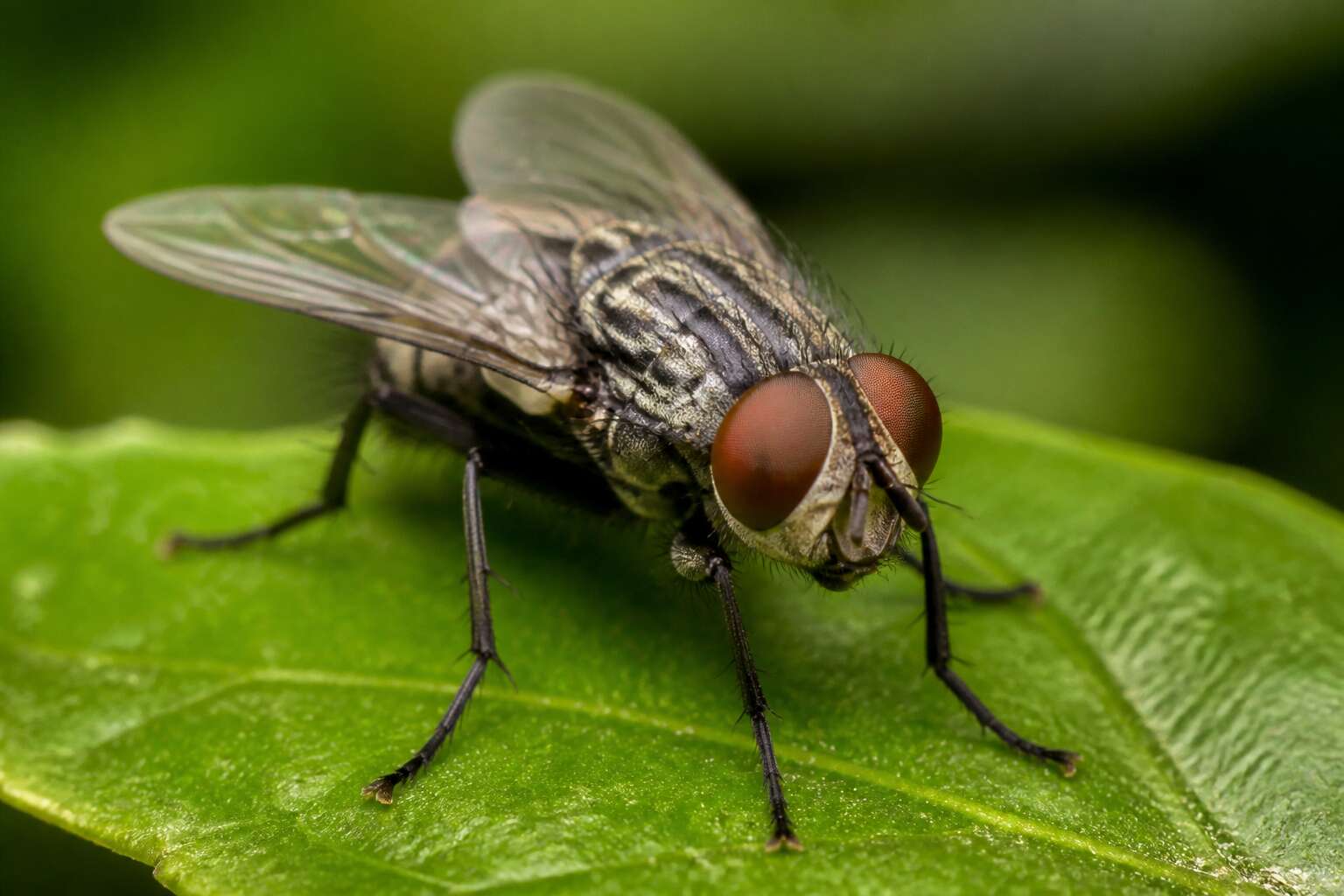
Understanding the Fly Life Cycle
Egg Stage: Where Flies Begin
A single female house fly can deposit up to 500 eggs in one batch, and she may do this five or six times. That is a staggering fidelity to a purpose we seldom stop to consider. The egg stage lasts only eight to twenty-four hours under warm South African conditions, yet those hours determine everything that follows.
Flies begin as pale, elongated capsules, typically laid in moist, decaying organic matter. Manure, compost heaps, unsecured refuse. The female chooses these sites with unerring instinct. Temperature dictates the speed of embryonic development. Cooler weather slows it; heat accelerates it almost violently.
What makes this stage quietly unsettling is the mathematics. One female, five hundred eggs, multiple cycles. Flies do not stumble into abundance; they are built for it. The entire structure of a fly infestation, the maddening buzzing in a Johannesburg summer kitchen, starts here, invisible and patient.
Larva Stage: The Maggot Phase
Out of the egg crawls the maggot, and the larval phase begins with appetite. A larva of the house fly is a pale, legless grub that feeds without pause on the material around it. It secretes digestive enzymes to break down solid waste into a liquid meal. Warmth accelerates every step. In South Africa’s summer heat, a maggot can complete its growth in under a week.
Three molts mark the progression to maturity. Each instar is bigger, hungrier, and closer to pupation. Maggots display a practical aversion to light, clustering deep within their food source. Consider these features:
- Maggots grow from roughly two millimetres to twelve.
- They consume organic waste and convert it into protein.
- They disperse from the food prior to forming a puparium.
This stage ends when the maggot stops feeding and seeks a dry, dark place to transform. Flies depend on this hidden, short period to complete their development.
Pupa Stage: Transformation and Development
Inside the puparium, the maggot’s body breaks down into a biological slurry. This is the most guarded secret of how flies develop. In South Africa, dry winter months slow the process, but summer heat can finish it in days.
- The larval skin hardens into a barrel shaped shell.
- Internal tissues reorganise into legs, wings, and eyes.
- Respiration shifts to breathing tubes that pierce the shell.
When the transformation ends, the adult fly inflates a sac on its head to crack the puparium open. It emerges with soft wings and a pale body, then pumps fluid into its veins to harden. Within hours, the new generation of flies is ready to mate. The pupa stage is the hidden foundation of the entire fly life cycle.
Adult Stage: Emergence and Reproduction
A single pair of flies can yield a lineage of millions within a season. That arithmetic drives everything. Once the adult breaks out of its puparium, it must find a mate quickly. Its first hour is spent hardening its wings and cuticle, a process that leaves it vulnerable.
Courtship is brief! Males scout, females assess, and mating often lasts seconds.
- Males perform a vibrating wing display to signal fitness.
- Females release chemical pheromones when receptive.
- Some species mate once, others repeatedly.
After mating, the female searches for decaying organic material to lay eggs. In South Africa, warm weather shortens this interval. A single generation in Gauteng can complete in under two weeks. Adult flies live only a few weeks at most, yet their fecundity maintains the population.
Common Fly Species and Their Features
Housefly: The Ubiquitous Pest
A single housefly can carry more than a million bacteria on its body. These flies thrive in urban and rural settings across South Africa. Their compound eyes provide a nearly 360-degree view of danger. Sponging mouthparts allow them to feed on liquids by dissolving solids with saliva. Unlike other species, houseflies rely on rapid flight and quick reflexes to survive.
Perhaps more interesting: they taste with their feet. When a housefly lands on your counter, it is sampling the surface. Here are a few key traits:
- Their wings beat roughly 200 times per second.
- They are attracted to decaying organic matter.
- They can spread typhoid and cholera.
Recognizing these features helps explain why houseflies are the ubiquitous pest we face daily.
Fruit Fly: Tiny but Troublesome
The fruit fly, often introduced to your kitchen on the back of a single ripe banana, operates on a scale that feels almost intimate. While the housefly dominates the rubbish bin, these tiny insects, sometimes called vinegar flies, take over the fruit bowl with a quiet persistence. A single female can lay hundreds of eggs, and within a week, your countertop becomes a launching pad for a new generation.
What makes them particularly troublesome is their attraction to the fermentation process. We see overripe fruit, but they smell a breeding ground. Their life cycle is so rapid that an infestation seems to appear overnight.
– They are particularly drawn to yeast and fermenting sugars.
– Their small size allows them to penetrate window screens and door seals.
– In South Africa, their presence peaks in the warmer months when fresh produce is abundant.
We often overlook how they hover in a seemingly erratic pattern, a defensive tactic against swatting. That erratic flight path is a complex survival mechanism. When you spot one landing on a grape, it is not just feeding; it is likely laying eggs in the broken skin. They are a prime example of how a household pest adapts to our habits of buying fruit in bulk and storing it on open counters. Their persistence is a testament to their simple biological drive, making them the prime example of a common fly species we encounter daily.
Blowfly: The Decomposer
Metallic blue and green blowflies arrive before the housefly, often within minutes of an animal’s death. They detect a fresh carcass using chemoreceptors on their antennae. In South Africa, these flies are essential to the decomposition cycle, returning nutrients to the soil.
Look for these features:
- Metallic blue or green sheen on the thorax and abdomen
- A loud, low-pitched buzz during flight
- Preferences for fresh carcasses over rotting material
A female blowfly can lay up to 200 eggs in a single batch, usually in a wound or natural opening. The larvae that hatch consume soft tissue and secrete enzymes that accelerate decay. Forensic entomologists study these flies to estimate time of death. Their development follows a precise timetable, and the presence of a particular life stage tells an investigator how long a body has been undiscovered. That reliability matters.
Horsefly: The Biting Menace
Horseflies in South Africa are not your average nuisance. These robust insects pursue warm-blooded hosts with a persistence that feels personal. The females possess scissor-like mouthparts that slice through skin to draw blood, a feeding strategy that sets them apart from most other flies.
I have watched horses in the Karoo twitch and stamp against these attackers, and the animals’ distress is understandable. A single female horsefly can drain a surprising amount of blood in one sitting. Their bite stings sharply and often itches for days afterward!
Here is how to spot them:
- Large eyes with iridescent bands
- Stocky, powerful bodies
- Clear wings marked with dark patterns
- Relentless pursuit of moving targets
Horseflies breed near water and damp soil, so farms and reserves provide ideal habitat. They are most active on hot summer days and will chase a target across considerable distances. Male horseflies feed on nectar, but the females’ blood requirement drives their aggression toward people and livestock.
Deer Fly: The Woodland Irritant
The drone of a deer fly is a sound that quickens the pulse of anyone who spends time in South Africa’s bushveld. Unlike the direct assault of a horsefly, these insects employ a more stealthy approach, often targeting the neck and shoulders with a silent, stealthy arrival. The females are relentless biters, and their serrated mandibles create a wound that feels disproportionate to their size.
Deer flies are smaller than horseflies but share that same robust build and love for warm blood. You can identify them by their distinctive, mottled wings, which they hold in a V-shape when at rest. Their eyes are often a brilliant green or gold, a striking feature that stands out against their darker bodies. They are particularly active during the humid months, and they seem to favour the edges of forests and water sources.
For those working or hiking in these areas, the nuisance is considerable.
– They are attracted to movement and carbon dioxide.
– They are persistent, often circling a host before landing.
– Their bite can cause a sharp, burning sensation.
These flies are not merely a summer annoyance; their presence dictates the routines of both people and wildlife. Antelope in the reserves constantly flick their tails and twitch their hides to dislodge these pests. The deer fly’s persistence is a reminder of the complex web of life where every creature plays a role, even if that role involves being a persistent annoyance to larger animals. They thrive in the same damp, warm conditions that suit many other flies, but their hunting strategy sets them apart. The bite is a distinct, sharp pain that lingers far longer than the insect’s brief visit.
The Role of Flies in the Ecosystem
Pollination: Unsung Contributors
Flies pollinate over two hundred crop varieties worldwide. In South Africa’s game reserves, they work the wild flowers quietly, overshadowed by honeybees, yet essential to the landscape. The carrion flower, with its foul odor, depends entirely on these winged visitors to reproduce. Mango orchards in Limpopo also benefit from their labor during flowering season.
The crops that rely on fly pollination in South Africa include:
- Mangoes
- Cashews
- Onions
- Citrus fruits
They carry pollen on their bodies as they move from bloom to bloom. When bee colonies struggle, these insects step forward as dependable pollinators.
Decomposition: Nature’s Cleanup Crew
When a springbok collapses on the Kalahari sand, the first responders are often flies. These necrophagous insects locate carrion within minutes, and their activity accelerates the return of nitrogen and phosphorus to poor soils. Without them, the veld would stagnate under layers of dead tissue.
Flies also process a wide range of organic waste. Their saprophagous habits reduce breeding grounds for pathogens and recycle nutrients back into the food web. This includes:
- Dung from livestock and wildlife
- Fallen fruit and decaying crops
- Animal carcasses at all stages
In South Africa’s game reserves and farmlands, this hidden labour keeps the system balanced. A carcass can be reduced to bone in a matter of days, a feat no other scavenger matches. That is efficiency worth respecting!
Food Source: Vital for Other Wildlife
A brood of five swallow chicks can consume over three hundred flies in a single day. Multiply that by every breeding pair across South Africa, and the scale of this food source becomes undeniable. From the Kalahari dunes to the coastal thickets, these insects support a network of hunters that most people never notice.
Chameleons fire their tongues at them with precision. Young fish and dragonfly nymphs feed on their larvae in still ponds. Spiders capture adults in webs or mid-air leaps. Few creatures refuse an easy meal!
- Ground beetles hunt fly eggs and maggots in dung and soil
- Frogs and toads snap up adults at dusk
- Dwarf mongooses turn over dung to find larvae
Each of these predators, in turn, becomes prey. Flies are a first link in a food chain that reaches up to eagles and leopards. When fly numbers falter, the animals that eat them falter as well.
Effective Fly Control Methods
Prevention Strategies: Eliminating Breeding Grounds
By the time summer arrives in South Africa, every pile of forgotten fruit and each damp corner becomes a five star restaurant for the local fly population. These insects are connoisseurs of decay, and your compost heap is their personal buffet. Winning the war against them requires a shift in thinking. You do not fight the adult buzzing around your braai; you starve the next generation before it ever gets wings. The secret lies in relentless denial of their nursery spaces.
Start with a forensic audit of your property. Anything that holds moisture and organic matter is a potential maternity ward for flies. This includes the obvious culprits like pet waste and overflowing bins, but also the sneaky ones like a clogged gutter teeming with wet leaves or a saucer under a pot plant holding stagnant water. We once found a thriving metropolis of maggots in a forgotten bag of potatoes at the back of a pantry. It was a humbling experience.
Your defense strategy revolves around a simple principle: refuse, deny, and eliminate.
– Manage all refuse in sealed bins with tight-fitting lids, and wash those bins out weekly.
– Collect and remove pet droppings from your yard daily, as they are prime real estate for egg laying.
– Clear any standing water and ensure your drain gutters are free of debris.
– Compost heaps should be turned regularly to generate heat, which discourages larval development.
The most effective method is simply removing the habitat they crave. A clean environment is a boring environment for a fly looking to procreate. This requires diligence, but the payoff is a significant reduction in the swatting and the swearing.
Natural Remedies: Essential Oils and Plants
The persistent drone of a single fly can dismantle the calm of a Karoo evening. We have discussed denying them their nurseries, but what about repelling the ones that still wander in from the neighbour’s property? The answer often sits in your garden, not in a can of insecticide. Certain botanicals produce volatile compounds that interfere with a fly’s sensory receptors, effectively scrambling their navigation and appetite.
Lavender, with its silver-green foliage, and the aggressive aroma of basil are not just for garnish. They are the guardians of the threshold. You can crush the leaves of a lemon-scented pelargonium and rub them on your skin; the scent is pleasant to people but a chaos signal to flies. A strategic placement of these plants near doorways creates a fragrant barrier. For a more potent approach, consider the oils extracted from these plants.
– Peppermint oil mixed with water can be spritzed around window frames, creating an invisible wall of scent.
– Eucalyptus oil, a staple in many South African homes, works similarly but with a sharper note.
– Clove oil is the most aggressive, a single drop on a cotton ball can clear a small room.
These oils are not a permanent solution. They are volatile and dissipate quickly, especially in the highveld heat. However, the allure of a chemical-free home is a strong motivator. The ritual of mixing a few drops and refreshing the spray is a simple act of reclaiming your space from these airborne intruders. It is a quieter, more elegant form of warfare.
Chemical Control: Insecticides and Sprays
The chemical aisle offers a swift answer for flies that slip past natural barriers. In South Africa, pyrethroid sprays dominate retailer shelves, delivering a rapid knockdown that satisfies an immediate need. These compounds target the nervous system of flies, causing paralysis within seconds. Yet their efficacy fades quickly, and repeated use breeds resistance in local populations.
Residual insecticides provide a longer-lasting alternative. Applied to walls and surfaces, they create a lethal film that flies contact hours after the initial spray. The trade-off involves toxicity. Most formulations require clearing the room, and pets demand extra caution. I have seen homeowners choose this path when a maggot infestation spirals out of control, knowing full well the cost.
- Use crack and crevice sprays for harbourage points.
- Select gel baits for breeding zones near waste bins.
- Rotate active ingredients to slow resistance.
The decision rests on tolerance for chemical exposure versus the stubborn persistence of flies.
Traps: Sticky, Light, and Bait Options
Sticky traps catch flies with an adhesive surface they cannot escape. These ribbons work best near windows where they congregate, and you will see results within hours. The downside is aesthetic. A ribbon covered in dead insects is not a decoration, I promise you.
Light traps take a more theatrical approach. They electrocute insects with a satisfying zap, or glue them to a UV panel. Placement matters! Put them away from doors and windows, otherwise you attract more flies than you kill.
Bait traps exploit fly gluttony. A sweet, rotting lure draws them in, and they drown or get stuck. For South African households, these work best near compost heaps or bins.
- Position sticky traps away from food preparation areas.
- Use light traps in dark corners where they rest.
- Place bait traps outdoors to avoid indoor odours.
Biological Control: Predators and Parasitoids
A single parasitoid wasp can neutralise hundreds of fly pupae in its short lifetime. These wasps, some barely visible to the naked eye, locate pupae buried in manure and inject eggs directly into the host. The wasp larvae feed on the developing fly, aborting an entire generation before it ever takes wing. South African poultry farmers already rely on such wasps to suppress housefly numbers around laying hens.
Predatory insects complement this biological control. Beetles and mites hunt fly eggs and maggots in compost and manure heaps, while ants carry off exposed larvae. A balanced approach uses both predators and parasitoids to target different stages of the fly life cycle.
- Muscidifurax raptor parasitises housefly pupae
- Spalangia cameroni attacks stable fly pupae
- Macrocheles mites consume fly eggs and tiny maggots
Integrating these natural enemies reduces reliance on chemicals and keeps fly populations in check without disrupting the surrounding ecosystem. Healthy populations of these beneficial organisms are a durable defence against recurring infestations.
Professional Pest Control: When to Call Experts
Some infestations exceed what any homeowner should tackle alone. When flies persist despite rigorous sanitation, the problem may be hidden in wall voids, roof cavities, or beneath concrete slabs. A professional pest control service in South Africa uses thermal imaging and larval sampling to locate cryptic breeding sites that escape ordinary inspection.
Commercial facilities face stricter thresholds. Health inspectors penalise food operations for even minor fly presence, and repeated fumigation failures suggest resistance to over-the-counter chemicals. Licensed technicians rotate insecticide classes and apply targeted residual treatments that eliminate hidden reservoirs of flies safely.
Signs that require expert intervention:
- Flies emerging from structural cracks or vents
- Maggot clusters in inaccessible waste lines
- Recurring infestations despite consistent hygiene
Professionals also document treatment protocols, which protects businesses during audits and legal disputes.


0 Comments