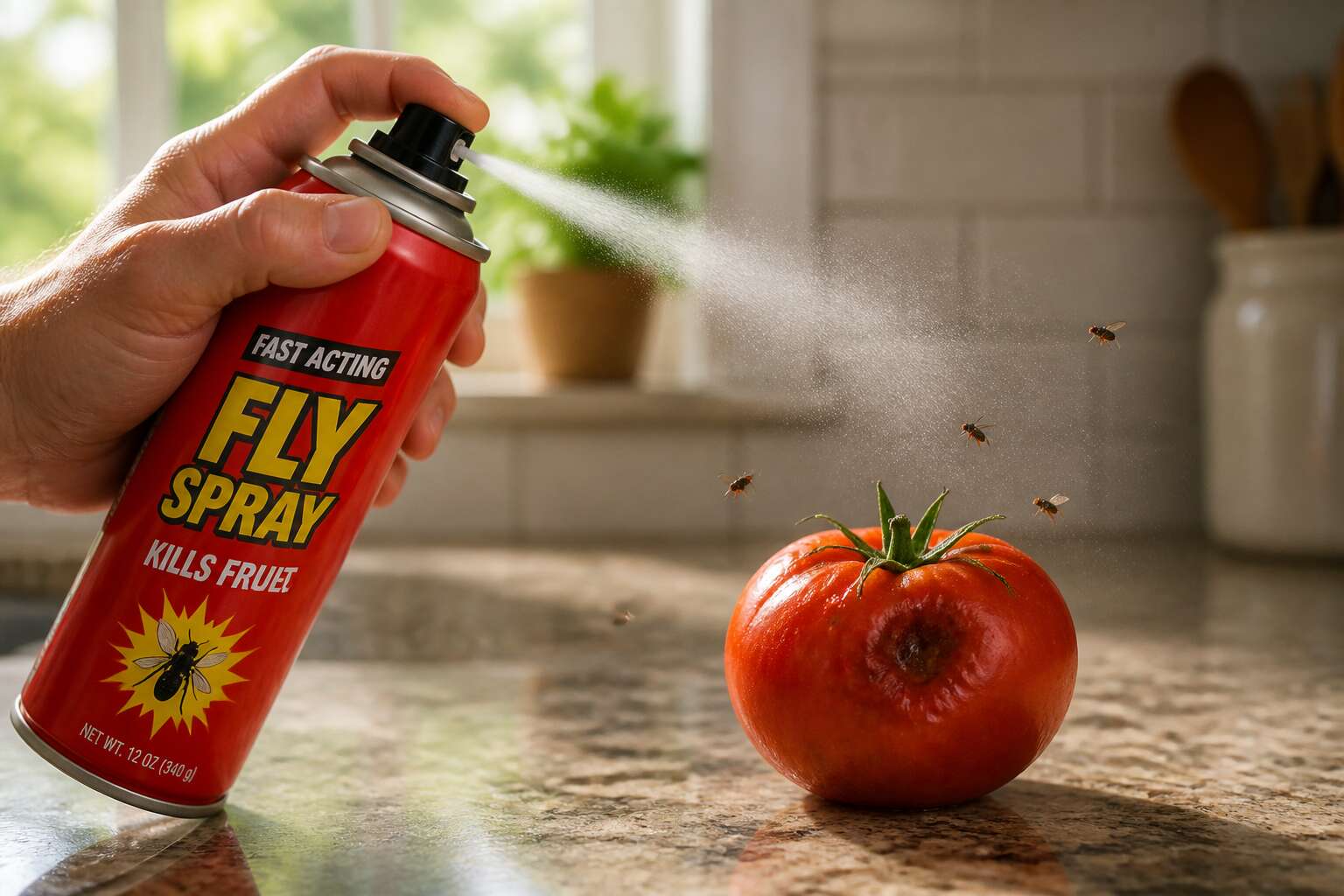
Understanding the Target Pest: Fruit Flies
Identifying Fruit Flies vs. Other Small Flies
Understanding the Target Pest: Fruit Flies Identifying Fruit Flies vs. Other Small Flies
Fruit flies are not merely tiny annoyances; they are particular about their lodgings. Unlike fungus gnats, which hover around overwatered plant soil, or drain flies with their moth-like wings, fruit flies prefer fermenting produce. That distinction matters when you consider whether will fly spray kill fruit flies effectively. Spray targeted at flying insects may work on contact, but if you mistake gnats for fruit flies, your efforts will prove futile. Look for red eyes, tan thorax, and a telltale zigzag flight pattern. Fruit flies also breed extremely fast, so identification is not a luxury. A simple list of their haunts helps:
- overripe fruit
- damp sponges
- empty bottles
- recycling bins
Each location hides potential breeding grounds. Without proper identification, any spray, however potent, becomes a temporary measure.
Life Cycle and Breeding Habits
One female fruit fly deposits nearly 500 eggs in her brief life, which explains why a small annoyance becomes an infestation overnight. The entire lifecycle, from egg to larva to pupa to adult, completes in roughly eight days during warm South African summers. That pace is staggering.
If you are wondering will fly spray kill fruit flies, the honest answer is that the spray only reaches adults in flight. Eggs and larvae stay hidden beneath the surface of breeding material. Several locations support these cycles:
- damp mops
- leftover wine bottles
- compost bins
- the bottom of fruit bowls
Fresh generations emerge every week. By the time they do, any residual spray has long dried. The breeding never stops, even when the adults we see seem manageable, which is why a single application rarely settles the matter.
Common Infestation Sources in Homes
One neglected potato at the back of a pantry can host hundreds of immature fruit flies without a single adult in sight. I have seen entire infestations traced back to a single onion. This is why the question of will fly spray kill fruit flies needs a closer look at where these pests actually gather.
In South African homes, the most common infestation sources are often small and overlooked:
- potato sacks holding sprouting tubers
- empty cool drink cans with sugary residue
- unrinsed jam jars or sauce bottles
- pot plant saucers with rotting leaves
Each spot contains fermenting organic matter, which is precisely what attracts gravid females. Fly spray kills adults on contact, but the hidden stages remain untouched, meaning will fly spray kill fruit flies is answered only in part.
Why Fruit Flies Are Hard to Eliminate
Fruit flies are not ordinary flies. They are relentless breeders. A single female can deposit hundreds of eggs, and each one hatches within 24 hours. Your kitchen can shift from clean to infested virtually overnight.
Their fragmented lifecycle complicates control. Spraying adults offers temporary relief, but hidden stages remain sheltered inside fermenting matter. Fruit flies are also behaviourally cunning. They retreat into drains and crevices the moment they sense danger.
Understanding why will fly spray kill fruit flies requires acknowledging their biological advantages:
- Eggs are microscopic and nearly invisible
- Larvae feed deep inside organic material, shielded from surface sprays
- Pupae can delay emergence for days
Even a meticulous cleaning regime misses residue inside bottle necks or beneath fridge seals. Honestly, that is what makes them so unnerving! These pests are not simply flying in. They are already embedded in your environment, waiting to emerge.
Types of Fly Sprays and Their Active Ingredients
Aerosol Insecticides: Pyrethrins and Permethrin
Most households in South Africa have confronted the nagging question of whether a standard aerosol will deliver a knockout blow. The answer lives in the active ingredients, not the flashy label. Pyrethrins, extracted from chrysanthemum blossoms, are fast acting neurotoxins that short circuit an insect’s nervous system. Permethrin, the synthetic counterpart, persists on surfaces and offers a residual barrier that pyrethrins cannot match.
When you ask will fly spray kill fruit flies, the chemistry is the deciding factor. These compounds stun and drop adult flies, yet they only work on contact. Fruit flies hover near fermenting scraps, so a direct spray is non negotiable.
- Pyrethrins deliver rapid knockdown but degrade quickly in sunlight.
- Permethrin remains active for days, making it ideal for treating bin rims and counter edges.
Natural or Organic Fly Sprays
The pressing question, will fly spray kill fruit flies, has a blunt answer: it depends on the bottle. For the average South African kitchen, two broad categories exist. There are the synthetic aerosols we covered, and then there are the pump bottles aimed at the eco conscious. Natural or organic fly sprays rely on a quieter set of assassins. Potassium salts of fatty acids, cold pressed neem oil, and citrus terpenes each attack the pest differently.
- Potassium soap salts breach the waxy outer layer, causing dehydration.
- Neem oil confuses feeding signals and stifles egg laying.
- Citrus extracts, especially d-limonene, degrade the nervous system on contact.
These ingredients work, yet they do so at a leisurely pace. Synthetic sprays drop flies in seconds; organic versions require a patient hand and a drenching mist. The active ingredients are only half the story. A natural spray still must hit the insect directly, so the hovering, zigzagging target remains the true challenge.
Residual vs. Contact Kill Sprays
Rows of fly spray cans sit on South African shelves, each promising a dead fly. But will fly spray kill fruit flies, or are you just wasting money? The real question is contact versus residual action. Contact sprays deliver a lethal shot the moment the mist lands on the insect. Residual sprays lay down a persistent layer that poisons flies long after you walk away. Fruit flies, with their erratic hovering, need direct hits from contact sprays, while the residual film catches the ones that land on nearby surfaces. Active ingredients fall into three categories:
1. Synthetic pyrethroids, which disrupt the nervous system.
2. Synergists such as piperonyl butoxide, which block detoxification.
3. Insect growth regulators, which stop larvae from developing.
So, will fly spray kill fruit flies when you pick a contact only product? Yes, but only the ones you see. The residual option handles the hidden infestation.
Fruit Fly Specific Sprays vs. General Fly Sprays
The pesticide aisle offers a dozen cans, each promising the same outcome. Will fly spray kill fruit flies, or are you buying a false reprieve? I have watched people grab the cheapest option and regret it. The active ingredients tell the truth. General fly sprays rely on synthetic pyrethroids for rapid knock-down. Fruit fly specific sprays often use spinosad, which attacks a different neural pathway and adds a food-based attractant. That difference matters.
Consider what each can contains:
- General fly sprays prioritise knock-down speed for strong fliers.
- Fruit fly specific formulas mimic ripe, fermenting fruit.
- Carrier chemicals decide whether the spray lingers or fades.
Fruit fly sprays anticipate the pest’s tiny size and hovering behaviour. General fly sprays target robust house flies. Ask which problem you actually have, and the answer to will fly spray kill fruit flies becomes clear before you press the nozzle.
Safety Considerations for Indoor Use
The active ingredients in a can tell you more than the label ever will. Pyrethrins offer rapid paralysis but break down within hours. Permethrin persists longer, yet neither fully answers the question of will fly spray kill fruit flies if the spray lacks a food-based lure. Fruit flies respond to scent, not to the movement of your arm.
Indoor safety deserves the same attention as pest control. Those aerosols do not discriminate between a fly and your lunch. Read the fine print before you spray anything near a kitchen counter.
– Direct spray away from dishes and open food.
– Ventilate the room for at least fifteen minutes after use.
– Store the can in a cool, dark cupboard, away from heat.
The solvents in some sprays leave a residue that settles on food preparation surfaces. That residue matters more than the kill rate. The proper answer to will fly spray kill fruit flies is not a blanket yes. It depends on the product’s chemistry and your willingness to follow the precautions.
Effectiveness of Fly Sprays on Fruit Flies
Direct Contact: Does It Kill on Impact?
Entomologists estimate that a fruit fly can detect a fermenting mango from half a kilometre away, yet it cannot outmanoeuvre a well aimed mist. The question of will fly spray kill fruit flies depends almost entirely on physical contact with the liquid.
Direct contact means the active ingredients, typically fast acting neurotoxins, penetrate the fly’s body or breathing tubes. Death occurs within seconds, but only if the droplet lands squarely on the insect. A graze might just anger it.
- Spray distance: closer gives better coverage.
- Droplet size: fine mists coat, coarse sprays bounce off.
- Fly movement: hovering insects are easier targets than erratic flyers.
Some labels promise knockdown in a flash, yet the real kill depends on that one precise hit. So, the answer to whether a fly spray can end the menace is yes, but only with a direct hit.
Residual Action: Does It Keep Killing?
Residual action is where many fly sprays overpromise. The canister boasts days of protection, yet the chemistry rarely delivers for flying pests. The question of will fly spray kill fruit flies shifts once the mist settles.
Most general fly sprays evaporate within minutes. What remains is a thin film, and that film targets insects that walk, not insects that hover. Fruit flies, being creatures of impeccable timing, wait for the liquid to dry before they return to the fruit bowl.
A few products do leave a longer acting residue:
– Pyrethrin formulas degrade quickly in sunlight.
– Permethrin based sprays persist longer on hard surfaces.
– Porcelain and glass hold residue better than wood or fabric.
So will fly spray kill fruit flies after the initial blast? Usually not. They breed in drains, bins, and overripe fruit, never on a sprayed skirting board. The spray’s useful life ends when the droplets dry.
Hidden Eggs and Larvae: Spray Limitations
One female fruit fly can deposit up to 500 eggs, each hidden beneath the skin of decaying produce. These eggs are not exposed to airborne mist. They rest in crevices, under fruit skins, or inside drain slime. Spray droplets never make contact.
Typical hiding spots include:
- Under the skin of overripe fruit
- Within the organic film coating drains
- In damp folds of rubbish bags
The larvae that hatch are equally shielded. They tunnel into fruit flesh immediately, feeding in darkness. Larvae also survive in sink drains where insecticide residues, in my experience, seldom penetrate. Because fly sprays target flying adults, the real answer to will fly spray kill fruit flies comes down to what the spray cannot reach. It cannot interrupt what has already been laid.
The realistic outcome of a single spray pass is temporary. Hidden eggs and larvae proceed with development. A new generation emerges days later, unaffected by the mist.
Comparing Fly Sprays to Fruit Fly Traps and Baits
Spray cans handle only the flies you see. When you ask will fly spray kill fruit flies, the answer is yes for the few that meet the mist. But compare that with a trap. A trap uses a lure that mimics ripening fruit, attractive to flies in a way a chemical spritz is not. In my experience, a vinegar-based bait draws flies that never approach a sprayed area. This is about chemistry, not opinion.
Consider the comparison:
- Fly spray kills on contact but requires visual targeting.
- Traps work through the night without human presence.
- Baits catch gravid females and interrupt reproduction.
So will fly spray kill fruit flies? Yes, but only for the adults it touches. Traps provide sustained suppression. For most homes, the trap wins because it continues working after you forget about it.
Proper Application Techniques for Maximum Results
Identifying and Targeting Breeding Sites
I have seen kitchens where a single fly outlives every spray on the shelf. The question will fly spray kill fruit flies is answered by your aim. Spraying the open air treats the symptom. The actual site is a dark corner where moisture gathers: the damp cloth forgotten under the sink, a husk of onion in the pantry shadow, juice pooled in the bin seam.
Find the site before you spray. Pull the refrigerator forward and clean behind it. Examine the bin seal. Lift pot plant saucers. Move the coffee machine and the toaster. Check the underside of every counter overhang.
– Empty the bin and scrub the rim
– Trace the sink drain line to the wall
– Inspect the dark shelf above the stove
The spray destroys when it touches the source. Direct the stream into the crevice, not into open air. Wait. The flies stop appearing, and the silence is the result.
Strategic Spraying in Kitchens and Trash Areas
Strategic spraying in kitchens and trash areas starts with a simple idea: the spray must go where the flies actually rest. A mist released into the centre of the room will drift and settle on the countertop, but it will not reach the larvae hatching in the drain. To make will fly spray kill fruit flies a definitive yes, the spray must travel to the physical refuge of the insect.
Start with the bin. Empty it first, then spray the rim and the inside of the lid. Fruit flies cling to these surfaces. In the kitchen, target the back corners of the sink and the gap between the wall and the counter. Hold the nozzle close enough to wet the surface, not just mist it.
– Spray under the rubber seal of the bin lid
– Direct a short burst into the overflow hole of the sink
– Treat the crevice where the toaster cable meets the bench
The stream needs to land on the fly or on the surface where it lands. That is the only mathematics that matters. Without that contact, the chemical remains an inert smell, and the flies continue their orbit.
Combining Sprays with Sanitation and Prevention
Will fly spray kill fruit flies? Yes, but only when the chemical touches the insect or a surface it frequents. A spray that merely scents the air performs no execution. The technique demands a deliberate hand and a close range.
Aim for a fine, wet film rather than a dramatic cloud. Press the nozzle and sweep the stream across the resting zones in a slow, steady motion. This coating lingers and catches flies that land moments later. Hold the canister upright and maintain a distance of roughly 30 centimetres to ensure the droplets carry enough momentum.
– Spray the underside of kitchen shelves and cabinet lips.
– Apply a short burst to the hinges and frames of the bin.
– Treat the rim of the compost caddy and the drip tray beneath the kettle.
Sanitation makes the spray effective. The chemical erases the living adults, but it cannot dissolve the eggs or larvae hiding in a forgotten banana peel. Remove the breeding matter first. Wipe down surfaces with a soapy cloth to break the film of fermenting residue. Empty the bins daily and rinse the recycling before it rests in the garage.
Combine the two actions and the equation simplifies. The spray removes the visible swarm, while hygiene removes the next generation. A clean kitchen with a targeted spray becomes a hostile zone. A dirty kitchen with a can of insecticide remains a revolving door. The question of will fly spray kill fruit flies resolves into a matter of persistence and preparation, not chemistry alone.
Alternatives and Integrated Pest Management
Homemade Traps and Natural Deterrents
Ever wondered will fly spray kill fruit flies, or if there is a smarter way to deal with them? The truth is, a homemade trap often works better than any aerosol. A simple jar with apple cider vinegar and a drop of dish soap creates a powerful lure. The soap breaks the surface tension, so the flies drown instead of landing and flying away. This method targets the adults directly, but it does nothing for the eggs hiding in your produce. That is where sanitation becomes the real weapon. Many people also rely on natural deterrents like basil or lemongrass. These herbs can mask the scent of ripening fruit, though they won’t solve an active infestation. For a complete approach, pair a trap with regular cleaning. Check your storage areas, dispose of overripe items, and wipe down counters. Combine these tactics with a targeted spray only when necessary, and you will see results without filling your kitchen with chemicals.
Professional Pest Control Options
When homeowners ask whether will fly spray kill fruit flies, the question overlooks a larger issue. Chemical intervention is a single tool. Integrated Pest Management, or IPM, treats the entire habitat as a system. It combines monitoring, exclusion, and targeted treatment. A professional pest control provider may locate breeding sites hidden behind appliances or inside drain pipes, places the naked eye cannot reach.
In South Africa, warm coastal cities like Durban allow fruit flies to breed year-round. That is when professional intervention becomes worthwhile. Technicians apply gel baits, insect growth regulators, or bacteria-based products that never appear on supermarket shelves. These tools disrupt the lifecycle at multiple stages.
- Property-wide inspection, not just the kitchen
- Species identification, since fungus gnats demand a different protocol than fruit flies
- Monitoring traps and scheduled follow-ups after the initial knockdown
So, will fly spray kill fruit flies effectively? Yes, for the insects it contacts. IPM closes the remaining gaps, preventing reinfestation at the source.
Long-Term Prevention Strategies
While homeowners often ask will fly spray kill fruit flies, the lasting answer lies in habitat disruption. A spray handles the adults you see, but the next generation is already developing in fermenting matter, moist soil, or the thin biofilm inside drain pipes. Long-term prevention removes that invitation entirely.
Fruit flies in Johannesburg and Cape Town respond well to cultural control. Store onions and potatoes outside the fridge. Keep compost bins sealed. Reduce mulch around foundation plants, since these flies seek out damp organic debris.
A few dependable strategies anchor a prevention-focused plan:
– Install fine mesh on windows and vents to block incoming adults
– Clean under appliance feet where spilled juice stagnates
– Flush drains weekly with hot water and enzyme cleaner
Wipe counters after meal prep and dry the sink overnight. These steps address the exact conditions that draw flies into your living space. No single spray, however potent, can substitute for that kind of persistent household stewardship.
When to Avoid Using Fly Sprays
Sometimes the most responsible action is to leave the aerosol on the shelf. will fly spray kill fruit flies in a single, clean stroke? Only if you manage to coat every adult and accept that the eggs in nearby moisture will emerge tomorrow. When the infestation spans rooms or returns after each application, the spray is no longer a solution; it becomes a crutch.
Integrated pest management asks you to watch before you treat. Avoid sprays entirely near open fermenting fruit, exposed wiring, or fish tanks. The solution may lie in exclusion strips, desiccant dusts, or releasing parasitoid wasps in the garden. In many South African households, targeted microbes and patience win without saturating your kitchen in chemicals. If you cannot locate the breeding source, then no spray, however strong, deserves a place in your routine.

0 Comments