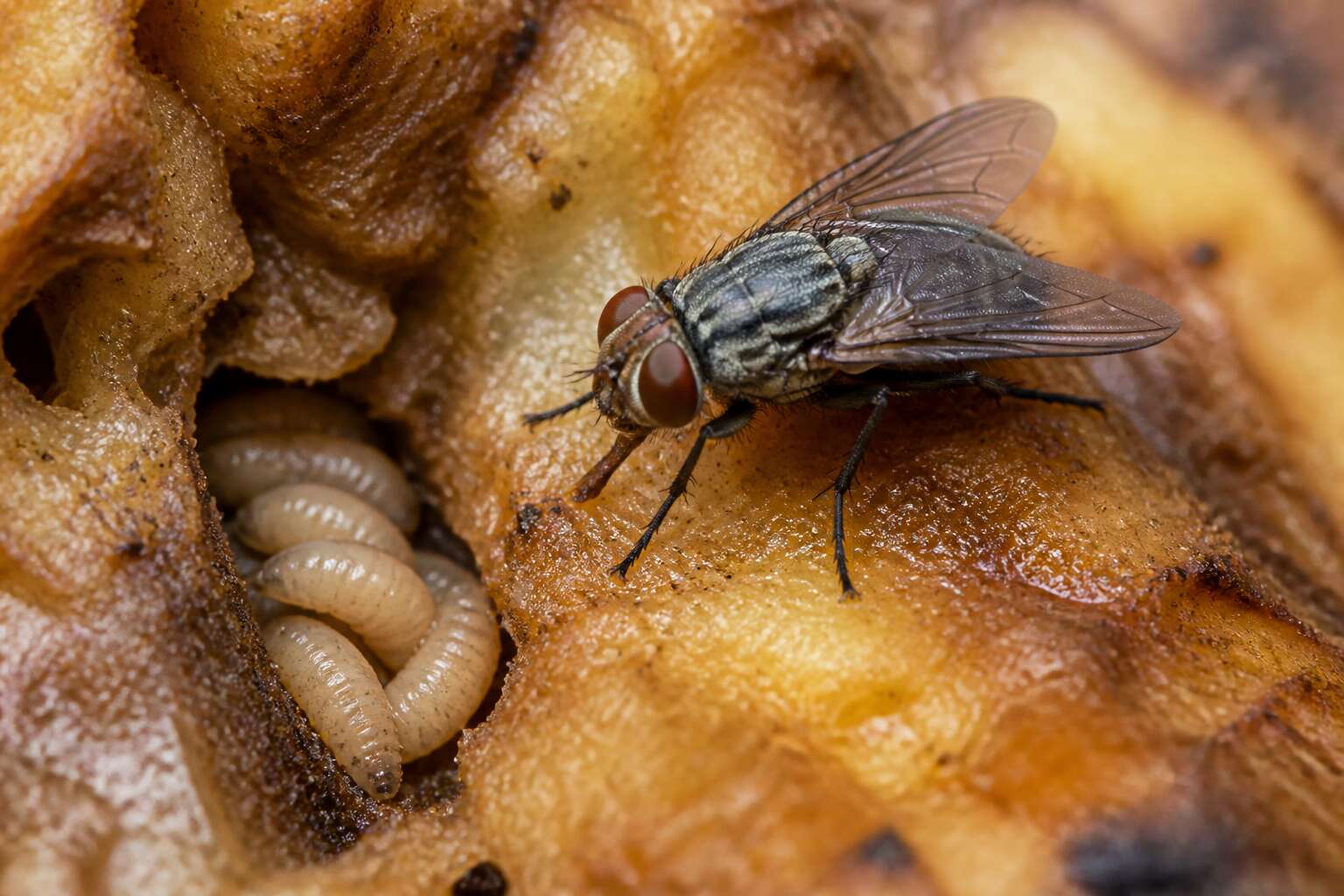
Understanding the Fly Lifecycle
A single female housefly can deposit 150 eggs in one sitting, and she does this every few days without pause. In South Africa’s summer heat, those eggs hatch within a day. That rapid transformation is flies laying maggots in its rawest form.
The lifecycle follows a fixed sequence, and it is unforgiving. Eggs become larvae, larvae feed on decaying matter, then they pupate and emerge as adults ready to breed again. At 25°C, this entire cycle completes in under a week.
- Egg stage: 8 to 24 hours
- Maggot stage: 4 to 7 days
- Pupal stage: 3 to 5 days
Each surviving female multiplies into thousands of descendants within a month. Few people expect an overlooked waste bin to turn into a full infestation that quickly!
Why Flies Choose Certain Locations to Lay Eggs
Every summer in South Africa, the air thickens with the hum of gravid flies. They hunt by scent, tracing the chemical whispers of decay across vast distances. A single female can detect the faintest trace of ammonia and sulfur compounds from kilometers away, and she follows that trail with unwavering purpose.
She seeks specific conditions. The ideal nursery must be moist, sheltered, and rich in the proteins her offspring will devour upon hatching. This is why you find flies laying maggots in the overlooked corners of rubbish bins, beneath pet bowls, or deep within compost heaps. Warmth accelerates everything, which is why the African sun turns these sites into frenzied breeding grounds.
- Moisture levels above 70 percent
- Protected from direct light but not heat
- Porous surfaces where larvae can burrow instantly
Once she commits, the act itself is swift. Flies laying maggots is not random scattering, it is a calculated placement that ensures the next generation has every advantage.
The Development Process of Maggots
One female house fly can deposit up to 150 eggs in a single sitting. That statistic is startling enough, yet it barely hints at the ruthless efficiency that follows. Within a day, those eggs hatch into pale larvae that immediately begin consuming their surroundings.
For anyone who has watched this unfold in a compost heap, the spectacle is both repulsive and strangely hypnotic. The sight of flies laying maggots in warm, decaying matter represents a recycling strategy that no municipal waste programme can match. The larvae feed with remarkable urgency, moulting through three growth stages before seeking a dry corner to pupate.
Development timing follows a predictable rhythm:
- Eggs hatch within 8 to 20 hours
- Larvae feed actively for 3 to 5 days
- Pupation lasts roughly one week
Temperature governs every stage. Durban’s humid summers accelerate the cycle dramatically, while a Cape Town winter slows it to a crawl. Learning this rhythm offers a strange appreciation for the order hidden within decay!
Common Fly Species That Produce Maggots
In South Africa’s summer heat, the sight of flies laying maggots is startlingly common. These larvae appear within hours, seemingly from nowhere. The housefly, Musca domestica, prefers decaying organic matter and animal waste. The metallic green blowfly, meanwhile, targets fresh carrion, while the flesh fly deposits live young directly onto wounds. Each species has its own strategy, but all are masters of rapid reproduction.
Some key culprits you might encounter:
- Houseflies: breed in garbage, manure, and compost.
- Blowflies: drawn to dead animals and open meat.
- Flesh flies: prefer moist, decaying tissue.
Understanding which flies laying maggots in your environment helps you identify the source. That knowledge is the first step toward effective control. These insects are more than a nuisance, they are nature’s recyclers, albeit ones you do not want indoors.
Preventive Measures to Stop Flies from Laying Maggots
A single fly can lay hundreds of eggs in the time it takes you to finish your coffee. That’s a maggot uprising waiting to happen. To stop flies laying maggots in your bin, you need to think like a detective. Deny them the crime scene.
Start with your waste. Wrap organic scraps in newspaper before they hit the bin. Seal the lid tightly and wash it weekly. Flies breed in moist, warm environments. Remove the moisture and you remove the problem.
Here’s what I swear by:
– Empty indoor bins every two days
– Rinse recyclables before discarding
– Use a thin layer of baking soda in the bin’s base
These habits break the cycle before flies laying maggots even becomes a thought. A clean kitchen is your first line of defence.
Health Risks and Safety Concerns Related to Maggots
When flies laying maggots find a warm, moist environment, they can trigger serious health issues. Maggots may infest wounds, a condition called myiasis, leading to tissue damage and secondary bacterial infections. They also contaminate food, causing gastrointestinal distress if ingested. To protect your home and health, follow these steps:
1. Seal garbage bins tightly to prevent fly access.
2. Clean pet waste promptly, as it attracts flies.
3. Cover open cuts with sterile dressings.
4. Use insect screens on windows and doors.
These simple actions reduce the risk of infestation. Remember, early intervention is crucial. If you suspect myiasis, seek medical attention immediately. The presence of these larvae indicates unsanitary conditions that require urgent attention.


0 Comments