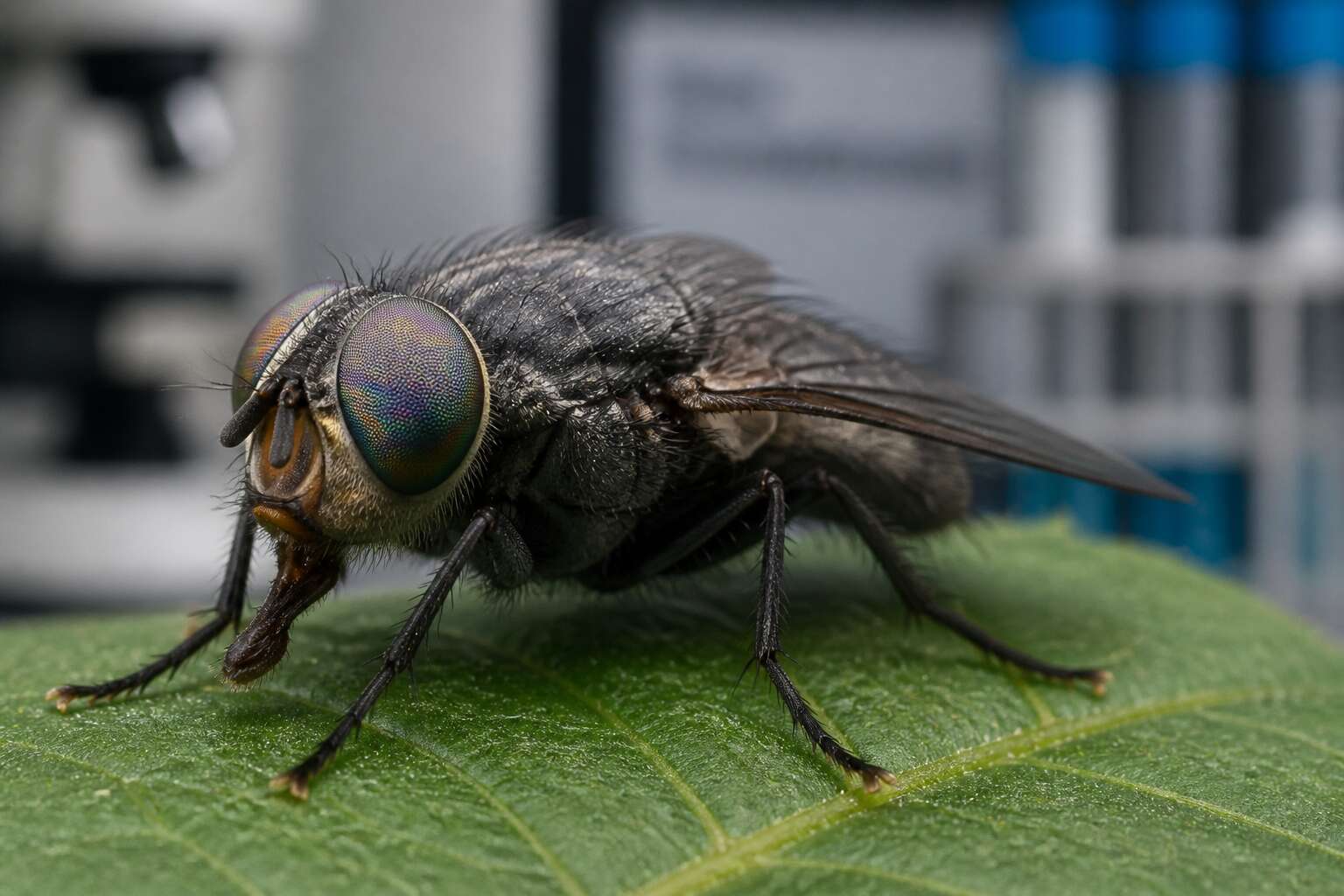
Understanding Fly-Borne Viruses
What Are Fly-Borne Viruses?
Across South Africa, the threat from these insects is often dismissed as a summer annoyance. However, fly-borne viruses are a serious public health concern. These diseases spread when houseflies and blowflies contact infected organic matter, then land on food or open wounds.
The mechanical transmission is unsettling. A fly regurgitates digestive fluids onto surfaces to liquefy food, depositing live viruses in the process. That is a biological fact.
Common fly-borne viruses include:
- Rotavirus, a leading cause of severe diarrhoea.
- Poliovirus, still present in some wastewater systems.
- Hepatitis A, which thrives in unsanitary conditions.
Understanding this mechanism is the first step toward real protection. The flies virus thrives where sanitation fails, which makes urban and rural South Africa particularly vulnerable.
Why Flies Are Efficient Viral Vectors
A single fly’s footfall is an obscene event. It is a moist, bristled stamp of everything it has touched. In the cramped spaces between our urban centres and rural farmlands, the flies virus finds its most efficient courier. The insect does not need a bite or a sting. It merely needs to walk.
Their bodies are a living archive of filth. Hairs on their legs and torsos collect microscopic particulates with every landing. When a fly settles on a sunny windowsill or a kitchen counter, it deposits a history of decay. The medium of transmission is often mechanical, a simple transfer of contaminated matter.
The efficiency of this process is what makes them so dangerous.
– They vomit onto solid food to pre-digest it, leaving a viral slurry.
– They defecate within seconds of landing, adding to the contamination.
– They travel freely between manure heaps and human food sources.
The creature’s gut is a temporary sanctuary for pathogens. The flies virus survives the journey through the insect’s system, emerging to find a new host. In South Africa, where the sun encourages open windows and outdoor living, the invitation is always open. The fly is not a pest in the house; it is a courier between the septic and the sublime.
The Lifecycle of a Fly and Its Impact on Virus Transmission
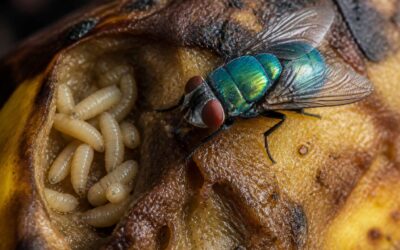
A housefly completes its life cycle in seven to ten days. That compressed biological timeline is the engine behind flies virus transmission. Every stage of development creates a fresh opportunity for pathogens to board the insect.
- Eggs are laid in decaying organic matter, where contamination begins immediately.
- Larvae, or maggots, feed inside that filth and absorb microorganisms into their tissues.
- Pupae harden into protective casings, preserving the microbes through metamorphosis.
- Adults emerge with a pre-existing microbial cargo, ready to disperse it on human surfaces.
The adults do not need to bite or sting. The flies virus travels on their bodies and in their guts from the moment they hatch. Each generation matures so quickly that the cycle never breaks. In South Africa’s warm climate, the insects breed year round. We often overlook the early stages, but that constant turnover is what makes controlling the problem so difficult!
Common Viral Diseases Spread by Flies
Enteroviruses and Their Symptoms
Enteroviruses are among the most understated threats carried by the common housefly, and in South Africa they find fertile ground. The flies virus transmission cycle is quiet, almost invisible, until the first fever breaks. These pathogens do not announce themselves with drama; they slip through a bite or a contaminated surface, then settle into the human gut.
Symptoms vary with the strain, which makes diagnosis a grim guessing game. Some patients endure a simple rash and a sore throat, while others face aseptic meningitis or sudden limb weakness. I once watched a young child lapse into seizures from a strain that began as a mild cold. The signs to watch for include:
- Unexplained high fever
- Stiff neck and sensitivity to light
- Severe muscle aches
- Vomiting without an obvious cause
These symptoms rarely appear in a neat sequence. The flies virus in urban South Africa often hides behind pretence, mimicking malaria or even heat exhaustion. Without rapid testing, doctors rely on pattern recognition, which means many cases linger untreated for days.
Hepatitis A and Other Liver Viruses
Every year, Hepatitis A accounts for a significant portion of liver infections linked to poor sanitation, and the common housefly acts as a silent courier. This flies virus strain does not need a bite to breach the body. It travels on the fly’s bristly legs and sticky pads, picked up from contaminated faeces or decaying matter, then deposited directly onto food preparation surfaces or an open loaf of bread. In South Africa, where intermittent water supply and informal settlement density create perfect conditions, this route of transmission is dangerously efficient.
The pathogen targets the liver with a tenacity that leaves patients exhausted for months. Unlike the rapid onset of enteroviruses, Hepatitis A has a longer incubation period, often two to six weeks. This delay makes it nearly impossible for the infected person to connect the initial fever and nausea to a specific meal or a fly that landed moments before. The virus is resilient, surviving on dry surfaces for weeks, meaning the risk does not vanish when the fly leaves the room. The clinical picture is a brutal fatigue, dark urine, and jaundice that turns the eyes a startling yellow.
– Severe, persistent nausea that resists common remedies
– Pain in the upper right abdomen where the liver struggles to process toxins
– Clay coloured stools that signal a complete biliary blockage
This liver focused flies virus does not respect socioeconomic boundaries, but it thrives where waste management fails. While many children contract mild cases and develop lifelong immunity, adults often face a much more severe course. The virus moves through a community not like a sudden storm, but like a slow leak, contaminating water sources and shared food. The true measure of the threat lies in the fact that a single fly can carry thousands of viral particles, and it only takes ten of those particles to establish a full infection.
Norovirus and Gastrointestinal Outbreaks
Hepatitis A lingers for weeks, but Norovirus strikes with brutal speed. Just 18 viral particles can floor a healthy adult. This flies virus strain invades the gut, causing acute gastroenteritis. The incubation spans a mere 12 to 48 hours, giving victims no time to trace the contaminated meal.
Flies pick up norovirus from raw sewage or soiled nappies. A single landing on an open plate transfers the pathogen instantly. The result is a punishing cycle of sickness that leaves people dehydrated and bedridden. The symptoms are unmistakable:
- Projectile vomiting
- Explosive watery diarrhoea
- Intense stomach cramps
In dense South African townships, shared taps and open drains make this flies virus a constant threat. We frequently see entire classrooms emptied by one contaminated fly. The acute illness passes in two days, but the outbreak can shut down a clinic or school for weeks.
Emerging Viral Threats from Flies
Rift Valley fever once stayed on livestock farms. Now it appears in peri-urban settlements across Gauteng and the Western Cape, carried by flies that breed on carcasses and contaminated feed. This flies virus survives hours on fly mouthparts, moving from rural paddocks to city markets in one flight.
Common viral diseases with mechanical fly transmission include:
- Rift Valley fever virus, present in livestock blood and aborted tissues
- Bluetongue virus, which devastates sheep flocks in cooler provinces
- Fowl pox virus, spread through open wounds at communal feeding sites
Warmer winters and wetter summers are extending fly breeding seasons across the region. Researchers in Mpumalanga have found unidentified viral RNA in fly gut contents, suggesting new pathogens are already cycling in insect populations. I worry we are losing ground to these silent carriers.
How Flies Spread Viruses: Mechanisms and Pathways
Mechanical Transmission: From Feces to Food
Houseflies regurgitate and defecate within seconds of landing. This habit makes mechanical transmission remarkably efficient. When a fly touches contaminated matter, viral particles adhere to its legs, body hairs, and mouthparts. The pathogen then transfers to human food through simple contact.
The journey from feces to food follows predictable routes. A fly may step from a latrine to a braai platter in under a minute. Viral loads remain viable on the insect’s exterior for hours, depending on temperature and humidity.
- Leg and foot contact with exposed food surfaces
- Regurgitation of gut contents onto solid items
- Deposition of fecal droplets on cutlery or plates
Each route bypasses cooking safeguards. Understanding these pathways helps explain why controlling flies virus transmission requires focus on sanitation and physical barriers, especially in urban and rural South African settings.
Regurgitation and Vomiting as Viral Spread
Regurgitation turns a fly’s feeding ritual into a route for viral spread. A housefly vomits enzyme-rich digestive fluid onto surfaces to dampen and pre-digest solid food. If that meal came from infected waste, the ejected droplet carries live pathogens. This makes flies virus transmission independent of leg contact or defecation, which many people overlook.
I find this pathway especially sinister because it is deliberate! The fly repeats the act 20 to 40 times per hour, each time depositing a fresh viral pool. The microbial load stays suspended in nutrient-rich fluid, remaining viable on counters, braai tables, and dishcloths for hours.
Environmental Factors That Enhance Transmission
One gut-churning statistic frames the threat: the viral load in a single drop of fly gut fluid can persist for days in the right conditions. These pathogens do not need direct sunlight or scorching heat to thrive. Environmental factors are the silent co-conspirators in the spread of the flies virus, transforming ordinary South African summers into a high risk period.
Warm temperatures accelerate viral replication within the fly’s body, while high humidity prevents the delicate droplets from desiccating. Conversely, sudden dust storms or dry winds can carry smaller, virus laden particles further. Consider the conditions that create a perfect breeding scenario:
– Ambient temperatures between 25°C and 30°C
– Moisture retained on non-porous surfaces like plastic and steel
– Sheltered microclimates under braai lids or inside refuse bins
Irrigation systems that keep lawns and compost heaps damp effectively create viral reservoirs. When the heat drops, flies become sluggish, but the risk does not vanish. They seek refuge indoors, retreating to warmer interiors where the virus remains shielded. This tropical amplification makes seasonal outbreaks of the flies virus almost predictable, yet entirely preventable through environmental management. The atmosphere itself becomes the delivery mechanism.
Hotspots for Fly-Mediated Viral Spread
Certain places become reservoirs of viral activity through concentrated waste and human activity. In South Africa, open-air food markets, abattoir perimeters, and municipal waste transfer stations create the conditions for flies to cycle pathogens between hosts. The flies virus thrives where organic matter accumulates and cleaning schedules falter.
Consider the key hotspots:
- Informal settlements with exposed refuse and inadequate sanitary infrastructure.
- Poultry farms and feedlots where manure dries then rehydrates with daily irrigation.
- Recycling depots that store unwashed containers for extended periods.
These sites amplify transmission because flies have abundant landing surfaces, warm resting areas, and minimal disturbance. A single fly can travel up to 20 kilometres after visiting such a hotspot, carrying the flies virus into residential neighbourhoods. No amount of repellent can compensate for a poorly managed dump.
Prevention and Control of Fly-Borne Viral Infections
Proper Sanitation and Waste Management
The most effective defence against the flies virus is not a chemical spray or a high-tech trap. It is the simple, unglamorous act of removing what attracts the fly in the first place. A single unsealed bin can sustain thousands of flies, each one a potential vector landing on your countertop. Sanitation is the first line of defence, and it is a battle fought daily.
Waste management is the cornerstone of this effort. Organic refuse is a breeding ground, and it must be treated with urgency. When you remove the larval habitat, you break the cycle of transmission before it begins. This requires a ruthless approach to how you handle your rubbish.
Consider the basic hierarchy of control that every household and business should follow:
1. Wrap all food waste tightly before placing it in a bin.
2. Use bins with fitted, self-closing lids to deny access.
3. Dispose of waste at least every two days, or daily in summer.
4. Clean bins regularly with hot water and a disinfectant.
The link between poor hygiene and the spread of the flies virus is undeniable. In South Africa, where warm climates accelerate decomposition, the margin for error is slim. If municipal services are delayed, private removal becomes a necessity, not a luxury. The goal is to create an environment where flies cannot find a foothold to breed and amplify viral particles. Every piece of litter you secure is a direct blow to the local fly population. This is practical, essential work that keeps families safe.
Installing Physical Barriers and Screens
There is a moment of pure comedy when a fly bounces off a well-fitted screen. That thud signals a fly denied entry. Physical barriers do not kill flies; they simply refuse them entrance.
The flies virus depends on opportunity, and a screen removes that opportunity. For South African homes and businesses, the humble mesh is essential. Check every seam and corner:
- Fitted screens on all windows
- Self-closing doors with no gap
- Dust-proof strips under utility doors
A single tear is an open invitation. Inspect regularly. This is unglamorous work; the alternative is explaining why your kitchen is a viral hotspot.
Using Insecticides and Traps Safely
Chemical intervention demands respect. A misapplied spray can do more harm than the flies virus it targets. I have learned that restraint matters more than volume. The right insecticide, placed correctly, creates a perimeter flies cannot cross without dying. But it must be applied before they settle, not after.
For those who want to minimise chemicals, traps are the dependable alternative. Sticky boards collect hundreds of flies without contaminating a single surface. Electric grids buzz through the night, removing carriers before they reach your produce. The safest setups often use several types:
- Residual sprays along door thresholds
- Light traps placed away from windows
- Fermenting liquid baits in shaded corners
Each tool has a role. The flies virus thrives on neglected corners, so traps need rotation and baits need refreshment. I have seen this work. The label in hand, common sense guides every choice.
Biological Control Methods for Fly Populations
The disease does not begin with the bite. It begins in the breeding ground. While sanitation removes the filth, biological control removes the future. I have watched parasitic wasps target fly pupae with chilling precision. These microscopic assassins lay eggs inside the larvae, and the emerging wasps consume the host from within. The adult flies never rise to carry the flies virus. This is nature correcting its own imbalance.
The strategy requires patience and timing. You cannot spray these beneficial insects away and expect them to protect you. The following organisms provide dedicated suppression:
– Parasitoid wasps that eliminate pupae before emergence
– Nematodes that hunt and infect larvae in the soil
– Predatory beetles that consume eggs in decaying matter
These agents reduce the next generation of threats. The flies virus cannot spread if the carrier never completes its lifecycle. This method works best alongside physical barriers, but it does the work that screens cannot. Or rather, it does the work before the fly exists. It is a quiet, relentless method. I prefer it because it leaves the environment intact while the threat simply disappears. In this war, the most effective weapon is often the one you never see, working beneath your feet.
Personal Protective Measures for High-Risk Areas
Workers in South African high risk zones touch their faces over 20 times per shift. Each touch can introduce the flies virus. For those handling waste, livestock, or clinical samples, eyes and nasal passages absorb viral particles efficiently, especially where flies contact contaminated material.
Protective measures must block every route. A fitted respirator prevents inhalation of viral dust. Sealed goggles stop conjunctival exposure. Disposable gloves offer limited protection in abattoirs and waste sorting facilities, since fly contaminated surfaces hide beneath organic matter.
- Half face respirators with P3 filters
- Chemical resistant nitrile gloves
- Full coverage goggles
Equipment removal is where contamination often occurs. Peel off gloves inside out, wash hands immediately, and never reuse single use items. The flies virus persists on fabric and skin for hours, so designated changing areas and antiseptic wipes are necessary.
Community-Wide Integrated Pest Management
In the sprawling townships and farmsteads of South Africa, the flies virus moves through shared spaces with a quiet persistence. A single neglected refuse pile can contaminate an entire block. Community-wide integrated pest management demands that neighbours synchronise waste removal, larval monitoring, and targeted treatments across every boundary.
This approach relies on data, not guesswork. Municipal teams map fly breeding sites using seasonal patterns and report densities to local health workers. Residents participate by reporting hotspots and allowing inspectors access to yards. The flies virus thrives in gaps between responsibilities, so each household must know its role.
- Coordinate treatment schedules across adjacent properties
- Share fly density data with municipal health offices
- Establish neighbourhood reporting systems for breeding sites
Without this collective pressure, isolated efforts merely push the problem to the next yard, where it persists.



0 Comments