Ecological roles of flies
Decomposition and nutrient cycling
Flies are nature’s fast-forward button on decay. In South Africa’s varied ecosystems, they speed up the breakdown of carcasses, dung, and rotting vegetation, feeding a cascade of microbes and fungi that release nutrients back into the soil. This efficiency is part of why flies are important.
Decomposition is how wastes become soil nourishment. Flies, especially their larval stages, act as efficient processors, increasing surface area and front-loading nutrients into the mineral cycle. In healthy systems, this rapid turnover supports plant growth and helps maintain soil fertility.
In practice, the ecological role translates into several concrete processes.
- Fragmentation of carcasses and waste speeds up decay.
- Maggot activity boosts nutrient release and microbial access.
- Movement of larvae stirs soil and spreads beneficial microbes.
These cycles sustain soil health and crop resilience across SA’s diverse landscapes.
Pollination potential among fly species
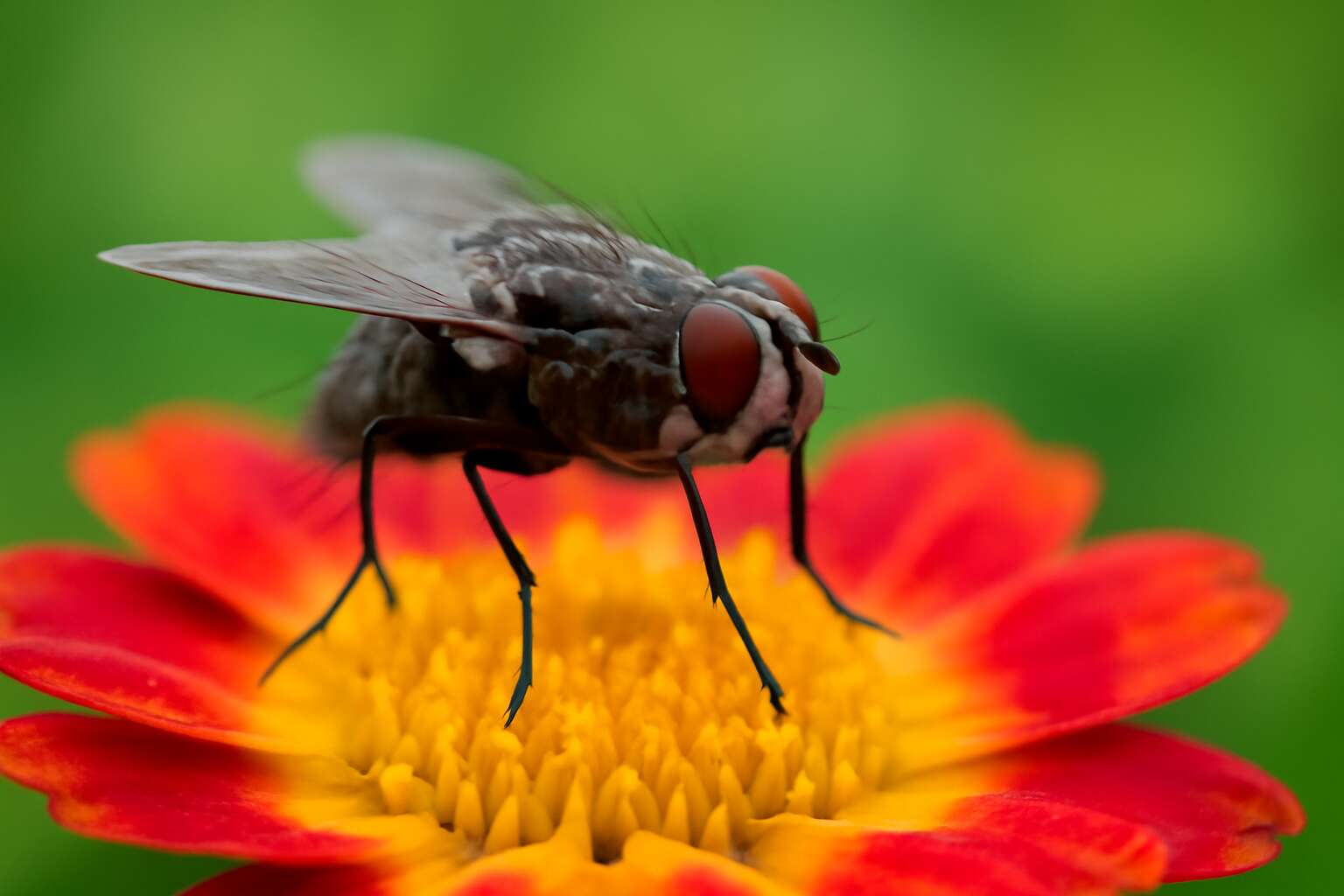
One in three bites of food worldwide depend on pollinators, and South Africa’s fields are no exception. Flies move through blooms with purposeful, almost shy intent, visiting a spectrum of flowers when bees are tucked away. Pollination potential among fly species is vast: hoverflies, midges, and other fly families shuttle pollen between blossoms, supporting fruit set in both wild landscapes and cropping systems. This is a robust reminder of why flies are important.
Their pollination strategies are nuanced:
- Generalist foraging across diverse blossoms, expanding the pollination network beyond bees
- Nocturnal and crepuscular activity keeps blooms productive after sunset in some habitats
- Body hairs and wing patterns facilitate pollen cling and transfer across many flower types
In SA’s climate mosaic, I watch these quiet interactions weave resilience into agricultural and natural systems, keeping blossoms, berries, and biodiversity alive. Pollination by flies quietly underpins food webs and landscape health.
Flies in food webs and ecosystem dynamics
One in three bites of our food owes its existence to the unseen engineers in the air—pollinators—and flies play a fearless, enduring co-star in that grand drama. In South Africa, the quiet flights of these creatures weave a living reminder of how life threads itself together. This is why flies are important.
In food webs, fly larvae churn detritus into energy that sustains soils and the creatures that depend on them. Adults bridge kingdoms by sipping nectar and serving as prey for insectivores, birds, and bats, weaving a dynamic that keeps ecosystems resilient across changing seasons.
- Larval tunneling aerates soils and enhances drainage, supporting root systems
- Adults provide a vital prey base for insectivores and birds, anchoring energy flow
- Flies act as bioindicators, signaling habitat health and ecological resilience
Across South Africa’s thornbush savannas and urban edges, these winged engineers shape the rhythm of life with patient, almost mythic steadiness. Their influence echoes through fields and landscapes alike, a quiet testament to the power of small beings in a vast web.
Geographic distribution and habitat influence on ecosystem services
Across South Africa’s diverse biomes, flies perform subtle but essential ecological roles. Their geographic distribution maps out linked networks, from arid savannas to misty coastlines, shaping predator–prey dynamics and the persistence of ecological communities when seasons shift.
Habitat influence on ecosystem services varies with where flies live. In urban edges, riparian zones, and farm margins, they contribute to waste reduction, nutrient turnover at micro-sites, and the maintenance of plant and soil health.
- Coastal and wetland mosaics
- Urban greens and peri-urban patches
- Mountain to savanna transition zones
In short, this complexity reveals why flies are important.
Economic and agricultural significance
Roles in pest control and waste management
Across South Africa’s sunlit orchards and feedlots, this is why flies are important in shaping farm economics: waste-management costs can drop by up to 25% when we align with natural processes rather than fight them!
Economic and agricultural significance reveals itself in two streams: pest control and waste management. Tachinid fly larvae parasitize caterpillars, dampening outbreaks and easing chemical reliance. In waste streams, black soldier fly larvae rapidly convert organic residues into usable material, curbing landfill pressure and yielding protein-rich feed and nutrient-rich frass.
- Natural pest suppression reduces chemical input
- Bioconversion turns waste into protein and fertilizer
- Odor reduction and cleaner disposal streams
Impact on livestock health and sanitation
On South African farms, waste-management costs can drop by up to 25% when we align with natural processes. This is why flies are important for South African farms and livestock health.
Cleaner yards, calmer animals, and steadier production come from better sanitation. Reduced fly pressure supports livestock health and protects margins.
- Cleaner pens and barns as waste is channeled into safer, natural processing
- Lower veterinary costs through improved sanitation and disease control
- Less odor and smoother manure handling around livestock facilities
Ultimately, natural processes in the barn translate to fewer veterinary calls and more predictable outputs. That link between nature and profit underlines the value of these small allies in South African livestock operations.
Pollination value for crops and agricultural yields
Across South African fields, tiny wings can tilt the balance between a modest harvest and a bountiful one. Flies contribute to pollination across a surprising range of crops—from orchard fruit to leafy greens—helping set fruit, improving seed production, and stabilizing yields in a changing climate. The economics are real: even modest improvements in pollination can translate into measurable gains for farm budgets.
In practical terms, the financial edge shows up as:
- Increased crop yields and fruit quality through natural pollination
- Lower input costs as pollinators supplement or replace some managed services
- Greater harvest predictability and export potential in risk-prone seasons
These benefits underscore a simple truth: why flies are important. In the South African agricultural mosaic, pollination by flies ties biodiversity to farm livelihoods, supporting yields, market access, and resilience.
Forensic science contributions and legal relevance
Flies quietly protect farm budgets in South Africa by turning waste into value and supporting resilient cropping systems. In practical terms, their role in nutrient turnover and sanitation reduces disease pressure and input costs, helping farms stay financially steady even when markets wobble. Understanding why flies are important shines a light on how biodiversity underpins rural livelihoods and export readiness!
In forensic science, the same biology helps reconstruct timelines and bolster evidence.
- Estimating time of death from blowfly larvae and their temperature-based growth.
- Proper handling and documentation to support admissibility in court.
- Ongoing training and standard methods that strengthen credibility in investigations and policy enforcement.
Legal relevance: entomological evidence is increasingly standardized in court, clarifying how flies inform regulatory decision making and pest management policy.
Scientific research and innovation
Model organisms in genetics and development
In the quiet corners of South African biolabs, fruit flies carry big answers—more than 60% of human disease genes have counterparts in Drosophila. As model organisms in genetics and development, they offer a rapid, affordable window into how genes sculpt growth, organ formation, and behavior. Researchers still ask why flies are important.
Advances rely on a nimble toolkit: genome editing, RNA interference, and live imaging let scientists link genes to fate with speed. A concise lineage of experiments illuminates developmental pathways, from cell fate decisions to tissue patterning.
- rapid, cost-effective genetic screens that map function to form
- conservation of core signaling mechanisms across species
From South Africa’s universities to global consortia, Drosophila research sparks innovations in education, drug discovery, and biotechnology. The elegant simplicity of this tiny organism amplifies our understanding of disease and development, inviting curiosity and careful debate alike.
Insights into aging and life cycles from fly studies
Across South African laboratories, the unassuming fruit fly doubles as a quiet oracle on aging. Fly studies reveal how simple life cycles harbor complex stories of aging, senescence, and regenerative potential. The elegance lies in their transparency: with fast generation times and a toolkit that bends genes to will, researchers trace how cells navigate stress and repair. This is why flies are important.
- Rapid generation times accelerate discovery and testing of aging hypotheses
- Conserved signaling networks reveal parallels with human aging and disease
- Live imaging and behavior assays illuminate how time sculpts function and fate
From Cape Town to Pretoria, these insights inform drug discovery, biotech education, and public health strategies. Their tiny life stories teach resilience and caution, reminding us that progress often hops on the wing of a fast-evolving model.
Genome sequencing and functional genomics milestones
With life cycles of roughly 10 days and a genome map that unlocked complex biology, genome sequencing milestones illuminate why flies are important. The fruit fly’s compact genome offers a readable map of conserved pathways that guide cells under stress and through regeneration. Across South Africa, researchers translate these milestones into practical tools for drug discovery, biotech education, and public health. The story of sequencing shows how simple organisms carry universal codes that echo in human biology.
- The Drosophila genome, a landmark mapping, sped comparative biology.
- RNAi and CRISPR screens mapped developmental and aging networks.
- Single-cell transcriptomics unveiled tissue programs in metamorphosis.
Together, these advances craft a narrative where model organisms illuminate health challenges and foster innovation across South Africa and beyond.
Contributions to neuroscience and behavior research
A fruit fly brain houses about 100,000 neurons—a tiny cosmos of circuits that hum with potential.
In neuroscience and behavior research, these tiny minds map how perception blooms into action, revealing how learning, memory, and social cues flow through neural networks. In South Africa, laboratories translate these threads into tangible insights—from classroom demonstrations to therapeutic screens—where imagination meets meticulous experiment.
This clarifies why flies are important for neuroscience education and innovation.
- neural circuit mapping at cellular detail
- behavioral assays that quantify learning, memory, and decision making
- gentle, scalable gene-editing approaches for rapid function tests
Conservation, ethics, and public perception
Protecting fly diversity and habitats
Ethical considerations in fly research and pest management
There are more described fly species on Earth than mammals, a fact that reframes why flies are important. In South Africa’s wind-swept plains and bustling towns, flies choreograph nutrient recycling, break down waste, and even assist in pollination in surprising ways.
To navigate conservation, ethics, and public perception, researchers and managers uphold a few core principles:
- Protect non-target species and minimize ecological disruption
- Employ humane research methods and seek alternatives to harmful chemicals
- Engage communities with clear data to shape responsible pest management choices
Public perception matters; in urban and rural communities alike, reframing flies from nuisances to guardians of health and habitat fosters trust. Understanding this helps align science, ethics, and policy.
Addressing myths and misinformation about flies
In South Africa, more species of flies share the air with us than there are mammals on the plains—a thriving, overlooked chorus across the Karoo and our coastal towns.
Conservation, ethics, and public perception steer our approach. Conservation means protecting habitats and non-target life; ethics push humane methods and restraint from harmful chemicals; public perception calls for clear data that reframes flies as guardians of health, countering myths and misinformation. Understanding why flies are important is not just science—it’s a social contract that guides policy, ethics, and conservation choices.
- They’re just dirty nuisances with no purpose
- They spread disease indiscriminately
- They’re not part of healthy ecosystems
- They deserve eradication rather than understanding
When communities hear honest data and see the nuanced roles, people shift from fear to informed stewardship.
Public health implications and safe handling protocols
Across South Africa, more species of flies share the air with us than there are mammals on the plains—a thriving, overlooked chorus from the Karoo to our coast. Conservation, ethics, and public perception steer our approach. We protect habitats, favour humane methods, and welcome a science-led conversation that reframes flies as guardians of health rather than nuisances.
This is the moment to ask why flies are important—not as a headline, but as a living contract between people and ecosystems we share. When communities hear honest data and see nuanced roles, fear yields to stewardship and policy becomes measured, not sensational.
Public health implications demand care that is ethical and informed. Safe handling protocols emerge as principles rather than prescriptions.
- Respect habitats and non-target species
- Minimize exposure through thoughtful management
- Present clear, evidence-based data
In this framework, conservation becomes a living pact between people, policy, and ecosystems.


0 Comments