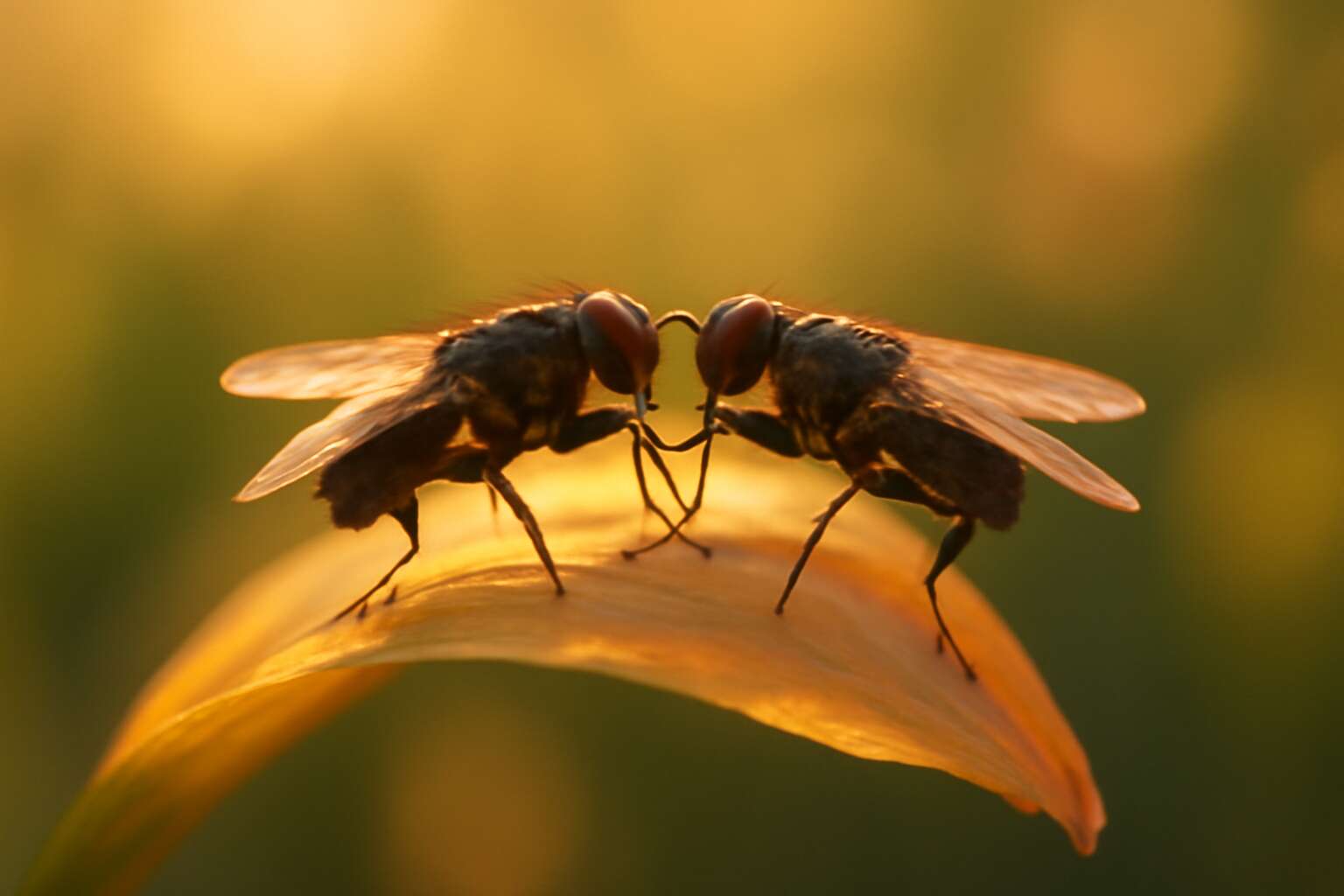
Understanding Fly Mating Behavior
Overview of Fly Reproductive Instincts – Examining the natural instincts that drive fly mating behaviors
Believe it or not, flies have a surprisingly complex set of instincts guiding their reproductive antics. When flies fall in love—well, more accurately, when they fall into the throes of mating—it’s driven by a fascinating cocktail of chemical cues and visual signals. These tiny winged matchmakers don’t just pair up haphazardly; their behavior is a finely tuned dance of attraction and territorial display.
For example, male flies often engage in elaborate courtship rituals, such as vibrating their wings to produce specific sounds or releasing pheromones that act as love potions. These chemical signals serve as a kind of love-at-first-scent for their potential mates, igniting the spark that will lead to reproduction. It’s a natural instinct that ensures their survival and perpetuation—an instinct as old as time itself.
Understanding the natural instincts that drive fly mating behaviors reveals a surprisingly intricate process. Flies are keen observers of their environment, constantly assessing the availability of mates and the right moment to strike. The question of when flies fall in love isn’t just about biology; it’s a carefully calibrated instinct that aligns with their life cycle and environmental cues.
- Visual cues and wing vibrations serve as the initial signals of interest.
- Pheromones act as potent love messages, triggering a mating response.
- Territorial behavior often influences mate choice, with dominant males securing the best partners.
Life Cycle and Mating Seasons – Discussing when flies are most likely to mate and the factors influencing their reproductive cycles
Understanding the fly’s reproductive cycle is akin to unraveling a delicate dance choreographed by nature’s most intricate instincts. Flies, often dismissed as mere pests, follow a surprisingly precise schedule for mating, closely aligned with environmental cues that dictate their reproductive timing. The question of when flies fall in love, in essence, is rooted in these seasonal and ecological factors that influence their life cycle. During warmer months, particularly in South Africa’s temperate zones, temperatures rise and food sources become abundant, creating an ideal environment for mating activities to peak.
This period marks the hottest window for fly reproduction, as their reproductive instincts are heightened. Flies are highly responsive to external stimuli such as light and humidity, which serve as signals for when they should prioritize mating. The confluence of these factors ensures that their reproductive efforts are not random but carefully synchronized to maximize survival and proliferation.
- Optimal temperatures
- Availability of food sources
- Environmental humidity levels
In these conditions, flies become more active, with heightened territorial behaviors and courtship rituals. The timing of when flies fall in love is thus a sophisticated interplay of environmental cues and biological imperatives, ensuring their species continues to thrive amid the complexities of their habitat.
Chemical Signals and Pheromones – Exploring how flies communicate readiness to mate through chemical signals
Fly communication is a fascinating aspect of their reproductive behavior, especially when considering the question of when flies fall in love. Unlike humans, flies rely heavily on chemical signals—pheromones—to signal their readiness to mate. These chemical messengers are subtle yet powerful, releasing information about a fly’s reproductive state and attracting potential mates in an instant. Understanding these signals reveals a remarkable level of biological sophistication that often goes unnoticed.
When flies detect specific pheromones in their environment, they interpret these chemical cues as signs of a suitable mate. This chemical dialogue triggers a series of courtship rituals, including visual displays and territorial behaviors. Interestingly, the intensity and composition of pheromones can vary based on environmental factors such as temperature and humidity, influencing exactly when flies fall in love. Their mating calls aren’t just instinctual—they’re chemically orchestrated, ensuring the timing aligns perfectly with ecological conditions.
In fact, the ability for flies to communicate their reproductive status chemically is so precise that it influences their entire mating cycle. To simplify the process, here are key factors that affect when flies fall in love:
- Presence of specific pheromones indicating reproductive readiness
- Environmental cues like temperature and humidity levels
- Visual cues combined with chemical signals to attract mates
This chemical signaling mechanism underscores how intricately flies are wired to their environment, ensuring their reproductive efforts are not only instinctual but also highly synchronized with ecological cues. When flies fall in love, it’s a finely tuned dance of chemicals and signals, orchestrated by nature’s unseen hand.
Symbolism of Love in Nature
The Metaphor of Flies in Romantic Contexts – Analyzing how flies are used as symbols in stories about love
In the intricate tapestry of nature’s symbolism, flies often carry a surprisingly profound role—especially when they fall in love. While many dismiss these creatures as mere pests, their behavior hints at deeper biological narratives that mirror human emotions. The metaphor of flies in romantic contexts is a fascinating lens through which we explore themes of persistence, fleeting passion, and instinctual drives. In stories and symbolic representations, flies evoke the idea that love isn’t always polished or pristine; sometimes, it’s raw, chaotic, and driven by primal urges.
This symbolism becomes even more compelling when considering the transient nature of fly mating seasons and their relentless pursuit of connection. When flies fall in love, it’s a testament to their survival instinct, an unyielding quest that echoes through centuries of folklore and literary symbolism. Their tiny, relentless courtship rituals serve as a mirror to the tumultuous and unpredictable nature of love itself—sometimes messy, often urgent, but undeniably vital.
Comparison with Other Insects’ Mating Rituals – Contrasting fly courtship with that of bees, butterflies, and beetles
In the grand tapestry of nature’s love stories, the courtship rituals of insects reveal surprising insights. While flies exhibit a raw, frantic approach to love—driven by instinct—other insects display more elaborate behaviors. Bees, for example, perform intricate dances to signal their readiness, emphasizing communication and cooperation. Butterflies, on the other hand, often rely on vibrant displays and chemical signals to attract mates, showcasing beauty and subtlety. Beetles, meanwhile, tend to engage in competitive displays, highlighting strength and dominance.
When flies fall in love, their pursuit is relentless and primal. It contrasts sharply with the more ceremonial rituals of bees or the visual seduction of butterflies. Flies’ courtship is quick, often chaotic, yet remarkably effective.
- In this way, their mating rituals underscore the idea that love can be messy and instinct-driven—just as it is when flies fall in love.
Understanding these differences enriches our view of love’s symbolism in nature, revealing that passion often manifests in diverse, sometimes surprising, forms.
Uniqueness of Fly Attraction and Pairing
Fly Courtship Displays – Detailing behaviors such as aerial dances and territorial disputes
In the delicate dance of love, flies exhibit a surprising array of courtship behaviors that underscore their unique attraction mechanisms. When flies fall in love, it’s not merely a matter of chemical signals—though pheromones certainly play a pivotal role—but also an intricate display of aerial artistry and territorial prowess. Their courtship rituals resemble tiny ballets, with males performing elaborate aerial dances that captivate and communicate their intent to potential mates.
Territorial disputes are common during this courtship period, as males fiercely defend prime spots to attract the attention of passing females. These disputes often escalate into rapid chases and aerial duels, each fly demonstrating strength and agility. Such behaviors serve as visual affirmations of fitness and vitality, vital factors in the decision-making process when flies fall in love. The combination of dance, display, and territorial challenge creates a vibrant tapestry of attraction that is as fascinating as it is fleeting.
Environmental Factors Influencing Attraction – How temperature, humidity, and food sources affect fly pairing
The environment plays a surprising role in when flies fall in love. Temperature, humidity, and available food sources can significantly influence their attraction and pairing behaviors. Flies are ectothermic creatures, meaning their activity levels and reproductive readiness often hinge on external conditions. In warmer, humid conditions, flies tend to become more active, increasing the likelihood of encounters that lead to pairing. Conversely, cooler or drier environments may suppress their mating behaviors, making moments of love rare and fleeting.
Food sources also act as critical catalysts in fly attraction. Decaying organic matter, for instance, not only provides nourishment but also attracts potential mates. Sometimes, the presence of abundant food sources can create hotspots of courtship activity, where multiple flies gather and compete for attention. In such settings, territorial disputes and aerial dances become more intense, underscoring how environmental factors shape when flies fall in love. These external influences ensure that their mating rituals are perfectly timed with optimal conditions, demonstrating nature’s intricate balance.
Role of Genetics and Health – Understanding how genetic compatibility may influence mate choice
Within the delicate dance of nature, the question of when flies fall in love remains an intriguing mystery. Beyond their seemingly simple existence, flies possess a complex mechanism of mate selection influenced deeply by genetics and health. It’s believed that certain genetic compatibilities may subtly sway their preferences, ensuring that only the fittest genes are passed on. This genetic filter acts like an invisible thread, guiding flies toward partners that promise vitality and reproductive success.
Remarkably, flies are highly attuned to health signals, often choosing mates that exhibit signs of robustness and vitality. This preference enhances their chances of passing on strong, resilient genes. Their selection process isn’t purely instinctual; it’s a finely tuned system that balances genetic compatibility with environmental cues. In some cases, flies will even engage in elaborate courtship displays—such as aerial dances—that might serve as visual tests of health and vigor, further revealing when flies fall in love.
Rare and Noteworthy Cases of Fly Pairing
Unusual Mating Stories – Documenting extraordinary or rare fly pairings observed by scientists
In the intricate world of insects, some fly pairings defy expectations, revealing a level of complexity that borders on the extraordinary. Remarkably, scientists have documented rare cases of flies forming seemingly unlikely bonds, challenging our understanding of their reproductive instincts. These extraordinary pairings often occur under specific environmental conditions, where chemical signals and pheromones align in an almost poetic dance of attraction.
One such noteworthy case involved a pair of blowflies observed engaging in an extended aerial courtship that lasted for hours—an event so uncommon that it captivated researchers. These instances serve as a vivid reminder that when flies fall in love, it’s not always a straightforward affair. Instead, it’s a nuanced interplay of genetics, environmental cues, and instinctual behaviors that sometimes results in astonishingly unusual mating stories.
Implications for Understanding Fly Behavior – What these cases reveal about flies’ social and reproductive habits
Rare and noteworthy cases of fly pairing shed light on the complexity of insect behavior. These extraordinary observations challenge the common perception that flies mate purely out of instinct. Instead, they reveal a nuanced social fabric where environmental cues and chemical signals play a pivotal role. When flies fall in love, their interactions can become surprisingly elaborate, hinting at a form of choice and preference that borders on the poetic.
Scientists have documented instances where flies engage in prolonged courtship rituals, sometimes lasting hours. These behaviors suggest that fly mating is not just a matter of chance but involves intricate signals and subtle exchanges. In some cases, flies seem to recognize genetic compatibility, indicating a level of selective mating that was previously underestimated. Such occurrences have significant implications for understanding fly reproductive habits and social dynamics. They point to a surprising level of sophistication in what is often dismissed as simple insect behavior.
- Extended aerial courtship displays
- Recognition of genetic compatibility
- Environmental factors influencing attraction
These rare events serve as a vivid reminder that when flies fall in love, it is an interaction shaped by a complex interplay of biology and environment. Recognizing these nuances helps unravel the deeper layers of fly behavior and their subtle social cues. Such insights are essential for anyone studying insect ecology or seeking to understand the full scope of fly reproductive strategies.
Mythology and Cultural Interpretations
Historical Perspectives on Flies and Love – Exploring ancient stories and symbolism involving flies
Across ancient mythologies and cultural narratives, flies have often been cast as more than mere pests; they embody complex symbolism related to mortality, transformation, and the fleeting nature of love. Historical perspectives reveal that early civilizations, from Egyptian to Greek, occasionally associated flies with divine messages or the soul’s journey. In some stories, flies serve as metaphorical messengers carrying secrets of love and longing, whispering truths that humans often overlook. These interpretations suggest that when flies fall in love, it transcends their mundane existence, hinting at a deeper, almost mystical connection with life’s impermanence.
In traditional symbolism, the fly’s persistent presence is sometimes viewed as a reminder of life’s transient passions. For instance, in certain South African folklore, flies symbolize the persistence of love despite decay and impermanence. Exploring these ancient stories, one finds that the symbolism of flies in romantic contexts is often intertwined with themes of resilience, obsession, and the inevitable decline that accompanies all earthly pursuits. Such narratives probe the moral and existential questions surrounding love’s ephemeral nature, making their symbolism both poignant and universal.
Modern Cultural References – How contemporary media depicts flies in romantic or love-related contexts
In modern storytelling, the image of a fly falling in love might seem absurd at first glance, yet it’s a surprisingly potent metaphor. Films, literature, and even advertising sometimes depict flies as characters embodying obsession, resilience, or fleeting passions. For example, animated cartoons often portray flies with romantic interests, emphasizing their relentless pursuit despite the odds. These portrayals serve as a humorous reminder of how love can transcend even the most mundane or repulsive circumstances, illustrating that when flies fall in love, it’s a reflection of universal longing and persistence.
Contemporary media frequently uses flies symbolically to explore themes of obsession and decay. In some indie films, a fly’s persistent presence becomes a metaphor for unrequited love or the inescapable passage of time. Interestingly, this cultural representation aligns with ancient symbolism, where flies were seen as messengers of divine secrets or symbols of life’s impermanence. By integrating these modern interpretations, creators deepen the narrative, revealing that when flies fall in love, they mirror human struggles with love’s ephemeral nature and the desire for lasting connection amidst inevitable decline.
How Studying Fly Mating Behavior Can Inform Science
Insights into Animal Behavior and Evolution – Understanding reproductive strategies in insects
Studying fly mating behavior offers a fascinating glimpse into the intricate dance of evolution and survival. Recent research reveals that when flies fall in love, their reproductive strategies become remarkably sophisticated, showcasing a complex interplay of chemical signals and behavioral cues. These tiny creatures are not merely instinct-driven; they exhibit a form of courtship that can teach us about the broader mechanisms of animal behavior and natural selection.
By observing these miniature romances, scientists uncover patterns that extend beyond flies, shedding light on how reproductive success influences genetic diversity and evolutionary pathways. Flies often engage in aerial displays, territorial disputes, and chemical communication—behaviors that mirror larger, more studied species but are scaled down to their essential elements. Understanding these routines helps us comprehend the evolutionary pressures shaping not just insects but the entire animal kingdom.
Informing Pest Control and Ecology – Using knowledge of fly reproduction to manage populations
Understanding when flies fall in love isn’t just a curiosity—it’s a window into how tiny creatures influence our ecosystems and pest control strategies. By delving into their reproductive behavior, scientists can develop innovative methods to manage fly populations more sustainably. For instance, manipulating chemical signals or pheromones that flies use during courtship can disrupt their mating cycles, reducing their numbers without harmful pesticides. This knowledge is pivotal in areas where fly-borne diseases are prevalent, offering a natural tool to curb their spread.
Furthermore, studying these miniature romances helps ecologists comprehend the delicate balance within local environments. When flies fall in love, they follow specific cues that can be harnessed for ecological benefit. Implementing bait traps that mimic natural pheromones, for example, can selectively attract and control pest species while preserving beneficial insects. As such, understanding their mating rituals provides a fascinating yet practical approach to integrated pest management and ecological conservation in South Africa’s diverse landscapes.


0 Comments