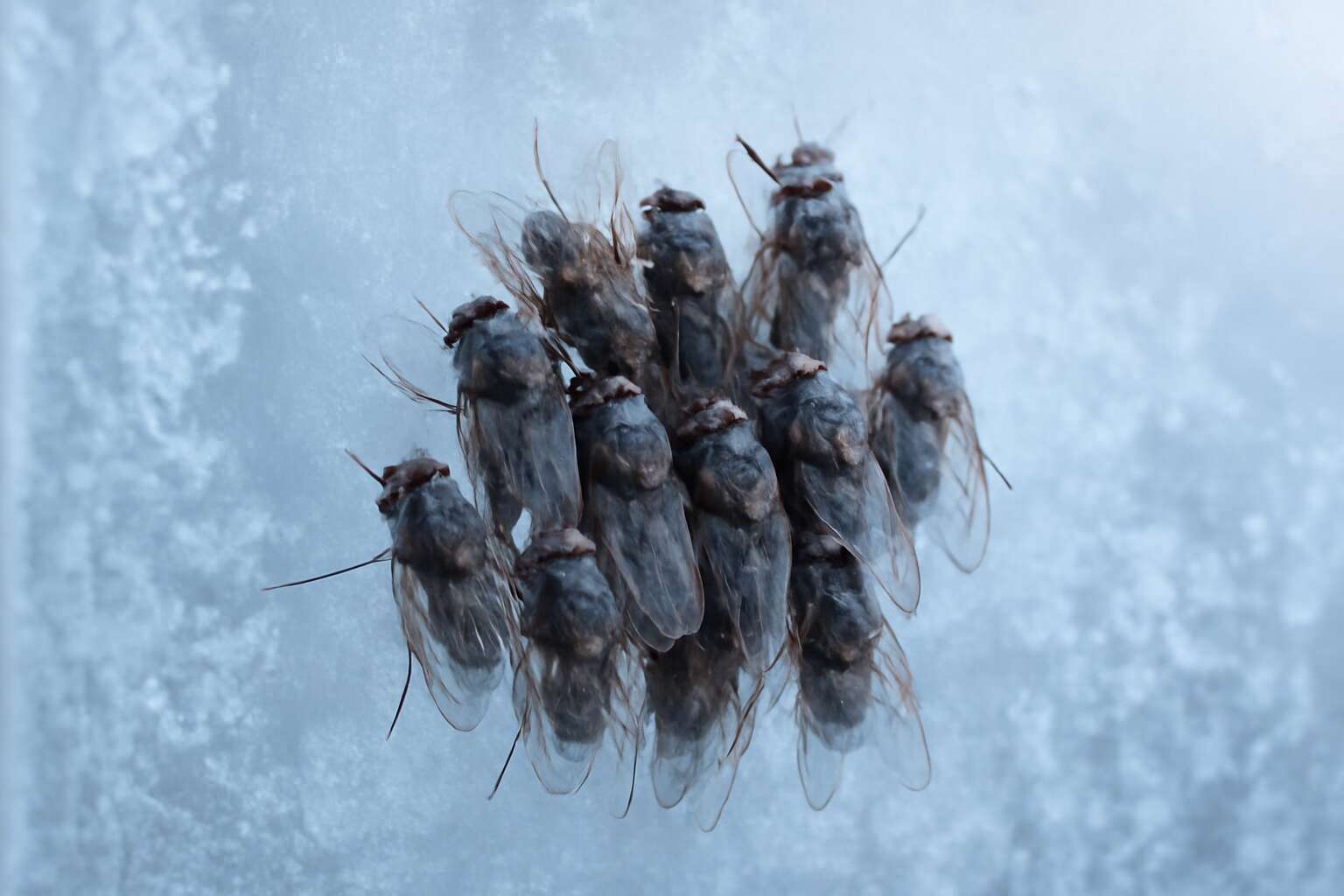
Winter fly behavior and ecology outline
Winter fly behavior and survival strategies
Winter reshapes the field for flies in winter! Many species slow to a whisper, their metabolism dipping by as much as 50% as diapause takes hold. They tuck into bark crevices, leaf litter, or sun-warmed wall cracks, waiting for warmth to return.
Survival hinges on a few quiet tactics:
- Diapause seals development until safe warmth returns
- Microhabitats offer shelter from frosts
- Cold-hardiness genes and antifreeze compounds
- Timing: reproduce only when spring signals a shift
When spring thaws arrive in South Africa’s varied climates, these insects resume activity, contributing to decomposition and early pollination. In urban pockets and natural habitats, they form small communities, shaping the seasonal balance in surprising ways.
Species overview and identification for winter flies
Winter hushes South Africa’s landscapes, yet flies in winter prove resilience wears wings. From coastal mists to sun-warmed stone walls, these tiny travelers endure by seizing pockets of warmth. Their quiet persistence adds color to the season, a reminder that beauty still stirs when daylight thins and temperatures dip.
Species overview and identification reveals a diverse, understated cast. Winter-active flies are small, with muted colors or metallic glints and wings built for brisk, darting flights.
- Compact bodies with muted tones or subtle metallic highlights
- Wings with practical venation for quick takeoffs
- Antennae bearing a delicate bristle pattern
- Size range from tiny to mid-sized; agile fliers
Across South Africa’s climate mosaic, they contribute to nutrient cycling as winter yields to spring’s first signs.
Indoor environments and winter fly problems
Winter tightens its grip on South Africa’s interiors, and the flies in winter learn to read the house like a map. ‘Heat is the magnet in winter,’ an entomologist observed, and these travelers follow the glow of lamps into rooms that feel like a warm refuge!
Inside, warmth and moisture sculpt microhabitats where they thrive—kitchens, pantries, and damp corners where organic residues accumulate. They glide through the air with purpose, tracing scent trails from ripe fruit, spilled drinks, or pet litter, turning quiet rooms into quiet theaters of survival.
- Heated kitchens and dining areas with lingering food residues
- Greenhouses, conservatories, or drafty sunrooms with plant matter
- Bathrooms, laundry spaces, and pet enclosures that retain moisture
These scenes remind us that even in South Africa’s mild winters, houses become weathered microcosms where winter ecology unfolds unseen, and the motion of flies in winter persists as a subtle, dusky hum.
Prevention and control strategies for winter
“Heat is the magnet in winter,” an entomologist observed. Winter drapes South Africa’s interior as the expedition of flies in winter persists, a tide under lamplight. They ride thermal currents, threading door cracks, drawn by warmth, seeking shelter in rooms that glow.
Ecology in these confines is a study in microhabitats: damp corners where spills linger, fruit remnants aging into syrupy nights, the humid hush of bathrooms and kitchens. Their routines are quiet but purposeful; they skim the air, tracing sustenance to a welcoming harbor.
- Attractant reduction through mindful sanitation and residue awareness
- Moisture balance in living spaces, reducing damp microhabitats
- Barriers and entry-point awareness to limit wanderers
Prevention and control strategies for winter hinge on shaping the environment rather than chasing the flutter. By aligning space with hygiene, dryness, and barriers, the house becomes less a cathedral of warmth and more a fortress against the hustle of the wings.


0 Comments