Understanding Flies’ Vision and Navigational Abilities
How Flies See the World – Overview of fly vision and sensory perception
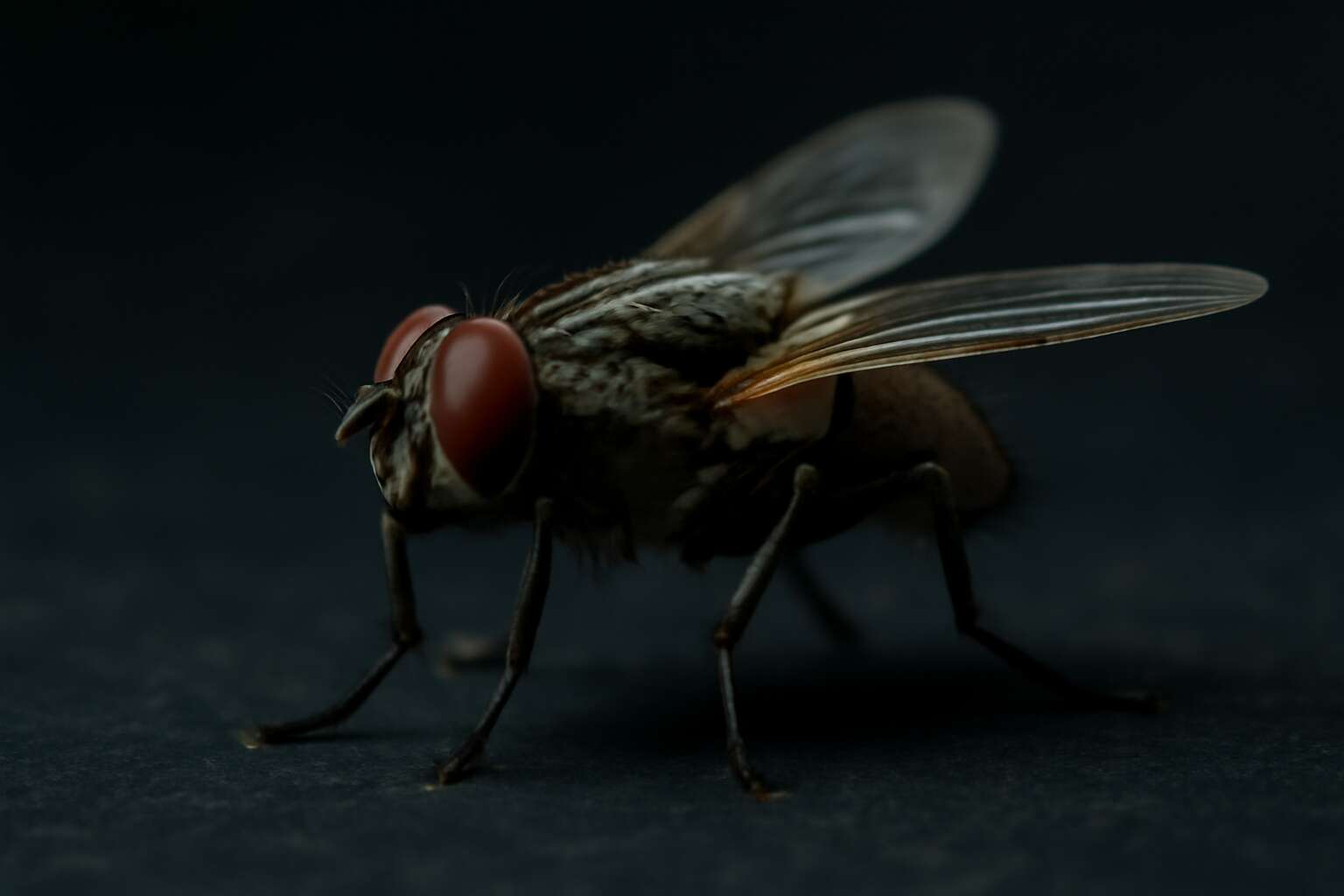
Flies possess a remarkable visual system that defies the ordinary, allowing them to navigate complex environments with astonishing agility. Their compound eyes, composed of thousands of tiny lenses, create a mosaic of perception that is both intricate and highly sensitive. This sensory architecture enables flies to detect rapid movements and subtle shifts in light, providing a vivid tapestry of the world around them. But can flies fly in the dark? While their vision is superb under illuminated conditions, their ability to operate in complete darkness remains limited, relying heavily on other sensory cues.
In fact, flies have evolved a suite of sensory perceptions that extend beyond their eyes, including sensitive antennae and mechanoreceptors that pick up vibrations and air currents. These adaptations allow them to orient and move even when visual input is minimal or absent. Notably, their navigational prowess often hinges on a complex interplay between visual stimuli and these non-visual cues, making them adaptable in various lighting environments. When darkness falls, their reliance shifts, and their chances of flying diminish, yet they may still find a way to sense and respond to their surroundings.
Fly Eyes and Visual Range – Types of eyes and their role in navigation
The question of whether can flies fly in the dark touches on the delicate balance between sight and sensory perception. Flies, with their complex visual systems, are often perceived as creatures of light and movement. But their navigational prowess extends far beyond their remarkable eyes. Their ability to adapt to low-light conditions hinges on a sophisticated combination of sensory inputs that transcend mere vision.
Fly eyes, primarily composed of thousands of tiny lenses, grant them an impressive visual range. However, this visual acuity diminishes significantly in darkness. Instead, they rely heavily on other senses—such as their antennae and mechanoreceptors—that detect vibrations and air currents. These non-visual cues become vital when visual information is sparse, hinting at their capacity for limited flight even in the absence of light.
- Vibrational sensing through specialized hairs on their bodies
- Air current detection via sensitive antennae
- Integration of multisensory data for spatial awareness
While their visual system is optimized for daylight and illuminated environments, the question remains—can flies fly in the dark? The answer is nuanced. Though their chances of successful navigation decline without light, their reliance on non-visual cues means they are not completely incapacitated. Instead, they may still respond to environmental vibrations and air movements, allowing for limited flight and movement in darkness, albeit with reduced agility and precision. This intricate interplay of sensory perception underscores the resilience of flies, revealing a creature that adapts, survives, and persists beyond the bounds of light.
Adapting to Darkness – Fly behavioral adaptations in low-light conditions
Despite their reputation as creatures of daylight and swift, erratic flight, flies possess a surprising resilience when darkness falls. Recent studies reveal that their ability to navigate in low-light conditions is not solely dependent on visual acuity. While their compound eyes, marvels of biological engineering, excel in detecting movement and contrast in bright environments, they falter when illumination diminishes. Yet, the question lingers—can flies fly in the dark? The answer reveals a complex interplay of sensory adaptations that defy simple categorization.
Even when visual cues fade into obscurity, flies do not become entirely incapacitated. Instead, they pivot to other finely tuned sensory mechanisms. Their antennae, equipped with mechanoreceptors, pick up subtle air currents and vibrations—crucial data points that guide flight when sight is limited. Additionally, specialized hairs on their bodies detect minute vibrations from their surroundings, allowing them to maintain spatial awareness. This multisensory integration enables limited flight in darkness, albeit with diminished precision and agility.
- Detecting environmental vibrations
- Feeling air currents through sensitive antennae
- Processing multisensory cues for navigation
Such adaptations underscore the remarkable plasticity of fly behavior. Though their chances of successful navigation decline without light, their capacity to adapt to darkness hints at an evolutionary resilience that has allowed them to thrive in diverse environments. So, while flies are primarily visual navigators, their ability to fly in the dark depends on a sophisticated system of sensory inputs that extend beyond mere sight. This intricate reliance on multisensory perception keeps them moving—sometimes in the shadows, but always alert to their surroundings.
Do Flies Really Fly in Complete Darkness?
Behavior of Flies in Low-Light Environments – Empirical observations and studies
Contrary to popular belief, flies are not mere nocturnal creatures stumbling blindly through the night. Recent empirical observations suggest that, yes, flies can fly in the dark, but their behavior in low-light environments is markedly different from their daytime antics. In complete darkness, many flies tend to adopt a more cautious approach, often reducing their flight intensity to avoid potential threats or disorientation.
While their compound eyes are marvels of evolution, capable of detecting even faint light, they are not designed for total darkness. Instead, flies excel in dim conditions, where their sensory adaptations shine brightest. Some studies indicate that flies rely more heavily on mechanosensory cues and olfactory signals when visual input is limited, allowing them to navigate through shadows and obscurities with surprising agility.
- Flies can fly in the dark, but their flight is often more tentative and less directed.
- They tend to stay close to familiar surfaces or sources of scent in low-light conditions.
- Behavioral shifts include a decrease in speed and erratic flight patterns, indicating a reliance on other senses beyond vision.
In essence, while the question “can flies fly in the dark” might seem straightforward, the answer reveals a fascinating interplay of sensory reliance and behavioral adaptation—one that keeps these tiny acrobats aloft even when the world around them is cloaked in shadows.
Limitations of Fly Vision – What darkness impairs and what it doesn’t
When darkness shrouds the world, many wonder: can flies fly in the dark? The answer isn’t as straightforward as one might assume. While their compound eyes are marvels of evolution, capable of detecting faint traces of light, complete darkness presents a formidable challenge. Flies rely heavily on visual cues for navigation, yet their vision isn’t designed for the pitch-black void. Instead, darkness impairs their ability to see fine details and detect rapid movements, which are crucial for precise flight.
Nevertheless, flies are not entirely helpless in the dark. Their incredible sensory system allows them to adapt and compensate through other senses. For instance, mechanosensory cues and olfactory signals become vital when visual information is limited. These tiny acrobats tend to stay close to familiar surfaces or scent trails, often displaying more tentative and erratic flight patterns. Their flight in darkness is thus more cautious and less directed, highlighting the limitations of their vision while showcasing their remarkable adaptability.
- Visual impairment in total darkness
- Enhanced reliance on touch and smell
- Behavioral shifts towards safety and familiarity
Environmental Factors Influencing Flight – Influence of ambient light levels on fly activity
Flies are often seen darting through the brightest days, their tiny wings a blur of frenetic energy. Yet, as darkness descends, a different question emerges: can flies fly in the dark? The answer isn’t a simple yes or no. While their visual system is finely tuned to detect faint light, total darkness presents an insurmountable barrier. Flies depend heavily on visual cues for navigation, but in pitch-black environments, their ability to see diminishes sharply, impairing their capacity for rapid, precise flight.
Environmental factors such as ambient light levels play a crucial role in fly activity. In low-light conditions, their flight patterns become more tentative, often influenced by the presence of moonlight, shadows, or artificial lighting. Interestingly, darkness triggers a behavioral shift—flies tend to stay close to familiar surfaces or scent trails, relying more heavily on their sense of touch and smell. This adaptation allows them to navigate despite limited visual input, though their flight remains less directed and more cautious in the absence of light.
Mechanisms Behind Fly Navigation in Darkness
Use of Sensory Cues – How flies compensate for poor vision
In the shadowed realm where darkness cloaks the earth, many wonder—can flies fly in the dark? The answer, cloaked in mystery and marvel, lies not solely in their fragile vision but in a symphony of sensory cues that guide their every erratic dance through the night. Flies, those tiny nocturnal wanderers, have evolved an uncanny ability to navigate in the absence of light, relying on a complex web of sensory perception that surpasses mere sight.
Beyond their eyes, which are marvels of biological engineering, flies possess a heightened sense of smell and tactile feedback. Their antennae act like ethereal antennae of perception, detecting minute chemical changes in the environment. When visual cues fade into obscurity, these sensory mechanisms take precedence.
- Air currents and vibrations
- Chemical signals from the environment
- Touch and proximity sensors on their legs
This intricate sensory system enables flies to compensate for poor vision in darkness, guiding them through their nocturnal escapades with an almost supernatural precision. In the midnight gloom, their ability to interpret the world through these unseen channels begs the question—can flies fly in the dark? The answer resides not in the darkness itself, but in their mastery of sensory perception that transcends mere sight.
Role of Olfactory and Tactile Senses – Non-visual cues in navigation
When the night cloaks the landscape in shadow, many wonder: can flies fly in the dark? Surprisingly, their nocturnal navigation is a marvel of biological ingenuity. While their vision may falter in the absence of light, flies have evolved a suite of non-visual cues that enable them to traverse the darkness with astonishing precision. These tiny creatures are not merely passive travelers but active explorers guided by an intricate sensory symphony.
Their olfactory senses play a pivotal role. Flies possess highly developed antennae that detect chemical signals in the environment—an invisible map of scents guiding their flight paths. These chemical cues can include the faint aroma of fermenting fruit or the scent of a potential food source, even in pitch darkness. Alongside this, tactile feedback from sensory receptors on their legs and body provides real-time information about proximity to surfaces and obstacles, acting like an internal radar system.
- Air currents and vibrations create a dynamic sensory landscape, alerting flies to movement and environmental shifts that remain unseen by their eyes.
- Chemical signals from decaying organic matter serve as guiding beacons, especially when visual cues are absent.
- Touch and proximity sensors on their legs help them gauge distance from objects, ensuring safe navigation through complex terrains.
This harmonious interplay of olfactory and tactile senses transforms the darkness into a navigable realm for flies. Their ability to fly in the dark hinges not solely on eyesight but on an impressive mastery of non-visual cues. So, the next time you see a fly darting through the shadows, marvel at the unseen channels guiding its erratic dance—proof that, in the world of these tiny wanderers, darkness is merely an invitation to explore through senses beyond sight.
Flight Patterns and Orientation – Behavioral strategies in low-light or dark conditions
In the shadowy realm of night, where human eyes falter, flies continue their restless dance, prompting the question: can flies fly in the dark? The answer reveals a ballet of biological sophistication. Rather than relying solely on sight, these tiny wanderers harness a symphony of non-visual cues that allow them to navigate with uncanny precision even when darkness cloaks their environment.
At the core of their nocturnal prowess lies an intricate mechanism involving olfactory and tactile senses. Flies possess highly sensitive antennae that serve as chemical compasses, detecting subtle scents such as fermenting fruit or decaying organic matter—beacons that guide their flight paths in complete darkness. Their tactile feedback system, provided by sensory receptors on their legs and body, functions like a tactile map, warning them of nearby surfaces and obstacles.
Moreover, environmental cues such as air currents and vibrations create a dynamic sensory landscape. Flies are remarkably attuned to these subtle shifts, which help them maintain orientation and avoid hazards. This ability to interpret non-visual signals underscores a fundamental truth: can flies fly in the dark? Absolutely, thanks to their mastery of olfactory, tactile, and vibrational cues. Their nocturnal flight patterns are a testament to nature’s ingenuity, turning darkness from an obstacle into an avenue for exploration.
Common Myths and Facts About Flies Flying in Darkness
Myth: Flies Only Fly in Light – Debunking misconceptions
Contrary to popular belief, flies are not solely creatures of the daylight. A common myth persists—can flies fly in the dark? The answer is more nuanced than a simple yes or no. Flies possess remarkable sensory adaptations that allow them to navigate through limited visibility, challenging the misconception that darkness renders them immobile or blind. Their compound eyes, while highly effective in detecting movement and light, are not the sole tools they rely on. Instead, they utilize an intricate tapestry of olfactory and tactile cues, enabling them to explore their environment even when visual information is scarce.
While darkness hampers their ability to see fine details, it does not completely inhibit their flight. Flies often continue to fly in low-light or dark environments, especially when driven by the scent of food or the presence of potential mates. This resilience highlights their evolutionary strategy to persist where other insects might falter. So, the next time you wonder if flies can fly in the dark, remember—they are equipped with sensory ingenuity that defies the limitations of darkness, allowing them to survive and thrive beyond the reach of light.
Fact: Flies Can Navigate in Darkness – Scientific evidence supporting this
For centuries, the image of flies as creatures of the light has persisted, but evidence suggests their capabilities are far more sophisticated. Recent studies reveal that flies can indeed navigate through darkness, challenging long-held myths. This resilience hints at an evolutionary mastery that allows them to thrive in environments where other insects falter. The question remains—can flies fly in the dark? The answer is complex, yet fascinating.
Flies rely on a combination of sensory cues beyond just their eyes. Their compound eyes, while highly effective in detecting movement and light, are complemented by olfactory and tactile senses that help them explore their surroundings even when visual information is limited. This sensory ingenuity enables them to continue flying in low-light or completely dark conditions, especially when driven by the scent of food or the presence of potential mates.
Understanding the mechanisms behind their navigation reveals a compelling fact: flies are not solely dependent on light. Their ability to use non-visual cues makes them surprisingly adept at flying in darkness, a trait that has been confirmed through various scientific observations and experiments. So, the next time you see a fly moving in near-total darkness, remember—its flight is powered by more than just sight; it’s a testament to nature’s intricate design.
Misconceptions About Bug Activity During Nighttime – Clarifying fly behavior trends
Despite the common belief that flies are creatures of the daylight, science reveals a different story. Many assume that darkness renders flies helpless, yet evidence shows they can indeed navigate in the shadows. This misconception persists, perhaps because their visual acuity diminishes in low-light environments, but their ability to fly in the dark is far more sophisticated than most realize.
Flies rely heavily on their olfactory and tactile senses, which act as their unseen navigational compass when the sun sets. Their remarkable sensory system allows them to detect food sources or potential mates even in the absence of light. It is this blend of sensory cues that enables can flies fly in the dark with surprising agility. Environmental factors like ambient light levels influence activity, but darkness itself does not completely incapacitate their flight capabilities.
Some might find it astonishing, but it’s true: flies are not solely dependent on visual stimuli. Their ability to adapt and thrive in low-light conditions underscores a resilient evolutionary mastery. So, next time you observe a fly darting through the night, remember—its flight is powered by more than just sight. It is a testament to nature’s intricate design, proving that can flies fly in the dark, and do so with startling competence.
Implications for Pest Control and Household Management
Understanding Fly Activity at Night – When and why flies are active after dark
Many homeowners are often surprised to learn that can flies fly in the dark, challenging common assumptions about their activity patterns. Flies are highly adaptable creatures, relying on a sophisticated combination of sensory cues to navigate their environment, even when the lights go out. Their ability to operate in low-light or dark conditions is not merely a myth but supported by scientific observations that highlight their reliance on olfactory and tactile senses over visual cues in such environments.
Understanding this behavior has significant implications for pest control and household management. If flies can indeed fly in the dark, simply turning off the lights won’t deter them from seeking out food sources or breeding sites. In fact, their nocturnal activity means that pest control efforts must be comprehensive, addressing factors beyond visual detection. This includes sealing entry points and managing odors that attract flies during nighttime hours. Recognizing that flies are active in darkness helps us develop more effective strategies to minimize their presence, especially in rural settings where such pests can impact daily life.
Effective Methods to Reduce Nighttime Fly Presence – Strategies including traps and sanitation
Understanding that can flies fly in the dark is crucial for effective pest control and household management, especially in rural South African settings where nighttime activity can be particularly disruptive. Since flies are surprisingly adept at navigating in low-light conditions, relying solely on light traps or turning off the lights may not suffice to deter them. Instead, a comprehensive approach that targets their sensory cues is essential.
Effective methods to reduce nighttime fly presence often involve strategic sanitation and the use of specialized traps. Sealing entry points prevents these resilient insects from gaining access, while managing odors—such as decaying organic matter or exposed food—removes the attractants that lure flies in the dark. Additionally, employing traps that utilize bait or light sources designed to target their olfactory receptors can significantly diminish their numbers after sunset.
Implementing these strategies not only curtails fly activity but also minimizes the health risks associated with their presence. By understanding that can flies fly in the dark, households and farms alike can develop smarter, more targeted pest management plans that work with the natural behaviors of these tenacious insects.
Impact of Light Management on Fly Behavior – Using lighting to deter or attract flies
Understanding whether can flies fly in the dark is vital for effective pest control, especially in rural South African households where nighttime fly activity can pose health risks. While many assume flies rely solely on light to navigate, evidence shows they are surprisingly capable of flying in the dark. Their sensory perception extends beyond visual cues, allowing them to adapt to low-light conditions and continue their search for food or breeding sites.
Impact of light management on fly behavior is significant. Using bright lights to attract flies can be effective during dusk, but once darkness falls, their reliance on olfactory and tactile senses becomes more prominent. Therefore, controlling ambient light alone isn’t enough. Instead, integrating sanitation practices and managing odors—such as decaying organic matter—plays a crucial role in reducing fly presence at night. In fact, strategic use of baited traps that target their non-visual sensory cues can disrupt their navigation even in complete darkness.
Some households and farms mistakenly believe turning off lights will eliminate flies, but this misconception overlooks their ability to fly in the dark. Instead, focusing on environmental factors like sealing entry points and maintaining cleanliness ensures a more comprehensive approach. Recognizing that can flies fly in the dark highlights the importance of multi-layered pest management strategies that work with, not against, their natural behaviors.
Frequently Asked Questions About Flies and Darkness
Can Flies See in Total Darkness? – Scientific insights on fly vision
Contrary to popular belief, flies are not solely creatures of the daylight; they possess a surprising aptitude for navigating in darkness. Scientific insights into fly vision reveal that their compound eyes, although not designed for total darkness, are remarkably adept at detecting minimal light levels. This allows them to execute complex flight patterns even when the sun has dipped below the horizon. In fact, many entomologists agree that the question “can flies fly in the dark” is more nuanced than a simple yes or no.
While flies rely heavily on visual cues, they also utilize an array of sensory mechanisms—such as olfactory and tactile cues—to compensate for limited visibility. This sensory redundancy ensures their survival during twilight or in poorly lit environments. Therefore, it is not uncommon to see flies darting about in low-light conditions, seemingly unfazed by the darkness. Their ability to adapt demonstrates an evolutionary finesse that challenges the notion that darkness is a barrier to their flight. So, yes, flies can fly in the dark, but their navigation is a complex dance of multiple senses rather than mere sight alone.
Are Flies More Active at Night or Day? – Behavioral patterns
When pondering whether flies can fly in the dark, many assume they are creatures of the daylight, swooping and darting only under the sun’s watchful eye. However, scientific insights reveal a different story. Flies, especially common houseflies, have evolved remarkable adaptations that allow them to navigate even when the world plunges into darkness. In fact, their ability to fly in low-light or poorly lit environments often surprises those who think flies are solely diurnal pests.
While their compound eyes are not designed for total darkness, they can detect minimal light levels, enabling them to perform complex flight maneuvers in twilight or faint moonlight. But it’s not just sight that keeps them aloft; flies also rely heavily on non-visual cues such as olfactory signals and tactile feedback. This sensory redundancy ensures their survival during nighttime activity, challenging the misconception that darkness renders them flightless.
So, can flies fly in the dark? Absolutely! Their agility in low-light conditions is a testament to their evolutionary finesse. They don’t simply depend on vision—they dance a complex ballet of multiple senses to stay airborne when the lights go out. Their nighttime activity is a fascinating blend of biology and instinct, making them far more adaptable than many give them credit for.
Interestingly, fly activity patterns depend heavily on environmental factors. For instance, in areas with ample artificial lighting, they might remain active longer into the night, while in darker, more secluded environments, their nocturnal flights become even more pronounced. This adaptive behavior is part of their survival toolkit, allowing them to forage and reproduce under a variety of lighting conditions.
In South Africa, where the night sky often remains clear and unpolluted by excessive artificial light, flies demonstrate an impressive ability to navigate in darkness. It’s as if they possess a built-in night vision system, even if not perfect, that helps them thrive in the shadows. So, next time you see a fly darting around in the dim glow of a lantern, remember—these tiny acrobats have mastered the art of flying in the dark!
How to Prevent Flies From Flying in the Dark – Practical tips and solutions
Contrary to popular belief, flies are not the nocturnal wallflowers many assume them to be. In fact, recent studies reveal that they can indeed fly in the dark, a revelation that might cause a few eyebrows to rise. Their remarkable ability to navigate in low-light conditions underscores a level of biological finesse that often escapes our notice. So, the next time you spot a fly darting in the shadows, remember—can flies fly in the dark? Absolutely. They are more adept at nighttime flight than most give them credit for, thanks to their evolved sensory arsenal.
Many wonder how they manage such agility without the sun’s guiding light. Flies possess compound eyes that, while not functioning optimally in total darkness, can detect minimal light, allowing them to perform complex flight maneuvers in dim environments. Their non-visual senses, including olfactory and tactile cues, step in to fill the sensory gaps, ensuring they can forage, escape threats, and reproduce even when the world is cloaked in shadows. This sensory redundancy is what makes their nighttime activity possible and surprisingly efficient.
In South Africa’s clear night skies, flies demonstrate a fascinating mastery of darkness, often more active in low-light or moonlit conditions. Their ability to navigate in such environments is a testament to their evolutionary adaptations. To understand this better, consider the following:
- Their reliance on olfactory cues helps them locate food sources in the dark.
- They use tactile feedback to maintain orientation when visual input is limited.
- Environmental factors, such as artificial lighting, can influence their nocturnal flight patterns.
So, can flies fly in the dark? The answer continues to be a resounding yes. Their nocturnal agility, combined with their sensory versatility, makes them much more than mere daytime nuisances. Instead, they are creatures finely tuned to exploit every available environmental cue, ensuring their survival under the cover of night.
Understanding their behavior not only dispels common misconceptions but also highlights the importance of environmental management. For instance, light management can influence fly activity—bright lights tend to attract or trap them, while darkness often encourages their stealthy flights. Whether in urban settings or rural South African landscapes, their ability to fly in the dark remains an intriguing aspect of their biology, reminding us that even the smallest creatures possess complex adaptations that allow them to thrive in the shadows.



0 Comments