Understanding Flies’ Vision
An Overview of Fly Eyes – Anatomy and structure of fly eyes
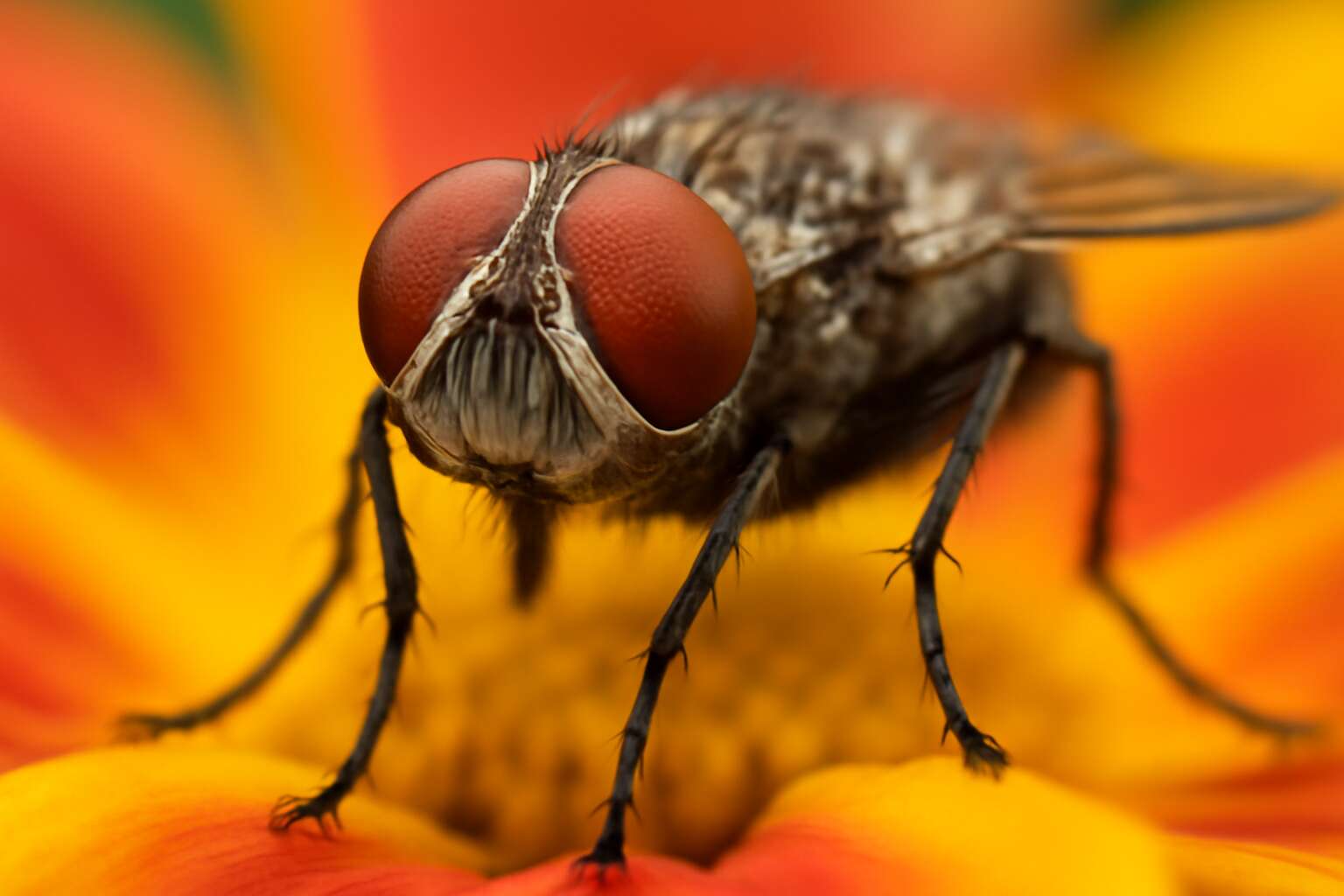
Amid the intricate tapestry of insect vision, a startling revelation emerges: are flies blind? The answer is a nuanced tapestry woven with astonishing biological sophistication. Fly eyes, a marvel of evolutionary engineering, consist of thousands of tiny units called ommatidia, each functioning as an individual visual receptor. These compound eyes grant flies a panoramic view of their surroundings, allowing almost 360-degree awareness that is nothing short of extraordinary.
At the core of this visual prowess lies the structure of fly eyes—an anatomical masterpiece. The ommatidia are meticulously arranged, each housing its own lens, photoreceptor cells, and neural connections. This architecture results in a mosaic-like image that, while not sharp by human standards, provides rapid motion detection and spatial awareness. Interestingly, this design prompts the question: are flies blind? The reality is far from it; their vision is optimized for speed and movement rather than fine detail.
- Each ommatidium captures a fragment of the environment, contributing to a composite picture
- The neural pathways process motion at an extraordinary rate, often faster than human reflexes
- Fly eyes are highly sensitive to ultraviolet light, giving them a broader spectrum of visual information
So, as we delve into the anatomy and structure of fly eyes, it becomes evident that their vision is a complex blend of specialization and adaptation—an evolutionary response to their predatory and evasive needs. The question remains: are flies blind? Not in the slightest; their eyes are a testament to nature’s ingenuity, revealing a form of visual perception that is as mesmerizing as it is functional.
Types of Fly Eyes – Compound eyes vs simple eyes in flies
When pondering whether flies are blind, one might imagine a creature wandering aimlessly through the air. Yet, the truth is far more intricate. Flies possess a fascinating combination of visual tools—primarily their compound eyes—that provide them with a unique perspective of their environment. Unlike humans, who rely on simple eyes for sharp focus, flies have evolved a complex visual system that is highly specialized for rapid motion detection and survival.
Understanding the different types of fly eyes is essential to answering the question: are flies blind? Flies primarily possess compound eyes, which are made up of thousands of tiny ommatidia. These eyes generate a mosaic image that excels in detecting movement and broad spatial awareness. In contrast, some insects feature simple eyes, or ocelli, which help with light regulation and orientation but do not contribute to detailed vision. Flies rely heavily on their compound eyes, making their visual perception distinctly different from that of humans or animals with simple eyes.
In essence, the question “are flies blind?” overlooks the remarkable capabilities of their compound eyes. Their vision, while not detailed in the way human eyesight is, offers an extraordinary window into the world—one that emphasizes speed, motion, and ultraviolet sensitivity. This diversity in eye types highlights the evolutionary brilliance that allows flies to thrive in complex environments across South Africa and beyond.
How Flies See the World – Visual perception and field of view
When contemplating whether flies are blind, it’s crucial to understand how they perceive their environment. Flies see the world through a stunning mosaic of tiny images created by their compound eyes. These eyes contain thousands of ommatidia, each acting as a separate visual receptor. This intricate structure allows flies to detect even the slightest movements—an invaluable survival trait in the bustling landscapes of South Africa.
Unlike human vision, which provides sharp, detailed images, a fly’s vision prioritizes speed and motion detection. Their field of view is nearly panoramic, often exceeding 300 degrees, giving them an uncanny ability to spot predators or food sources from nearly every angle. This expansive perception means that, contrary to the misconception that flies are blind, they’re actually equipped with a highly specialized visual system tuned for rapid response. So, when asking “are flies blind?”, the answer is a resounding no—rather, they see in a way that’s fundamentally different, yet perfectly suited to their survival needs.
Are Flies Completely Blind?
Fly Vision Capabilities – What flies can see and detect
When pondering the question, “are flies blind?” the answer is both astonishing and nuanced. Flies possess an extraordinary visual system, far from the idea of blindness they might evoke. Their compound eyes, teeming with thousands of tiny lenses, grant them a panoramic view of the world—an intricate mosaic that allows for rapid detection of movement and light. This sophisticated visual apparatus suggests that flies aren’t blind but are instead equipped with a form of sight uniquely tuned to their needs.
While they may not perceive the world with the clarity humans do, flies excel in detecting flickers, shadows, and swift motions that escape our notice. Their ability to see ultraviolet light and perceive rapid changes in their environment enables them to react in a fraction of a second. This heightened sensitivity is vital for avoiding predators and navigating complex terrains. It’s a vivid reminder that the question “are flies blind?” might be more about their perception of the world rather than blindness itself. Their vision is a marvel—a testament to nature’s extraordinary ingenuity, especially in the diverse landscapes of South Africa.
Limitations of Fly Sight – Blind spots and focus issues
Contrary to the simplistic notion that flies are blind, the truth is far more intriguing. While they lack the sharp, detailed vision humans enjoy, their visual system is nothing short of a marvel. The question “are flies blind?” often arises in casual conversations, but the reality is nuanced—flies perceive their world through a mosaic of rapid flickers and shadows rather than clear images. Their compound eyes, composed of thousands of tiny lenses, enable them to detect movement with astonishing speed. However, this sophisticated system does have limitations.
One such limitation is the presence of blind spots. Because each tiny lens, or ommatidium, is oriented in a specific direction, there are areas where their vision is less effective. Focus issues also come into play—flies struggle with sharp, detailed perception, especially when trying to discern distant or stationary objects. Instead, they excel at noticing quick changes in their environment, like a predator’s shadow or a sudden movement of a potential meal. This focus on motion detection over clarity is a testament to their evolutionary adaptation, perfectly suited for survival in the wild landscapes of South Africa.
With their specialized visual tools, flies effectively “see” the world in a way that is both limited and uniquely advantageous. Their ability to perceive ultraviolet light and rapid environmental shifts means their sight is finely tuned for immediacy, not detail. So, when pondering whether “are flies blind,” it’s clear that their vision is a specialized form of sight—one that’s more about swift reactions than sharp images, highlighting the fascinating complexity of their visual perception.
Impact of Vision on Fly Behavior – Navigation, feeding, and mating
Many people wonder, “are flies blind?” The truth is far more nuanced than a simple yes or no. Flies possess an extraordinary visual system that’s tailored for survival in the wild landscapes of South Africa. While their eyes don’t provide the sharp, detailed images humans enjoy, they excel at detecting motion and shadows—crucial for navigating their environment. This specialized vision influences every aspect of their behavior, from finding food to avoiding predators.
Impact of vision on fly behavior is profound. Their ability to swiftly react to environmental stimuli hinges on their visual acuity. Flies rely heavily on their eyes for navigation, hunting, and mating. Their capacity to detect rapid movements makes them masters of evasion, often escaping danger before we even notice they’re there. In fact, their visual perception is so finely tuned that they can see ultraviolet light, an ability that helps them locate nectar and mates in the complex tapestry of South African ecosystems.
Fly Vision vs. Human Vision
Differences in Eye Structure – Compound eyes compared to human eyes
When contemplating the enigmatic world of flies, a common question surfaces: are flies blind? The answer reveals a captivating divergence from human vision, rooted in the intricate architecture of their eyes. Unlike our single-lens eyes, flies possess compound eyes—an astonishing mosaic of thousands of tiny facets called ommatidia. Each ommatidium functions as a miniature visual processor, collectively creating a panoramic, almost kaleidoscopic view of their surroundings. This complex design grants flies a staggering field of view, nearly 360 degrees, allowing them to detect motion from every direction. It’s no wonder they seem to anticipate every flutter and flicker around them!
While their compound eyes are marvels of evolution, they do not grant flies perfect sight. Instead, their vision is characterized by rapid motion detection and a broad visual spectrum, but with notable limitations—such as difficulty focusing on stationary objects or perceiving fine detail. In essence, the question of are flies blind is a misconception; their eyes are finely tuned for survival, not clarity. This extraordinary visual system exemplifies nature’s mastery, turning what might seem like a handicap into an extraordinary tool for navigating their world.
Differences in Visual Perception – Color perception and motion detection
When pondering whether flies are blind, it’s essential to understand how their visual perception differs dramatically from ours. Unlike human eyes, which rely on a single lens to focus light onto a retina, flies have compound eyes composed of thousands of tiny facets called ommatidia. This unique structure enables them to perceive motion with astonishing speed and breadth. But does this mean they see the world clearly? Not quite.
Fly vision excels in motion detection and broad color spectrum perception, yet it falls short in areas humans excel at—like perceiving fine detail or focusing sharply on stationary objects. Their visual system is more about quick reactions than clarity. Interestingly, flies can detect rapid movements that escape our notice, making their perception almost like a living kaleidoscope. This raises a compelling question: are flies blind? The answer is a definite no—rather, their vision is optimized for survival, not sharpness.
In terms of color perception, flies see a spectrum that includes ultraviolet light, which is invisible to humans. This gives them an advantage in locating food sources and mates that are otherwise hidden from our view. Conversely, their limited ability to focus on stationary objects means they often perceive the world as a blurred, dynamic tableau—perfect for evading predators or swiftly navigating their environment. Their visual capabilities are finely tuned for motion detection rather than detailed observation, illustrating how evolution crafts different forms of sight for different needs.
Advantages of Fly Vision – Why flies rely heavily on their eyesight
While many believe that flies are blind, the truth is far more fascinating. Their extraordinary visual system is a marvel of evolution, crafted for survival in a world teeming with dangers and opportunities. Unlike human vision, which depends on focusing light onto a single retina, flies rely on their compound eyes, a kaleidoscope of tiny facets called ommatidia, each acting as a miniature eye. This intricate design grants them an expansive field of view and rapid motion detection, making their perception of the world uniquely dynamic.
Are flies blind? Not at all. Their eyesight excels in areas where humans often falter. For instance, they can detect ultraviolet light—an invisible spectrum to us—allowing them to see cues that lead directly to food and mates. Their ability to perceive motion at lightning speed enables them to evade predators with astonishing agility. This heightened motion detection is a crucial advantage, especially when navigating complex environments in South Africa’s diverse landscapes.
Interestingly, the advantages of fly vision lie precisely in what it lacks—sharpness and fine detail. Their eyes are optimized for quick reactions rather than clarity. This means they often see the world as a blurred, swirling tableau, yet they excel at reacting swiftly to sudden movements. Their visual perception is a vivid reminder of how evolution designs senses tailored to specific needs, giving flies a remarkable edge in their daily survival battles.
Myths and Facts About Flies’ Sight
Common Misconceptions – Are flies really blind or not?
One of the most persistent myths about flies is that they are completely blind. Many people imagine these tiny creatures as mere pests with poor vision, stumbling blindly through our spaces. However, this couldn’t be further from the truth. Flies possess remarkably sophisticated eyesight that allows them to navigate complex environments with agility. The question, are flies blind? The answer is a resounding no. Their compound eyes are designed to detect movement and light with astonishing precision, making them agile and almost impossible to catch.
Despite their impressive visual capabilities, flies do have limitations. They struggle with focusing on stationary objects and have blind spots around their heads, which can sometimes cause them to miss subtle dangers. These visual shortcomings, however, are offset by their ability to detect rapid motion, an essential trait for evading predators and finding food. So, while they are not blind, their eyesight is a specialized tool finely tuned to their survival needs, proving that are flies blind is a misconception rooted in outdated assumptions about insect vision.
Scientific Evidence – Research studies on fly vision
Scientific research shatters the myth that flies are blind, revealing a fascinating world of visual acuity that is both intricate and astonishing. Studies using advanced imaging techniques have shown that flies possess compound eyes teeming with thousands of tiny lenses, each contributing to a mosaic-like panorama of their environment. These studies affirm that their eyesight is far from dull; instead, it is a marvel of evolution, optimized for swift, precise reactions.
In fact, research indicates that flies are incredibly adept at detecting rapid motion, a trait crucial for their survival. Their ability to perceive even the slightest movement helps them evade predators and locate food sources with remarkable efficiency. While some might assume that their tiny eyes limit their vision, scientific evidence confirms that their visual systems are highly specialized. They can see a broad spectrum of colors and possess exceptional motion detection, making the question, are flies blind, a clear misconception rooted in superficial observation.
Adding intrigue to their visual prowess, the eye structure of flies includes blind spots around their heads—areas where their vision is less sharp—yet this does little to impede their agility. Instead, it highlights the elegance of their evolutionary design.
- Flies can see in a nearly 360-degree field of view, allowing them to monitor their surroundings constantly.
- Their compound eyes are sensitive to movement, even at high speeds.
This combination of features underscores that their vision is finely tuned to their survival needs.
In essence, the scientific evidence paints a clear picture: are flies blind? Absolutely not. Their visual system is a testament to nature’s ingenuity, enabling them to navigate complex terrains and perform incredible feats—all without the limitations once ascribed to their tiny, seemingly simple eyes. Instead, flies rely on their extraordinary sight to thrive in a world filled with danger and opportunity, illustrating that this common pest possesses eyes of wonder rather than blindness.
Real-world Implications – How fly vision affects their survival
Many assume that because of their tiny size and seemingly simple eyes, flies are blind or possess limited vision. This misconception persists despite mounting scientific evidence that reveals the extraordinary visual capabilities of these insects. In truth, the question — are flies blind — is rooted in superficial observation rather than scientific fact. Their eyes are marvels of evolution, designed to detect movement with astonishing speed and precision, vital for their survival in a world fraught with predators and hazards.
Understanding how fly vision influences their behavior underscores their resilience. Flies rely heavily on their ability to perceive rapid motion, enabling them to evade threats and locate food swiftly. Their compound eyes give them a broad field of view—almost 360 degrees—making it nearly impossible for predators to approach unnoticed. This heightened visual acuity is not limited to detecting movement; flies also perceive a spectrum of colors, adding another layer to their survival toolkit. The idea that they are blind simply does not hold up against the weight of scientific evidence, which confirms that their eyesight is both intricate and highly functional.
Further Insights into Fly Sensory Systems
Other Sensory Modalities – Touch, smell, and sound in flies
While the notion that flies are blindly navigating their environment persists, the reality is far more intricate. Their sensory systems extend beyond mere visual prowess, encompassing touch, smell, and sound—each playing a vital role in their survival. Flies possess mechanoreceptors on their antennae and body hairs, allowing them to detect subtle vibrations and tactile cues, which are crucial when swift evasive action is necessary.
Moreover, their olfactory capabilities are astonishing. Flies can perceive a complex tapestry of scents, guiding them toward food sources or mates with remarkable precision. This multisensory integration means that even if their eyes are limited, they compensate through other modalities, making them far from blind in the traditional sense. Instead, their reliance on a sophisticated interplay of senses creates a nuanced perception of their surroundings.
- Touch and vibration detection
- Enhanced smell sensitivity
- Auditory cues through body hairs
In essence, the question isn’t simply whether flies are blind, but rather how their sensory systems weave a rich tapestry of environmental awareness that surpasses human expectations. This layered sensory network underscores their resilience and adaptability, revealing that in the world of flies, sight is just one piece of a complex perceptual puzzle.
How Multiple Senses Work Together – Navigation and behavior
Within the intricate dance of survival, the question persists—are flies blind? The answer unfurls like a tapestry woven with threads of sensory marvels. Far from the notion of total darkness, their perceptual world is a symphony of senses working harmoniously to navigate the chaos of their environment.
Imagine a realm where touch, smell, and sound are as vivid as sight itself. Flies possess mechanoreceptors on their antennae and body hairs—tiny sentinels attuned to vibrations and tactile cues that alert them to imminent danger or the presence of food. Their olfactory system, a marvel of evolutionary engineering, guides them with astonishing precision toward scents that signal sustenance or potential mates.
- Touch and vibration detection
- Enhanced smell sensitivity
- Auditory cues through body hairs
Together, these senses form an interconnected web, transforming how flies perceive their world. Their ability to detect subtle vibrations or discern complex scents ensures they are far from blind—rather, they are masters of multisensory perception. The layered sensory network they wield reveals that, in their universe, sight is merely one piece of a grand perceptual puzzle. The question isn’t simply whether flies are blind, but how their sensory systems orchestrate a vivid, dynamic reality that surpasses human imagination—an exquisite dance of perception in the tiny world of flies.
Research Frontiers – Advances in understanding fly perception
In the shadowy corridors of insect perception, a question lingers—are flies blind? The answer dances beyond mere sight, revealing a symphony of sensory mastery that defies human imagination. Recent research uncovers startling advances in understanding fly perception, illustrating that these tiny creatures are far from blind—they are maestros of multisensory integration. Their ability to navigate complex environments hinges on a web of finely tuned senses that work in concert, transforming their perception into a vivid tapestry of vibration, scent, and subtle cues.
Scientists have delved into the intricacies of their sensory systems, revealing that flies possess remarkable mechanoreceptors on their antennae and body hairs—tiny sentinels attuned to vibrations and tactile signals. These sensors act as an early warning system, detecting threats or locating food sources with astonishing speed. Meanwhile, their olfactory system, an intricate network of scent receptors, guides them towards nourishment or mates with precision that rivals the most advanced tracking devices.
Rather than relying solely on sight, flies utilize a layered sensory network, orchestrating a dance of perception that surpasses human capability. This interconnected web enables them to perceive motion, detect subtle vibrations, and discern complex scents—an exquisite form of sensory symphony. The question isn’t simply whether flies are blind, but how their multisensory perception crafts a dynamic, vibrant reality that makes them true masters of their tiny universe.
In fact, recent advances in fly perception research suggest that their sensory systems are a frontier of scientific exploration. Here are some fascinating insights:
- Their ability to detect rapid vibrations allows flies to avoid predators almost instantaneously.
- Enhanced smell sensitivity helps them locate food from great distances, even in cluttered environments.
- Auditory cues, transmitted through body hairs, aid in communication and environmental awareness.
Such discoveries challenge the notion that “are flies blind” is an adequate answer. Instead, they reveal a complex, multisensory world where sight is merely one thread in a grand tapestry of perception. Understanding this sensory orchestra not only deepens our appreciation of these resilient insects but also illuminates the extraordinary mechanisms that underpin survival in the natural world’s chaos. Truly, flies are not blind—they see with a sophistication that is nothing short of poetic in its elegance and ingenuity.



0 Comments