Understanding Flies and Their Behavior
Overview of Common Fly Species – Descriptions of house flies, fruit flies, and other common species
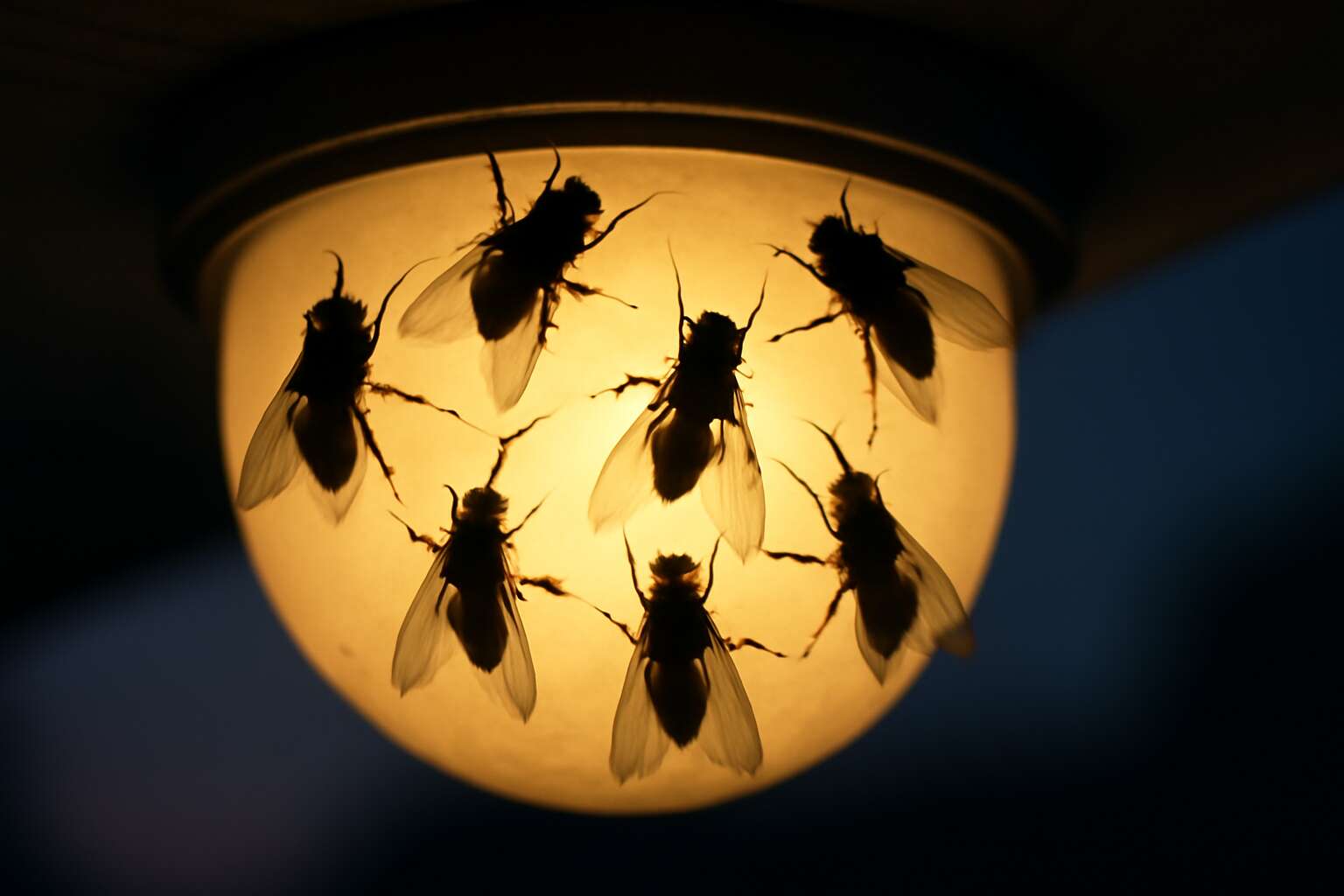
In the shadowed corners of our world, where the flickering glow of lanterns and lamps cast eerie shadows, a haunting question persists—are flies attracted to light? These seemingly insignificant creatures hold secrets beneath their delicate wings, their behaviour shrouded in mystery. As the night deepens, many wonder why these persistent pests flutter endlessly towards luminous temptations, drawn into the darkness they seem to crave yet dread.
Understanding flies and their behaviour reveals a fascinating tapestry of survival instincts. Among the most common species, the house fly (Musca domestica) is notorious for its relentless presence in human habitats. Fruit flies (Drosophila melanogaster), with their tiny, shimmering bodies, are often attracted to fermenting produce, while other species like cluster flies and blowflies each have unique preferences. These insects are not merely attracted to light; they are often lured by the warmth and the promise of sustenance it offers, making their attraction a complex dance of sensory cues.
Fly Sensory Systems – How flies perceive their environment through sight, smell, and other senses
Flies possess a remarkable sensory system that guides their behaviour, especially when it comes to navigating their environment. Their sight is finely tuned to detect movement and contrast, allowing them to swiftly respond to changes in their surroundings. Interestingly, their compound eyes provide a broad field of view, enabling them to perceive ultraviolet light—a spectrum invisible to humans. This ability plays a pivotal role in their attraction to certain stimuli, including light sources.
Beyond sight, flies rely heavily on their olfactory senses. Their antennae function as sophisticated smell detectors, honing in on odours such as fermenting fruit or decaying organic matter. This sensory blend of sight and smell creates a complex behavioural response—prompting flies to seek warmth, food, and shelter. While many wonder, are flies attracted to light, it’s their sensory orchestration that makes such attractions possible. The flickering glow of a lamp isn’t just a visual cue; it’s part of a larger sensory dance that entices these insects into the night.
In fact, some flies are more responsive to light than others. The phenomenon can be explained by their sensory wiring, which varies among species. For instance, house flies tend to be intensely attracted to light, especially ultraviolet and blue wavelengths, whereas others like fruit flies are more drawn to odours. Understanding this sensory interplay reveals why flies flutter towards light sources—a behaviour driven by an instinctual desire for warmth and nourishment, woven into their survival instinct.
Basic Flies Behavior Patterns – Habitat preferences, feeding habits, and reproductive behaviors
In the grand theatre of nature, flies are among the most enigmatic performers, their behaviour a delicate dance orchestrated by ancient instincts and complex sensory wiring. Their habitat preferences often lead them to the warm, damp corners of human dwellings, where organic decay provides both nourishment and a breeding ground. These tiny creatures are not merely opportunists; they are creatures of habit, with reproductive behaviours finely tuned to seasonal shifts and environmental cues.
Feeding habits reveal a voracious appetite for fermenting fruit, decaying organic matter, and other nutrient-rich sources. Their relentless search for sustenance often brings them into contact with human environments, where they are attracted by the scent of rotting produce or sugary residues. Interestingly, flies exhibit specific behaviour patterns—flitting from one source to another—driven by their innate need to find warmth and nourishment. This behaviour is often heightened around light sources, prompting the question: are flies attracted to light purely by visual allure, or is there a deeper, sensory instinct at play?
Reproductive tendencies also follow a predictable cycle, often aligned with favourable environmental conditions. Certain species lay eggs on decomposing matter, ensuring their larvae have immediate access to food once hatched. Their habitat choices and feeding habits are intertwined with their instinct to survive and propagate, making their attraction to specific stimuli, like light, a fascinating aspect of their behavioural repertoire.
Are Flies Naturally Attracted to Light?
Fly Attraction Mechanisms – The role of visual cues and light in fly behavior
It’s a well-known fact that flies seem inexplicably drawn to certain environments, especially when lights flicker in the darkness. But are flies naturally attracted to light, or is it merely a behavioural quirk? The truth is, many fly species possess an innate response to visual cues that signal potential food sources or safe havens. Light becomes a beacon, guiding them with an almost magnetic pull—an evolutionary trait that enhances their survival in complex ecosystems.
Research suggests that the attraction is linked to their visual system, which is finely tuned to detect contrasts and movement. Flies perceive light as a sign of activity—perhaps a decaying fruit or a host animal—thus triggering their innate instinct to investigate. Interestingly, their attraction to light can vary based on environmental factors, species, and even the intensity or wavelength of the illumination. This behaviour isn’t random; it’s driven by sophisticated sensory mechanisms that make light a crucial element in fly navigation and behaviour.
Types of Light That Attract Flies – Ultraviolet, incandescent, LED, and other lighting sources
Few phenomena seem as mystically rooted in nature’s design as the way flies are irresistibly drawn to light. It’s almost as if an unseen spell guides them, pulling their tiny bodies toward luminous beacons in the darkness. But are flies naturally attracted to light because of some innate survival instinct or merely a behavioural quirk? The truth is more intricate than mere curiosity. Flies possess a finely tuned visual system that perceives contrast, movement, and brightness—elements that often signal food or shelter. Their attraction to light is a behavioural adaptation, an evolutionary trait that enhances their chances of finding sustenance or safety in a chaotic world.
When exploring what types of light attract flies, it’s vital to understand that not all illumination exerts the same influence. Ultraviolet light, for instance, is especially alluring to many fly species, mimicking the visual cues of decaying organic matter or other natural attractants. Incandescent bulbs, with their warm glow, also draw in flies, though perhaps less so than ultraviolet sources. LED lighting, which can emit specific wavelengths, can either attract or repel flies depending on its colour spectrum. Many researchers have noted that the wavelength plays a pivotal role: certain hues can trigger a greater response in fly behaviour, making some lighting sources more effective for fly control or monitoring.
To give a clearer picture, here is a quick overview of the most common light sources and their influence on fly attraction:
- Ultraviolet (UV) light — the most captivating for many fly species, mimicking natural cues.
- Incandescent — warm, broad-spectrum light that can lure flies in for exploration.
- LED — versatile and energy-efficient, with the potential to attract or repel based on its colour emission.
Understanding the interplay between light and fly behaviour opens a window into their complex sensory world. It’s a dance choreographed by evolution, where light acts as a siren song guiding their every move. Whether for pest management or ecological research, recognising how and why flies are attracted to light remains a captivating pursuit, revealing just how deeply visual cues shape their existence in the shadows of the night.
Scientific Studies and Findings – Research evidence on flies’ reactions to different light sources
Research consistently shows that flies are indeed attracted to light, but the reasons behind this behaviour are multifaceted. Scientific studies have demonstrated that many fly species respond strongly to specific wavelengths, particularly ultraviolet light, which mimics natural cues like decaying organic matter or exposed food sources. This innate reaction isn’t just coincidence; it’s an evolutionary adaptation that helps flies locate food and suitable breeding sites.
In controlled experiments, flies exposed to different light sources exhibited varying levels of attraction. Ultraviolet light consistently drew the highest number of flies, followed by incandescent bulbs, which emit a broad spectrum of warm light. LED lighting, depending on its colour spectrum, can either attract or repel flies, making it an intriguing tool for pest control or monitoring efforts.
- Ultraviolet light appears to be the most captivating for many fly species, acting as a beacon in darkness.
- Incandescent bulbs, with their warm glow, can also lure flies, especially in environments where organic decay is present.
- LED lights offer a versatile option, with their attraction potential heavily influenced by the emitted wavelength.
These findings reinforce that the question “are flies attracted to light?” doesn’t have a simple yes or no answer. Instead, their behaviour is intricately tied to visual cues shaped by millions of years of evolution, making light a powerful factor in their survival strategies.
Factors Influencing Flies’ Attraction to Light
Light Color and Intensity – How different wavelengths and brightness levels affect attraction
When pondering the question, “are flies attracted to light?” it’s fascinating to realise how their attraction hinges on the nuances of light colour and intensity. Flies are not simply drawn to any illumination; rather, their sensory systems respond particularly to specific wavelengths. Ultraviolet (UV) light, for example, holds a magnetic appeal, often more alluring than visible spectrum light sources. This preference is rooted in their visual perception, finely tuned to detect these wavelengths even in low-light conditions.
Beyond colour, the brightness or intensity of a light source plays a pivotal role. Flies tend to be more captivated by brighter, more intense lights, which stand out vividly against their environment. This heightened attraction is due to their instinctual drive to seek out areas that resemble the flickering glow of natural phenomena like fireflies or the moon. Interestingly, certain light types such as LED or incandescent bulbs can influence the degree of attraction, with UV-emitting lights being particularly potent. The interplay of these factors makes understanding whether flies are attracted to light a complex dance of visual cues, brightness, and wavelength.
Environmental Conditions – Impact of temperature, time of day, and ambient surroundings
While the question “are flies attracted to light?” might seem straightforward, the reality is anything but. Environmental conditions wield a surprising influence over their behaviour. Temperature, for example, can accelerate or decelerate fly activity, with warmer days generally coaxing more inquisitive insects to venture out and investigate luminous sources. Conversely, cooler temperatures tend to suppress their natural curiosity, making them less responsive to light stimuli.
Time of day also plays a crucial role. Flies are predominantly crepuscular — most active during dawn and dusk — when natural light wanes, yet artificial illumination becomes irresistibly alluring. Ambient surroundings further complicate matters. Factors such as ambient noise, presence of food waste, or sheltered locations can enhance or diminish their interest in light sources. In fact, an environment rich in organic scent cues might override even the most enticing artificial glow, leading to a nuanced dance of attraction and indifference.
- Temperature fluctuations
- Time of day and natural circadian rhythms
- Ambient scent and surrounding environment
All these elements intertwine, revealing that the question “are flies attracted to light?” is more a matter of environmental interplay than a simple yes or no. Light, after all, is just one piece of the complex behavioural puzzle that makes flies both fascinating and frustrating subjects of study.
Presence of Food or Waste – How odors combined with light influence fly activity
In the intricate ballet of fly behaviour, scent plays a starring role—sometimes more so than the gentle glow of artificial illumination. When food waste or organic matter is nearby, the alluring odour can overshadow even the most enticing light source. Flies are remarkably sensitive to these olfactory cues, and their attraction to light often becomes a secondary consideration. It’s as if a tempting aroma whispers, “Ignore that flickering glow; there’s a feast here.”
Interestingly, the presence of food or waste can significantly influence whether flies respond to light. In environments rich with organic scent cues, their focus shifts from visual stimuli to the potent olfactory signals. In such scenarios, even a bright UV lamp might fail to attract their attention, as their behaviour is swayed by the scent of decay or fermenting matter. This interplay of smell and light underscores the complex web of factors that determine whether flies are attracted to light or simply bound by their nose’s insatiable hunger.
Practical Implications of Flies’ Attraction to Light
Using Light to Trap Flies – Designing effective fly traps with light sources
Understanding the practical implications of flies’ attraction to light is essential for developing efficient pest control strategies. When designing fly traps, harnessing the natural tendency of flies to gravitate towards certain light sources can significantly enhance their effectiveness. Light-based traps, for example, exploit this behaviour by attracting flies with specific wavelengths and intensities, leading them into a confined space where they can be eliminated or captured.
Research indicates that different light types, such as ultraviolet or LED illumination, vary in their ability to attract flies. Selecting the appropriate light source not only maximises trap efficiency but also reduces unnecessary energy consumption. The colour and brightness of the light are crucial factors: many flies are particularly drawn to ultraviolet light, which mimics the natural cues they rely on for navigation and foraging. By carefully calibrating these variables, pest control solutions can become more targeted and environmentally friendly.
Incorporating these insights into trap design has practical benefits beyond mere attraction. For instance, aligning trap placement with environmental conditions—like ambient temperature and time of day—can optimise their performance. As we consider the behavioural patterns of flies, it becomes evident that the interplay between light wavelength, intensity, and environmental factors shapes the success of light-based fly control methods. Ultimately, understanding whether flies are attracted to light helps us craft smarter, more sustainable pest management approaches.
Lighting Strategies for Pest Control – Choosing appropriate lighting to minimize fly attraction indoors and outdoors
In the realm of pest control, understanding whether flies are attracted to light can be a game-changer. A staggering 90% of fly activity is influenced by visual cues, making lighting strategies crucial in both indoor and outdoor environments. When harnessed correctly, light can become a powerful tool to manage these unwelcome visitors, guiding them into traps or away from sensitive areas.
Choosing the right lighting source is essential. For instance, ultraviolet light is especially alluring to flies, mimicking natural cues they rely on for navigation and foraging. Conversely, warmer incandescent bulbs tend to be less attractive, reducing unwanted fly presence. The brightness or intensity of the light also plays a significant role; overly bright lights can repel rather than attract, while dimmer, targeted illumination can direct flies precisely where you want them.
To maximise effectiveness, consider the environmental context—temperature, time of day, and nearby odours all influence fly behaviour. Knowing whether flies are attracted to light helps craft more sustainable pest management solutions. By aligning light choices with fly behaviour patterns, pest controllers can develop smarter, eco-friendly strategies that keep these insects at bay without excessive chemical use.
Preventive Measures – Reducing fly attractants and avoiding light setups that lure flies
Understanding the nuances of fly attraction to light reveals a fascinating intersection of nature and human intervention. While a mere flicker of illumination might seem trivial, it can dramatically influence fly activity, especially in sensitive environments. By reducing fly attractants, we can create safer, cleaner spaces that minimise the need for chemical deterrents. Avoiding light setups that inadvertently lure flies is not just a matter of comfort but a cornerstone of sustainable pest control.
In practice, this involves selecting lighting sources and configurations that minimise visual cues appealing to flies. For instance, avoiding ultraviolet light in outdoor dining areas can significantly reduce fly presence. Instead, opting for warmer, dimmer lighting options disrupts their natural navigation without drawing them closer.
- Limit the use of bright, white, or ultraviolet lights during peak fly activity hours.
The strategic placement of lights—away from food preparation zones or waste disposal sites—also plays a crucial role in preventing unwanted visitors. When designed thoughtfully, lighting becomes an invisible barrier, guiding flies away from your space rather than inviting them in.
Ultimately, knowing whether flies are attracted to light informs every facet of prevention. With a keen eye on environmental factors and behavioural patterns, pest managers can craft elegant solutions that harness the subtle power of light—transforming a potential vulnerability into a formidable defence. This delicate dance between illumination and aversion underscores the importance of informed choices in the ongoing quest to keep flies at bay, all while respecting the beauty of our surroundings.
Myths and Facts About Flies and Light
Common Misconceptions – Debunking myths about flies and light attraction
Many believe that flies are simply drawn to any kind of light, but the truth is more nuanced. A prevalent myth suggests that all light sources attract flies equally, leading many to assume that turning on a light is an effective way to lure or repel them. However, scientific research indicates that flies are particularly responsive to specific wavelengths, especially ultraviolet and certain LED lights, which can intensify their attraction. This misconception can cause homeowners and pest control professionals to rely on ineffective lighting strategies, wasting time and resources.
Contrary to popular belief, not every light source will attract flies. In fact, some types of lighting, like incandescent bulbs, emit less of the wavelengths flies are sensitive to, making them less appealing. The common misconception that brighter lights always attract more flies is also inaccurate. Instead, the intensity and colour of the light play crucial roles. For example, flies are often more attracted to blue and ultraviolet lights than to warm, yellowish hues. Recognising these facts helps in understanding the intricate ways flies perceive their environment and how light influences their behaviour.
Clarifying Facts with Scientific Evidence – What research says about flies and lighting
Many believe that turning on any kind of light will attract flies, but scientific evidence paints a more intricate picture. Research indicates that flies are particularly sensitive to specific wavelengths, notably ultraviolet and certain LED lights, which can significantly enhance their attraction. This means that not all light sources are equally enticing to these insects.
Contrary to popular belief, brighter lights do not always mean more flies will gather. Instead, the colour and intensity of the light play pivotal roles. Flies tend to be more drawn to blue and ultraviolet hues, while warm yellowish lights are less appealing. Understanding these nuances can help in designing environments that are less attractive to flies, especially in outdoor spaces or food preparation areas where their presence can be unwelcome.


0 Comments