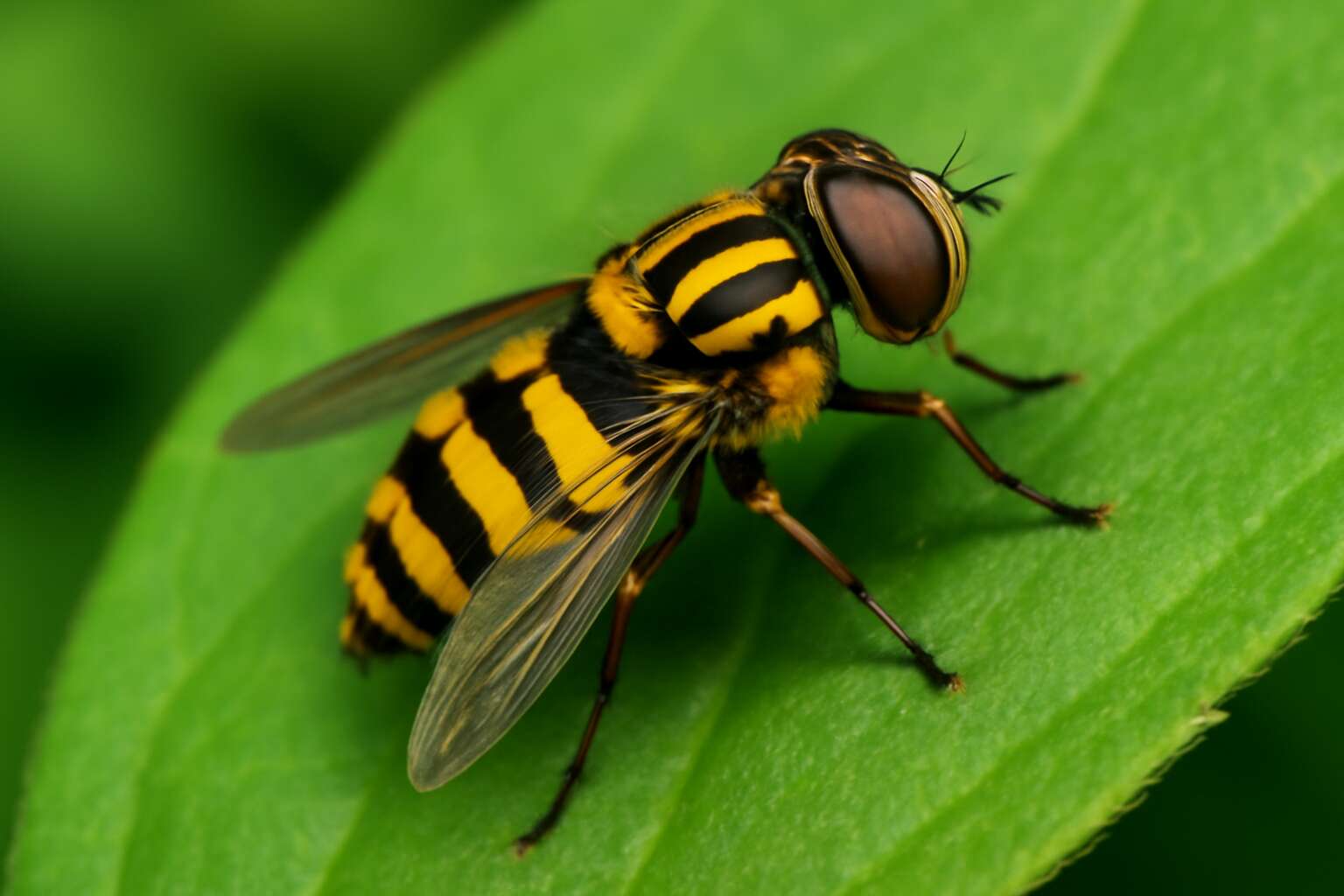
Identifying Flies with Yellow Stripes
Common Species with Yellow Stripes – Overview of prominent fly species featuring yellow stripes
Flies with yellow stripes are more than just a visual curiosity; they often serve as indicators of specific ecological roles and behaviors. Among the most common species found in South Africa, the yellow-striped pattern helps these flies stand out in diverse environments, from urban areas to wild landscapes. Recognizing these flies is crucial, especially since some species can impact agriculture or human health.
Several prominent species featuring yellow stripes include the yellow-throated fly, the striped hoverfly, and certain types of blowflies. These flies with yellow stripes typically exhibit a combination of vibrant coloration and distinctive markings, making identification easier for enthusiasts and professionals alike. For example, the striped hoverfly mimics bees and wasps, a clever defense mechanism against predators. Meanwhile, the yellow-throated fly is often found around decaying organic matter, playing a vital role in decomposition processes.
By understanding the common species with yellow stripes, one can better appreciate their ecological significance. Focusing on these prevalent flies with yellow stripes not only aids in identification but also highlights their importance in local ecosystems. Recognizing these species can help in managing pest control and understanding environmental health in South Africa’s unique landscapes.
Physical Characteristics – Distinct features to recognize yellow-striped flies
Flies with yellow stripes often catch the eye, but their true distinction lies in their physical features. These vibrant markings are more than just a splash of color; they serve as crucial identifiers in the diverse ecosystems of South Africa. Recognizing these flies requires a keen eye for subtle details that set them apart from other insects.
Most flies with yellow stripes share distinctive characteristics such as a compact body shape, often with a slightly tapered abdomen. Their wings are usually clear or lightly tinted, allowing their bold yellow markings to stand out vividly. The yellow stripes themselves can vary in pattern—some are broad bands across the thorax, while others form narrow lines along the abdomen. In some species, the yellow coloration is complemented by black markings, creating a striking contrast that aids in quick identification.
To simplify recognition, observe these features:
- Bright yellow stripes on the thorax or abdomen
- Distinctive black and yellow coloration pattern
- Compact body size, often around 6-8mm in length
- Clear or lightly tinted wings with minimal markings
By paying attention to these physical characteristics, enthusiasts and professionals alike can easily distinguish flies with yellow stripes. This clarity not only aids in scientific observation but also plays a role in understanding their ecological roles—whether they’re pollinators, decomposers, or pests. After all, in the world of insects, appearance is often the first clue to their story.
Habitat and Distribution – Where these flies are typically found worldwide
Flies with yellow stripes are more than just a visual curiosity—they are fascinating indicators of ecological balance and biodiversity. These vibrant insects, though often overlooked, have a remarkable distribution that spans across diverse habitats worldwide. In South Africa, their presence adds an intricate layer to the intricate web of life, highlighting the importance of understanding their habitat preferences.
Typically, flies with yellow stripes thrive in environments rich in organic matter, where they play vital roles in pollination and decomposition. They are frequently encountered in areas such as lush grasslands, wetlands, and around decaying plant material. Their adaptability allows them to flourish in both urban and rural settings, demonstrating an impressive resilience that underscores their ecological significance.
To better grasp their distribution, consider these common habitats:
- Forests and woodland edges, where they find ample food sources and breeding sites
- Farmlands, particularly around crops and livestock, due to the abundance of organic waste
- Urban gardens and parks, which provide a mosaic of plants and decaying matter suitable for their lifecycle
Across the globe, flies with yellow stripes are often regarded as vital pollinators and decomposers, contributing to the health of ecosystems. Their striking coloration not only serves as a warning or attractant but also signifies their role in balancing nature’s intricate processes. Whether in South Africa or beyond, these insects remind us of the delicate harmony that sustains life in all its colorful forms.
Biology and Behavior of Flies with Yellow Stripes
Life Cycle and Development – Stages from egg to adult for yellow-striped flies
Understanding the biology and behavior of flies with yellow stripes reveals a fascinating glimpse into nature’s resilience. These insects, often mistaken for mere nuisances, follow a precise life cycle that underscores their adaptability. From the moment an egg is laid, their development is a testament to evolutionary efficiency. In warm South African climates, their lifecycle accelerates, allowing rapid population growth and influencing local ecosystems.
During the *development stages from egg to adult*, flies with yellow stripes undergo remarkable transformations. The eggs, tiny and unassuming, hatch into larvae that voraciously consume organic matter—often found near livestock or decaying plant material. After several molts, the larvae pupate, forming a protective cocoon that signals the transition to their final form.
- The pupal stage is crucial, as the fly prepares for metamorphosis.
- Within the cocoon, the transformation into an adult fly occurs, revealing its distinctive yellow-striped pattern.
This cycle, typically completed within a week under optimal conditions, highlights their quick adaptability—an essential trait for survival in diverse habitats across South Africa. The life cycle of these flies with yellow stripes demonstrates a delicate balance between survival instincts and environmental influence, reminding us of the resilience embedded in even the smallest creatures around us.
Activity Patterns – When these flies are most active
In the quiet moments of South Africa’s sprawling landscapes, the activity patterns of flies with yellow stripes unfold like a silent ballet across the warm air. These insects, often overlooked, reveal their hidden rhythms—peaking at dawn and dusk, when the sun’s gentle caress awakens their restless dance. Their behavior is a testament to survival, a delicate interplay of instincts and environment that keeps their populations thriving amidst the harsh and lush terrains alike.
During the early morning hours, flies with yellow stripes are most active, flitting from one organic matter to another, seeking nourishment and mates. As the day progresses, they retreat into shaded corners or remain still, conserving energy for their next burst of activity. Their activity peaks again at twilight, when the fading light sparks a flurry of movement, a fleeting reminder of life’s persistent pulse in the wilderness. This pattern is vital for their reproduction and sustenance, allowing them to adapt seamlessly to South Africa’s diverse climates.
Remarkably, their activity is influenced by temperature and humidity, making them highly adaptable. To better understand their behavior, observe how these flies with yellow stripes:
- Seek out decaying organic material during cooler parts of the day
- Become more active when the ambient temperature rises
- Converge around livestock and organic waste, especially in the late afternoon
Understanding these subtle activity patterns unveils the resilience and cunning of flies with yellow stripes—tiny creatures whose daily routines mirror the enduring dance of life itself. Their behavior, a symphony of instinct, underscores the importance of respecting the delicate balance of ecosystems they inhabit in South Africa.
Feeding Habits – Diet preferences and feeding behavior
Within the intricate tapestry of South Africa’s wilderness, flies with yellow stripes exhibit a fascinating array of feeding habits that highlight their vital role in the ecosystem. These tiny creatures are not merely pests but are essential players in the cycle of decay and renewal. Their diet preferences reveal a delicate balance—they are primarily scavengers, drawn irresistibly to organic matter that signals life’s inevitable decline.
Flies with yellow stripes are particularly attracted to decaying plant material, animal remains, and organic waste, which serve as their primary nourishment. Their feeding behavior is swift and precise; they use their sponge-like mouthparts to lap up liquids from decomposing matter, playing a crucial part in nutrient recycling. During cooler mornings, they often forage around rotting vegetation, while in warmer parts of the day, they focus their attention on livestock and manure.
Understanding their diet, it’s clear that these flies with yellow stripes are opportunistic feeders. They are also known to:
- Lay their eggs directly on organic decay, ensuring a ready food source for their larvae
- Converge around animal enclosures and waste zones, especially during late afternoons when conditions are optimal
Such feeding habits not only reveal their adaptability but also underscore their importance in maintaining ecological equilibrium. The subtle dance of their dietary choices mirrors a profound natural harmony—one that sustains both their survival and the health of South Africa’s diverse landscapes.
Roles in the Ecosystem
Pollination – Their contribution to pollinating plants
Flies with yellow stripes might seem insignificant, but their role in pollination is crucial. These vibrant insects are often underestimated in their contribution to the health of ecosystems, especially in South Africa’s diverse landscapes. They help pollinate various native plants, supporting both wild and cultivated species. In fact, many yellow-striped flies act as primary pollinators in areas where bees are less active or absent.
Their effectiveness stems from their frequent visitation to flowers, often visiting multiple plants during a single foraging session. This behavior enhances cross-pollination, which is vital for genetic diversity and plant resilience. The presence of flies with yellow stripes in a habitat indicates a balanced pollination network—an essential component for maintaining biodiversity in the region.
- Visit a range of flowering plants, including those not typically pollinated by bees.
- Help sustain native flora, which in turn supports local fauna.
- Contribute to the pollination of crops, especially in organic farming systems.
Decomposition and Waste Management – Role in breaking down organic matter
Amidst the vibrant tapestry of South Africa’s ecosystems, flies with yellow stripes play a surprisingly vital role in decomposition and waste management. These unassuming insects are nature’s diligent recyclers, breaking down organic matter and transforming decay into fertile soil. Their presence accelerates the natural process of nutrient cycling, ensuring that life continues to thrive in the most resilient ways.
By feeding on decomposing plant and animal material, flies with yellow stripes help prevent the accumulation of waste that could otherwise become a breeding ground for disease. This natural breakdown process not only keeps environments clean but also sustains the delicate balance of ecosystems. In fact, these flies act as essential agents of decomposition, turning what is discarded into nourishment for future growth.
In areas where organic waste is abundant, such as farms or natural reserves, their activities are indispensable. They facilitate rapid decomposition, supporting soil fertility and promoting healthy plant growth. The quiet efficiency of flies with yellow stripes underscores their importance—they are nature’s unseen allies in maintaining ecological harmony and supporting biodiversity across South Africa’s diverse landscapes.
Food Chain Importance – Predators and prey relationships involving these flies
In the shadowed corridors of South Africa’s vast ecosystems, flies with yellow stripes weave a silent, yet indispensable, thread within the intricate tapestry of the food chain. These unassuming creatures serve as both predators and prey, orchestrating a delicate balance that sustains the vitality of their environment. Their existence is woven into a complex web where each role echoes with purpose and subtle power.
Predators such as spiders, birds, and certain amphibians rely heavily on flies with yellow stripes as a vital food source. In turn, these flies are preyed upon by a host of creatures, creating a symphony of survival that underscores their ecological importance. Their presence influences population dynamics, ensuring that no single species dominates while maintaining biodiversity’s fragile equilibrium.
Within this web of life, certain species of predatory insects, like wasps and beetles, have evolved a keen eye for these striped flies. This predator-prey relationship sustains a natural balance that preserves the health of South Africa’s diverse habitats. The intricate dance of life and death among these insects exemplifies how even the smallest players hold profound significance in the ecosystem’s grand design.
- Their role as prey sustains the diets of numerous predators, keeping the food chain in harmonious flux.
- Simultaneously, flies with yellow stripes help regulate populations of other decomposers, preventing overgrowth that could destabilize their environment.
In the grand, shadowed theater of nature, flies with yellow stripes emerge as both vital participants and silent witnesses—guardians of ecological equilibrium in the wild landscapes of South Africa. Their existence underscores a dark elegance, a reminder that even the most unassuming creatures hold the keys to life’s perpetual cycle.
Impacts on Humans and Agriculture
Disease Transmission – Potential health risks associated with yellow-striped flies
In the shadowy corridors of our environment, flies with yellow stripes lurk like spectral messengers of decay. Their presence is more than mere nuisance; it’s an ominous sign of potential health risks that can ripple through communities and farms alike. These enigmatic insects are often vectors for disease transmission, quietly ferrying pathogens from filth to food sources and human contact. As their insidious role in spreading illness becomes clearer, the danger they pose to both humans and agriculture is undeniable.
In regions like South Africa, where agriculture forms the backbone of the economy, the impact of flies with yellow stripes extends beyond discomfort. They can compromise the safety of fresh produce and livestock, acting as unwitting couriers of disease. This transmission process is particularly concerning in mixed farming systems where contact between humans, animals, and contaminated organic matter is frequent. The potential health risks include bacterial infections, parasitic infestations, and viral outbreaks, which threaten not only public health but also food security.
Understanding the disease transmission capabilities of these flies underscores the importance of vigilant hygiene and control measures. Their role as disease vectors in both urban and rural landscapes is a dark reminder of nature’s hidden threats, often concealed beneath their striking, yellow-striped guise. The more we learn about flies with yellow stripes, the better equipped we are to combat the unseen peril they carry.
Crop and Livestock Effects – Economic impact on agriculture
The economic toll inflicted by flies with yellow stripes on South Africa’s agriculture is a silent hemorrhage—an insidious drain that often goes unnoticed until the damage manifests in stark terms. These insects, seemingly innocuous in their vibrant markings, are in fact unwitting agents of devastation, compromising both crop yields and livestock health. Their presence in farming environments can lead to reduced productivity, spoilage of perishable goods, and increased expenditure on pest control measures. The ripple effects influence market prices and threaten the livelihoods of countless farmers who grapple with this persistent menace.
Moreover, the impact extends beyond immediate financial losses. Flies with yellow stripes can act as vectors for a range of diseases, exacerbating the economic strain by causing outbreaks that necessitate costly quarantine measures or veterinary interventions. In mixed farming systems, where human, animal, and organic matter intermingle freely, the likelihood of disease transmission escalates dramatically. The result is a complex web of risks that directly threaten food security and the stability of agricultural communities.
Consider these critical factors:
- Contamination of fresh produce, leading to post-harvest losses
- Increased expenditure on insecticides and sanitation protocols
- Livestock infections and reduced reproductive efficiency
Ultimately, the presence of flies with yellow stripes is more than a nuisance; it is a persistent economic challenge that underscores the importance of integrated pest management strategies. In the shadowy dance of ecology, these insects serve as stark reminders of how unseen forces can reshape the economic landscape of South African agriculture, making vigilance and innovation essential for survival.
Control and Management – Methods to reduce fly populations
The intrusion of flies with yellow stripes into human environments extends beyond mere annoyance; it carries profound implications for public health and agricultural integrity. These insects, often underestimated, are capable of transmitting a spectrum of pathogens that threaten both individuals and livestock. Their relentless presence in homes, markets, and farms can lead to increased incidences of disease outbreaks, prompting urgent calls for effective control measures.
Controlling the proliferation of flies with yellow stripes requires a nuanced understanding of their behavior and habitat. Integrated pest management (IPM) methods are essential to mitigate their impact sustainably. Techniques such as habitat modification, biological control agents, and strategic use of insecticides can dramatically suppress populations. For example, eliminating breeding sites by removing organic waste and ensuring proper sanitation cuts off their reproductive cycle at its source.
To effectively manage these pests, it’s important to consider a combination of approaches:
- Implementing biological controls, such as introducing natural predators or parasitoids.
- Applying targeted insecticide treatments during peak activity periods to reduce adult fly numbers.
- Enhancing hygiene practices in both urban and rural settings to limit organic matter that supports breeding.
Vigilance and innovation are paramount. The insidious nature of flies with yellow stripes demands more than routine measures; it calls for a strategic, adaptive response that integrates ecological principles with modern technology. Only then can we hope to curb their relentless march, preserving both human health and agricultural productivity in South Africa’s complex ecosystem.
Differences Between Flies with Yellow Stripes and Similar Species
Comparison with Other Flies – Key distinguishing features
Flies with yellow stripes often catch the eye, but distinguishing them from similar species requires more than just a quick glance. While many yellow-striped flies belong to the family Muscidae or Tephritidae, key features set them apart. For instance, some species have a distinctive pattern of yellow and black bands across their thorax, whereas others display subtle yellow markings on their wings or abdomen. Recognizing these differences is crucial for accurate identification, especially in regions like South Africa where biodiversity is rich.
When comparing flies with yellow stripes to other common species, look for unique traits such as wing venation, body size, and the arrangement of yellow markings. For example, the yellow-striped fruit fly (Drosophila) often has a more slender body with prominent yellow markings on the thorax, setting it apart from similar-looking species that might have more muted coloration. To simplify identification, consider the following:
- Body size and shape
- Pattern and placement of yellow stripes
- Wing markings and venation
Understanding these distinctions can make a significant difference, especially when assessing their role in local ecosystems or their potential as pests. Flies with yellow stripes are not just visually distinctive—they often have specific behaviors and ecological functions that differentiate them from other flies with similar appearances. Recognizing these key features ensures accurate monitoring and management, essential in agricultural and urban environments across South Africa.
Identifying Misconceptions – Common mistakes in identification
Misidentification of flies with yellow stripes is a common pitfall that can lead to misguided management efforts or overlooked ecological roles. Many assume that all yellow-striped flies are either harmless or pests, but this oversimplification ignores the nuanced differences that define each species. A frequent misconception is equating the slender, brightly marked Drosophila with more robust, subtly striped flies within the same visual spectrum. Such errors often stem from superficial observations—focusing solely on color without considering the finer details like wing venation or body size.
Understanding the nuances, such as the precise pattern and placement of yellow stripes, is essential. For example, some flies with yellow stripes feature a distinctive banded thorax, while others display yellow markings only on their abdomen or wings. Recognizing these distinctions can reveal whether you’re observing a species with a significant impact on local ecosystems or one that could be a potential pest. Misidentifying these flies not only hampers ecological comprehension but can also affect agricultural and urban pest control strategies in South Africa.
To avoid common mistakes, it’s crucial to observe the following features:
- Body size and shape—are they slender or stocky?
- Pattern and placement of yellow stripes—are they on the thorax, abdomen, or wings?
- Wing markings and venation—do the wings have specific vein patterns unique to certain species?
By honing in on these details, one can discern the true identity of flies with yellow stripes, ensuring accurate ecological assessments and effective management. Recognizing these differences is not merely about identification; it’s about understanding their role in the intricate web of life, especially in a biodiversity hotspot like South Africa where each species carries its own story.
Expert Tips – Advice for accurate identification
Accurate identification of flies with yellow stripes is vital, especially in a biodiversity-rich country like South Africa. While their vivid coloration might initially suggest harmlessness, the truth is far more nuanced. Expert observation reveals that subtle differences in physical features distinguish benign species from those with potential ecological or agricultural impacts. Misidentifying these flies can lead to misguided pest control efforts or overlooked roles in pollination and decomposition.
When differentiating among flies with yellow stripes, pay close attention to their body size and shape. Some species are slender and delicate, while others are more robust and stocky. The pattern and placement of the yellow stripes are equally revealing—whether they adorn the thorax, abdomen, or wings—each variation hints at a different species with distinct ecological functions. Wing venation, often overlooked, provides a key diagnostic feature that can quickly clarify identity, especially since many yellow-striped flies share superficial similarities.
Expert tips emphasize that mastering these distinctions requires a keen eye for detail. Recognizing that some flies feature a banded thorax while others only display yellow markings on their wings can prevent dangerous misconceptions. These nuances are not just about taxonomy; they unlock understanding of the fly’s role within South Africa’s complex ecosystems, where each species weaves its own story of survival, adaptation, and impact.
Preventative Measures and Control Strategies
Hygiene and Sanitation – Reducing breeding sites through cleanliness
In the lush landscapes of South Africa, where the dance of life is ceaseless, flies with yellow stripes often emerge as uninvited guests. Their presence is more than mere annoyance; it signals underlying issues that demand attention. One of the most effective preventative measures against these vibrant insects is impeccable hygiene and sanitation. By curbing the breeding sites, we can significantly diminish their numbers and influence.
Reducing breeding sites begins with maintaining cleanliness in areas prone to organic decay. Regularly disposing of waste and cleaning up spilled food can make all the difference. It’s essential to eliminate stagnant water sources and damp environments that serve as nurseries for these yellow-striped flies. Employing simple yet consistent sanitation practices creates an inhospitable environment for their larvae to thrive.
- Seal trash bins tightly to prevent flies with yellow stripes from accessing breeding grounds.
- Clean surfaces where organic matter accumulates, such as drains and compost heaps.
- Ensure proper drainage to eliminate standing water—an irresistible lure for these insects.
By integrating these hygiene and sanitation strategies, communities and farmers alike can effectively control the proliferation of flies with yellow stripes. This proactive approach not only reduces their numbers but also promotes a healthier environment for all. After all, the key to managing these striking insects lies in disrupting their lifecycle at its most vulnerable stages—the breeding sites.
Physical Barriers – Use of screens and traps
In the ongoing battle against flies with yellow stripes, physical barriers can serve as an unyielding frontline defense. These striking insects are swift and persistent, but the strategic use of screens and traps can significantly reduce their presence. Installing fine mesh screens over doors, windows, and ventilation points creates an impenetrable barrier, disrupting their usual entry points and preventing them from establishing breeding grounds inside homes and farms.
Moreover, traps designed specifically for flies with yellow stripes can be remarkably effective. Sticky traps or baited traps lure these insects away from critical areas, capturing them before they can reproduce or cause health concerns.
- Use UV light traps to lure and trap adult flies at night
- Employ pheromone traps to target specific species
These control strategies are less invasive yet highly targeted, making them ideal for both residential and agricultural settings.
When combined with other control measures, physical barriers form a robust shield against these vibrant pests. Their effectiveness hinges on consistency—regularly checking and maintaining screens and traps ensures that the battle against flies with yellow stripes remains in your favor. The challenge lies in disrupting their lifecycle at the very point where they begin—before they can multiply and spread further. In South Africa’s lush landscapes, where these insects thrive, such preventative measures are the silent guardians of health and hygiene.
Chemical and Natural Controls – Insecticides and eco-friendly solutions
Controlling flies with yellow stripes requires a nuanced approach that balances efficacy with ecological responsibility. While chemical solutions such as insecticides can swiftly diminish their numbers, natural controls offer a sustainable alternative that aligns with eco-friendly practices. In South Africa’s diverse landscapes, integrating both strategies can be particularly effective in managing these vibrant pests.
Insecticides remain a potent weapon against flies with yellow stripes, especially in severe infestations. When applied judiciously, they target adult flies swiftly, curbing reproduction and reducing the risk of disease transmission. However, over-reliance on chemicals can harm beneficial insects and the environment. Therefore, many experts advocate for natural controls that work harmoniously with nature. These include biological agents like parasitic wasps and nematodes that predate on fly larvae, breaking their lifecycle at the source.
Eco-friendly solutions also encompass cultural practices, such as maintaining cleanliness and removing potential breeding sites. Employing organic repellents, like neem oil or citronella, can deter these insects without the collateral damage associated with traditional insecticides. For comprehensive management, consider incorporating natural controls with physical barriers—screens and traps—to create a multi-layered defense against flies with yellow stripes.
- Use targeted insecticides cautiously, following manufacturer instructions for maximum safety.
- Introduce natural predators like parasitic wasps to suppress larvae growth.
- Enhance sanitation efforts to eliminate organic waste that attracts these flies.
By intertwining chemical and natural control strategies, homeowners and farmers in South Africa can forge a resilient front against these striking insects. Every measure taken not only reduces their presence but also fosters a balanced ecosystem where beneficial insects thrive, and health risks diminish—an elegant dance of science and sustainability.
Interesting Facts and Fun Trivia
Unique Behavioral Traits – Unusual habits of yellow-striped flies
Among the fascinating world of flies with yellow stripes, some display behavior that borders on the whimsical and the mysterious. These flies often engage in intricate mating dances, fluttering in a rhythmic pattern that seems almost choreographed. Such habits not only attract mates but also serve as a visual spectacle for keen observers. Interestingly, certain yellow-striped flies have developed unique habits of mimicking decaying organic matter, a clever survival tactic to evade predators. This uncanny camouflage allows them to blend seamlessly into their environment, enhancing their chances of survival in diverse South African habitats.
One of the most captivating behaviors of these flies involves their role in pollination. Unlike their common counterparts, yellow-striped flies are known for their exceptional persistence in visiting a wide variety of flowering plants. This trait makes them vital contributors to local ecosystems, assisting in maintaining biodiversity. Their activity peaks during the warm, sunny hours, when they are most energetic and eager to forage. Such habits underscore their importance in both natural and agricultural landscapes, where their presence can influence crop health and ecosystem stability.
Historical and Cultural Significance – Roles in myths, traditions, or studies
Throughout history, insects have often held a mirror to human culture, embodying symbols of transformation, cunning, or even divine messengers. Among these, flies with yellow stripes have carved a niche not only in ecological niches but also in the tapestry of local myths and traditions. In South African folklore, certain tribes have long regarded these vividly marked flies as harbingers of change or warnings of impending shifts in the environment, reflecting an intuitive recognition of their behavioral intricacies. Their striking appearance, often mistaken for more ominous pests, has inspired tales that weave their presence into the very fabric of cultural narratives.
Interestingly, scientific studies have revealed that these yellow-striped flies serve as essential bioindicators within their habitats, offering clues about ecosystem health and biodiversity. Their role in traditional medicine and local practices further elevates their significance beyond mere insects—they symbolize resilience and adaptability. Recognized for their unique coloration, flies with yellow stripes have also been subjects of entomological research, shedding light on evolutionary adaptations that have allowed them to thrive amidst varied and often challenging environments. Such multifaceted roles elevate these insects from minor players to vital components of South Africa’s natural heritage, inspiring curiosity and deep respect among scientists and laypeople alike.
Record-Holding Facts – Record sizes, migrations, or lifespan
Flies with yellow stripes are more than just striking insects; they hold intriguing records that captivate entomologists and enthusiasts alike. One remarkable fact is their impressive lifespan—some species can live up to 60 days, a significant duration considering their small size. This extended lifespan allows them to participate in multiple reproductive cycles, ensuring their presence remains pivotal in their ecosystems.
Moreover, certain yellow-striped flies are known for their extraordinary migration feats. In South Africa, sightings of these insects during seasonal migrations have been documented, with some traveling over several kilometers in search of optimal breeding sites. Their ability to adapt to diverse environments and migrate across vast terrains highlights their resilience and importance within the local ecological fabric.
Among the fun trivia surrounding these vibrant insects, one record stands out: the largest recorded flies with yellow stripes measured nearly 12 millimeters in length! These sizable specimens are often mistaken for more ominous pests, yet their size and vivid coloration make them easily distinguishable from other fly species. Such traits underscore their unique evolutionary adaptations, which have allowed them to thrive in a variety of habitats across South Africa and beyond.
Interestingly, their distinctive yellow stripes are not only a visual marvel but also serve as a behavioral cue in their life cycle and mating rituals. The conspicuous markings make these flies easily recognizable, turning them into living symbols of nature’s ingenuity and diversity. Whether fluttering through lush gardens or bustling urban spaces, flies with yellow stripes continue to fascinate and surprise both scientists and casual observers alike.


0 Comments